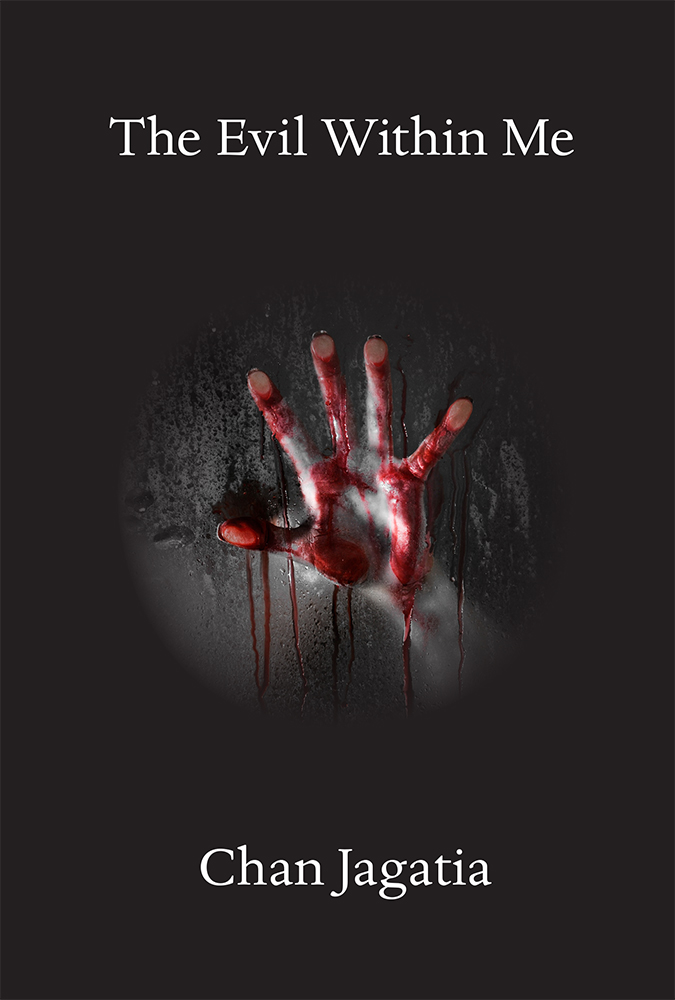
You are all alone in a narrow and very dark corridor. In front of you stands a nightmarish being, the thing you fear most in the entire world. You hear it breathing. You place your hands over your mouth in order to steady your own breathing, hoping to stop the sound of your hastened breath …
Be prepared for shock horror and dread!
And be grateful you’re not Sam Smith. Sam has a close circle of friends but one of them has become entangled in something so awful that their web of friendship is under impossible strain. Sam has been severely tested by life but now he must undergo unimaginable obstacles - and a hellish figure of Nazrath from Ancient India emerges from the darkness.
Maya Black - Great Read, highly recommended
I started to read this book and couldn't put it down, the suspense builds up as the story moves on and it becomes quite gripping. The characters are really good and all have their individual identity and you can't help but get pulled into their world. The book is also quite emotional at times and tugged at my heart strings a few times. I found the Indian references quite interesting too. It is a brilliant read and I definitely recommend it.
Khalid Sheikh - grabs your attention from the first page and does not release you until the very last page...
This is a brilliant debut novel by Chan Jagatia as through this book he has mixed the horror genre with Indian mythology in a way which I have never seen before in any other books or medium and mixes them both in a way which is not confusing and easy to follow. The book is also full of plot twists - majority I hadn't seen coming just when you think you have it all figured out Bam! Chan switches gears and takes the book in a different direction. In addition to this the characters are likeable, the dialogue memorable (especially the humour as it is on point) and overall the book was gripping and made me want to read to the end to find out how it all pans out. If you want a book which is a page turner, has characters to root for, good setting and plot then this book is a MUST READ for you.
Coops - Enjoyable, easy read
This is a great first novel for this author. There is awesome attention to detail centred around Indian mythology and Hindu theology, which is very enjoyable. I reckon future books will be even better so I'll be keeping my eye on what he publishes next.
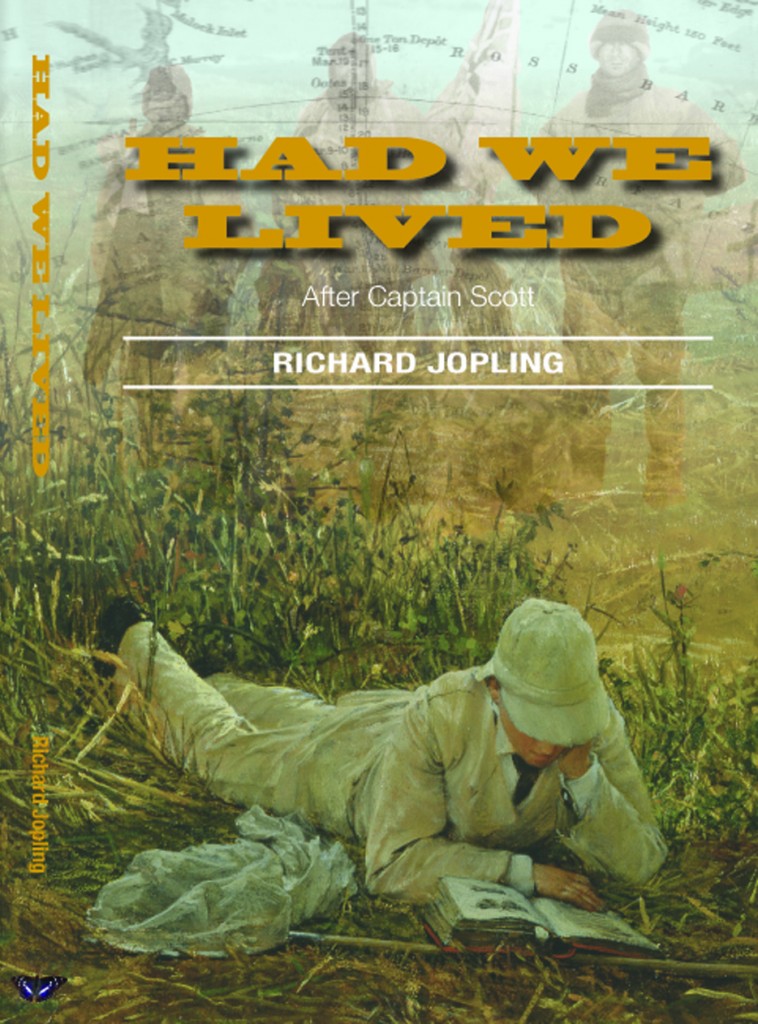
Richard Jopling's new novel, 'Had We Lived: After Captain Scott,' picks up on one of the last things that the dying Captain Scott wrote: 'Had we lived, I would have had a tale to tell of the hardihood, endurance, and courage of my companions which would have stirred the heart of every Englishman.' For one of the survivors these words would have had particular poignancy. Apsley Cherry-Garrard did live on but he had to take with him the fear that he could have saved Scott and his two closest friends. The novel fast forwards to the late 1950s and to Cherry's friendship with a boy who shares his love of the English countryside and a thirst for adventure. This is a wide-sweeping novel that takes the reader on a journey from an imperial battlefield to the challenges of Antarctica and forward to a new era.
Richard Jopling’s enthusiasm for Captain Scott’s expedition was fired by reading Apsley Cherry-Garrard’s Worst Journey in The World. This led him to undertake over ten year’s research into the heroic age of Antarctic exploration and made him determined to capture the extraordinary spirit and times of those explorers in a novel. Richard has a wide range of teaching and lecturing experience. He is now a freelance writer and lecturer and welcomes invitations to speak at events. He and his wife Christine live in rural Shropshire and spend a considerable part of the year in Cornwall.
More reviews from Amazon readers Had we Lived I really enjoyed this book, I was totally immersed in the story, when it was cold I felt cold,when it was bleak I felt bleak. In contrast, I enjoyed the warmth of the relationships Cherry had with the other characters in the story especially his sister Ida and the young boy Pip. It was well researched and I felt a sense of time and place. At one point in the story Richard is describing "Sterling Currency" and it made me go and look at my own collection of "Old Money". The unexpected bonus was learning about the Emperor Penguin, I am planning a trip to the Natural History Museum in London to see the egg for myself. Cherry Picking This is a must read, a wonderful insight into times past. To comprehend the courage and determination required by such people, to imagine what they experienced at such a young age and the contrast to what they had left behind is brought to life in this exceptional book. I highly recommend it. A rattling good read I thought I knew about Scott and Oates but I had not heard of Cherry-Garrard other than as a name. This book changed all that in a delightfully racy and erudite style that combined historical commentary with some "Boy's Own" storytelling. The contrast in this remarkable book between the life in England and the extraordinary harshness of the Antarctic winter, added to the feeling of scale. The reader spans the British Empire from its greatest days to its decline, spans the globe from Surrey to the South Pole and spans the life of an man totally dominated by two years of his youth. A feat of writing about a physical feat of unimaginable severity and a rattling good read! An addictive read This is a must read, a wonderful insight into times past. To comprehend the courage and determination required by such people, to imagine what they experienced at such a young age and the contrast to what they had left behind is brought to life in this exceptional book. I highly recommend it.
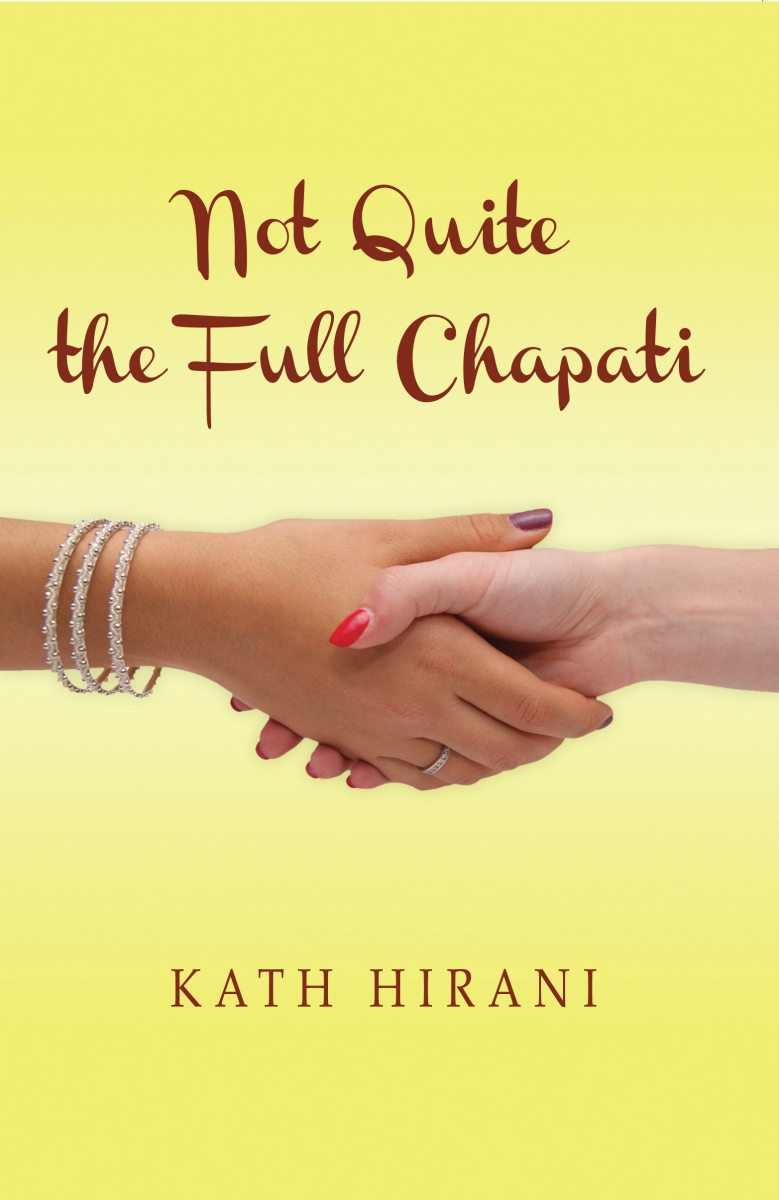
Janice Saheed is no stranger to racism. Her husband is one of the first Asians to settle in England after the War although Janice herself is white. However, on her first day at school, Janice's four-year-old daughter, Joanna, meets local-girl, Helen, and a lifelong friendship is forged that transcends prejudice.
Twent years on and now a young woman, Joanna is still struggling with her mixed-race identity and having to cope with racism when, against all her advice, her friend Helen falls for Rahim Ismail, a handsome dentist - and it is Helen's fascination with Asian culture, a fascination caused in the first place by Joanna, that is to blame.
In her fight against racism from the other side of the racial divide, Helen struggles to understand why she and Rahim cannot be together. Eventually she admits defeat and decides to leave Rahim - but then, her father becomes ill and Rahim fails to vanish from her life as intended.
To complicate matters yet further, Joanna's father refuses to acknowledge his daughter's marriage and Helen's father steps in to fill the gap and do the right thing for his 'adopted' daughter.
Not Quite the Full Chapati! is based on a true story, a story of friendship, love, happiness, racism and heartbreak. It speaks to all of us.
When you have produced the final draft of your book, it is always advisable to have the text read and checked by a professional editor or proof reader.
You may have friends that are willing and competent to do this and we can advise you on the type of editing that is required.
We can offer four levels of editing as well as proof-reading.
You choose which, if any, are appropriate in your case: 1. Edit of sample pages and short report (£30)
We will edit a few pages to highlight editorial issues so that you can look for similar problems throughout the book.
This will reduce the amount of further copy-editing required when the book is finished. 2. Broad structural editing and criticism (£5 per thousand words)
A structural review is particularly relevant for works of fiction.
The structural reviewer will address the following main areas and produce a short report for the author ” Read More 3. Copy editing (£10 per thousand words)
A copy-editor takes a close look at your text, line by line, with an eye to grammatical errors, repetition, inconsistency and lack of clarity. The copy editor will make changes to the text, with suggestions for rewriting, grammar, and punctuation. When you receive the edited version, you have the final choice about accepting of rejecting the individual changes. 4. Proof Reading (£8 per thousand words)
Proof reading is a line-by-line check that the book is ready for publication. Proof readers will make small corrections for punctuation, grammar and spelling but they will not make significant changes to the text.
A proof reader will identify any significant issues and add comments to the text so that you can make those corrections yourself. 5. Consistency Scan
If you decide your book doesn’t need a full proof reading, we offer an electronic scan to search for common errors and inconsistencies. This looks at issues such as inconsistent spelling and inconsistencies of hyphenation and capitalisation.
We can also identify inconsistencies in the spelling of proper names. 6. Cover text
The quality of the text on the cover is very important as it indicates the quality of the writing in the book.
The title, sub-title and back-cover blurb are all important elements and we can work with you to make sure that these are correct and effective.
Copy Edit
Copy-editors get the raw material into shape for publication i.e they edit the copy.
When they have finished, the designer can lay out or typeset the book and produce a proof.
It is quite normal for the author to make additional changes after a book has been copy-edited.
Working through the material, the copy-editor may identify errors in spelling, punctuation, grammar, style and usage, but also very long sentences and overuse of italic, bold, capitals and exclamation marks.
They should correct or query doubtful facts, weak arguments, plot holes and gaps in numbering.
In fiction, they should also check that characters haven’t changed their name or hair colour, look for sudden changes from first to third person among other things.
The Copy-editor is not a proof reader and should not be expected to find all of the errors in the text particularly if the text is badly written to start with.
This is the job of the proof reader.
The final proof should be checked by a proof reader or an experienced reader friend before going to print.
It is almost inevitable (and acceptable) to miss a few errors which can be corrected in a later edition.
Proof Reading
Proof reading is a line-by-line check that the book is ready for publication.
Proof readers will make small corrections for punctuation, grammar and spelling but they will not make significant changes to the text.
A proof reader will identify any significant issues and add comments to the text so that you can make those corrections yourself.
If you have decided to complete this stage of the process yourself, we will send a detailed check-list to help you.
We ask you to try and ensure that the book is completely ready before we start the layout.
Once the layout has started, we expect that you might want to to make a small number of amendments but
if there are a significant number, we may need to charge for the extra time it takes to change the layout
so best to discuss this with us first.
Structural Review
In fiction, the main areas that a structural editor will address are:
Plot: Does the plot make sense? Is it believable? Is it satisfying or does it leave the reader frustrated? Themes: Are the themes effectively handled? Are there so many that the book lacks focus? Do they interfere with the plot or complement it?
Characterisation: Are your characters well developed and believable? Are they cast in a role that fits their personality? Do they sometimes behave out of character? Point of view/voice: Is the voice consistent or is it sometimes confused? Is the voice authentic? Are you using too many or too few POVs? Pace: Does the plot move forward at an appropriate pace? Should you cut that preface? Should the action happen sooner or should the tension build more slowly? Dialogue: Do your characters sound real when they speak? Is your dialogue cluttered with adverbs and beats? Do you use clunky dialogue to move the plot forward? Flow: Is the narrative interrupted by dead-ends and tangents? Is there so much back story that the main plot is dwarfed? Are there missing plot points that would give the narrative greater integrity?
In non-fiction, the principle is the same, but the specific issues are slightly different:
Thesis: Is your thesis relevant? Is it clearly defined or is it lost among marginal issues? Exposition: Are your arguments clear and cogent? Are they well researched and properly supported? Do they have a clear relationship with your thesis? Content: Are all the necessary topics sufficiently dealt with? Are the chapters weighted correctly? Is there superfluous content? Organisation: Is the information organised logically? Are tables and illustrations used appropriately? How many levels of subheads do you need and how should they be arranged? Tone: Is the tone appropriate for the audience? Do you need to eliminate jargon? Is the text accessible? Pace: Are there passages that are bogged down in detail? Do you spend too long on detail irrelevant to the main thesis? Are there areas that need further exposition lest they be skipped over?
Cover Text
The quality of the text on the cover is very important as it indicates the quality of the writing in the book.
The title, sub-title and back-cover blurb are all important elements and we work with you to make sure that these are as effective as possible.
Consistency check
If you decide your book doesn’t need a full proof reading, we can run an electronic scan to search for common errors and inconsistencies.
This looks at issues such as inconsistent spelling, hyphenation and capitalisation.
It also checks for consistent formatting of numbers and dates as well as undefined abbreviations.
Full Script Edit
The script that you deliver to us will probably constitute what the industry would classify as the ‘Initial Rough Draft’, i.e. a full screenplay written without any other professional input or advice, and probably without a great deal of rewriting. We work through your draft, line by line, scene by scene, and come back to you with a comprehensive set of notes from which you can then work towards the official ‘1st Draft’. Some of our notes will be broad and general, dealing with such areas as the overall shape and structure, pacing, plot and character development; others will be far more specific, with corrections, clarifications and suggested cuts etc. It is of course entirely up to you whether or not to take these suggestions on board, and to what extent.
Subsequent Script Edit
It is very normal and generally beneficial for the script-editing process to go through at least a couple of cycles
i.e. the rewritten draft to be worked through once again by an experienced script practitioner – though this would be entirely at the discretion and behest of the writer.
Ongoing Support
We aim to make your self-publishing venture an enjoyable and rewarding experience.
Publishing is a complex business and we treat every book as a separate project.
We explain all of the stages at the outset and we manage the project schedule for you. This will include all of the expert services you have requested for editorial, design, printing, distribution and collection of royalties, keeping in close contact with you throughout the process.
You will be allocated a project-sheet on the YouCaxton website so that you can monitor progress and ensure that all stages are properly completed.
If you would like to see an example of a Project-Sheet…
go to My project on the menu and enter…
Username: Sample
Password : welcome.