|
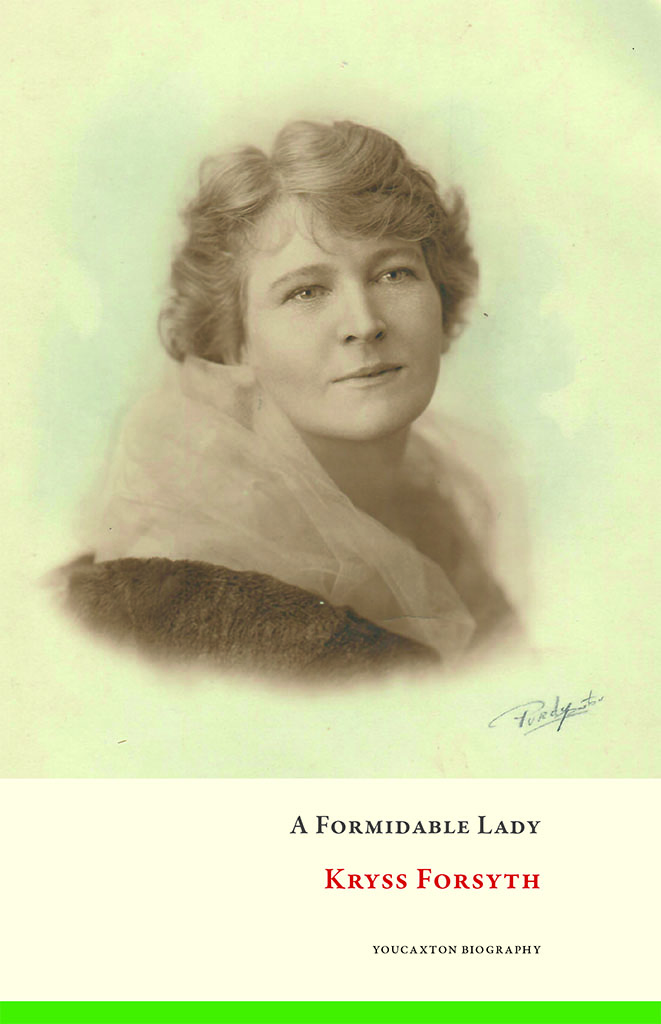
A Formidable Lady Kryss Forsyth I would like to share with you, the reader, a portrayal of Diana Gray (1913 - 2009), a ‘formidable lady’ who I admired and respected for her capability, and strength of character. I was pushing Diana in her wheelchair along the promenade, enjoying the late afternoon warmth from the sun, when suddenly she said, “I was abused, you know, when I was fourteen years old. I am ninety now, and I’ve never told anyone.” There had been no mention of this before, in all the years I had known her. I was shocked, surprised and sad, but also felt honoured she could tell me. I listened, and all that I knew about Diana suddenly began to fall into place, like a jigsaw puzzle. |
£6.99 (+ £2.50 postage) |
||||||||
|
She lives with her partner David and, since retiring, they have been renovating their house on North Hill. Kryss has two sons, and three beautiful grandaughters, who she loves spending time with. She has also been a foster parent for several young people. Family and friends are an important part of Kryss’s life. She also likes a challenge, and writing a book was on her list. |
||||||||||
Category Archives: livesinprint
A Formidable Lady – A biography of Diana Gray
An English Doctor in Japan
Gabriel Symonds
|
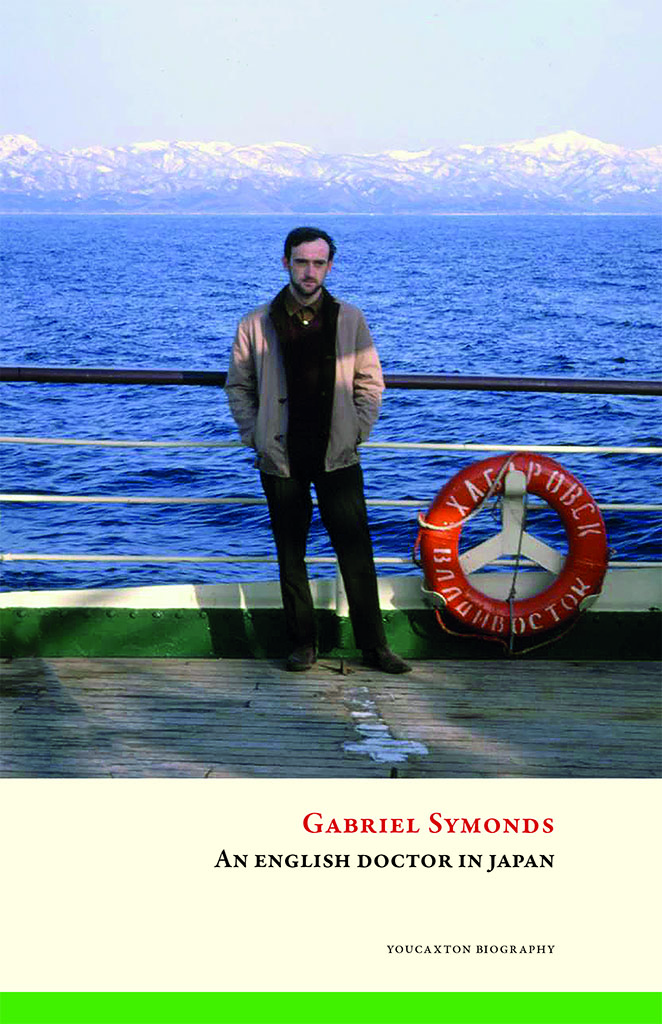
An English Doctor in Japan This entertaining memoir takes the reader at pace through Dr Gabriel Symonds’s unusual career as an English doctor in Japan, but there is much to his story before he got there: hitch-hiking to India on leaving school, disturbing incidents in the dissecting room at medical school, the antics of an eccentric bisexual fellow student, trials of life as a junior hospital doctor, attack by a drunken Irish colleague, and work in ‘heartsink’ general practices in deprived areas of London. Life in Japan is equally eventful, and includes encounters with incompetent physicians and a Japanese surgeon known as ‘the butcher’. This is contrasted with the ‘ideal’ practice he eventually set up, the Tokyo British Clinic, where we meet a host of colourful characters: minor royalty, a clutch of ambassadors, visiting pop singers, and a famous pianist—as well as many ordinary patients with extraordinary stories. |
£12.00 (+ £2.50 postage) Available on Amazon | ||||||||
|
Of particular interest are Dr Symonds’s perhaps outspoken views on general check-ups, statins, animal experiments, psychiatry, and smoking. Although it may raise a few hackles, he does not shy away from discussing controversial issues such as circumcision, female genital mutilation, and his critical observations on terminal care in Japanese hospitals. |
||||||||||
|
Reviews... 5 out of 5 stars What is your doctor really thinking? Reviewed in Japan on December 14, 2020 Verified Purchase I've always wondered what goes on inside the head of a physician. Obviously professional ethics prevents them from discussing patients and their problems by name. But Dr. Gabriel Symonds has found a way to tell his story while maintaining confidentiality, and it's quite a story. Only a small number of foreign physicians have practiced medicine in Japan during the post-WW2 period, and even fewer (if any) have spun together such an informative package. Symonds, a London native, has strong feelings about various aspects of diagnosis and treatment, and doesn't pull any punches when it comes to discussing shortcomings of the Japanese health care system. The result is a book that is inspiring, entertaining and enlightening. What's more, An English Doctor in Japan turned out to be a great read while stuck at home during the pandemic! |
A Soldier’s Memoir Vol 1: The Phoney War and the Horror of Dunkirk
George West
|
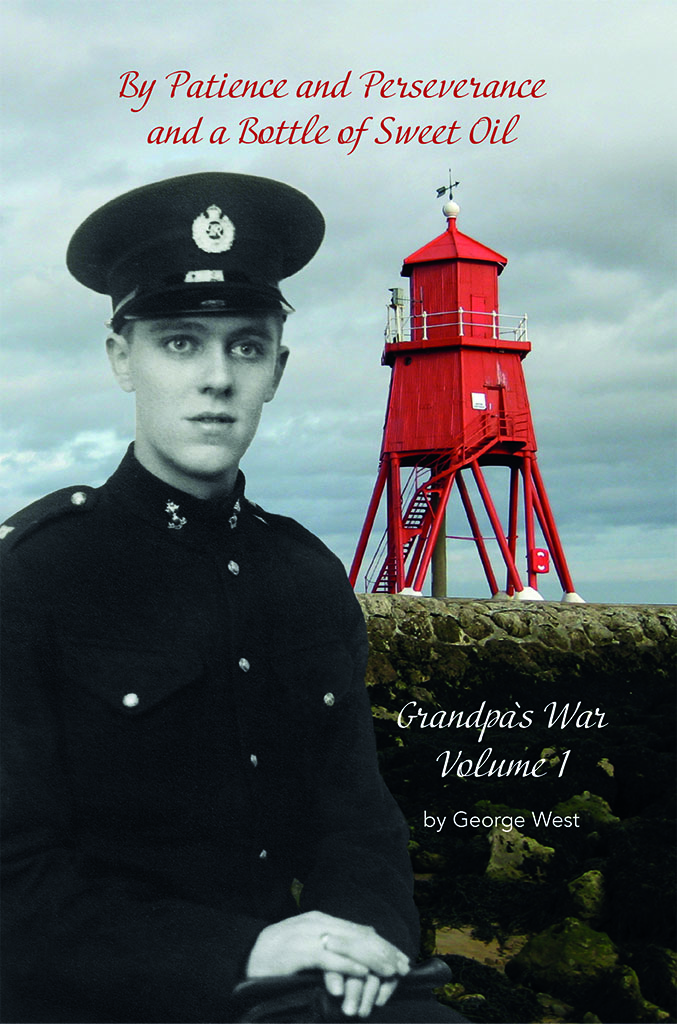
By Patience and Perseverance and a Bottle of Sweet Oil Grandpa’s War, Volume 1 Edited by Effie Cadwallader By Patience and Perseverance and a Bottle of Sweet Oil is the first volume of an account of an ordinary soldier`s experiences during World War 2, one man`s course through seven years of activity not of his own choosing, recounting episodes, individuals and activities in extraordinary detail. We follow George West from the shock of being transformed from a teenage accounts clerk into a soldier before war broke out in 1939, through the confusion of the Phoney War to the horror of Dunkirk and its aftermath. George`s story isn`t really about fighting or regimental business; it is a chronological account of the incidents and elements of his daily life, described in interesting detail, with a few adventures and some odd characters thrown in. |
£8.99 (+ £2.50 postage) Available from Amazon |
||||||||
|
There are simmering feuds, romantic dalliances, humanitarian rescues and comic moments, as well as the inevitable fear and danger. George matures from an innocent nineteen-year-old driver into a highly competent, resourceful and inventive Sergeant Mechanic, Royal Engineers. Volume 2, “The Snail, at Length, Reached Jerusalem” covers the second part of George`s war, from North Africa, through Sicily, D Day, “A Bridge Too Far” and Belsen, to demob in 1946. George qualified as a primary school teacher soon after demob and had a successful career back in South Shields, specialising in teaching literacy and numeracy and, of course, drawing and painting, before retiring to live with Kathleen in Shropshire. |
||||||||||
A Soldier’s Memoir Vol 2: Sicily, D Day, Belsen to demob in 1946
George West
|
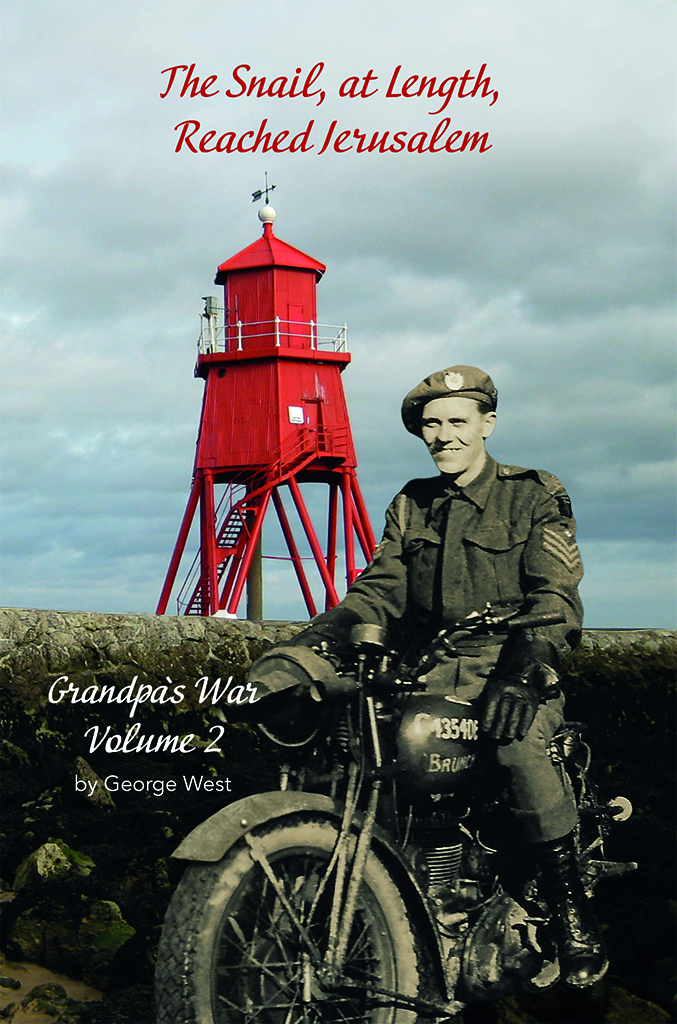
The Snail, at Length, Reached Jerusalem Grandpa's War - Volume 2 Edited by Effie Cadwallader The Snail, At Length, Reached Jerusalem is the second volume of the memoir of an ordinary soldier`s experiences during World War 2, one man`s course through seven years of activity not of his own choosing, describing episodes, individuals and activities in extraordinary detail. George`s story isn`t really about fighting or regimental business; it’s more an account of the incidents and elements of his daily life, described in interesting detail, with quite a few adventures thrown in. There are simmering feuds, romantic dalliances, humanitarian rescues and comic moments, as well as the inevitable fear and danger. In this volume, George has matured from an innocent nineteen-year-old driver into a highly competent, resourceful and inventive sergeant mechanic, Royal Engineers. |
£10.99 (+ £3.50 postage) Available from Amazon |
||||||||
|
There are simmering feuds, romantic dalliances, humanitarian rescues and comic moments, as well as the inevitable fear and danger. George matures from an innocent nineteen-year-old driver into a highly competent, resourceful and inventive Sergeant Mechanic, Royal Engineers. George West was brought up in South Shields. His mother died in childbirth and his father disappeared to Australia, so he was adopted by his mother`s elder sister and her husband who were late middle-aged when they took the baby. His upbringing was strictly Methodist and difficult, but he spent a great deal of his childhood with his close friend Bill Sharp whose family was open, loving and lively. After the war George married Bill`s younger sister, Kathleen. George qualified as a primary school teacher soon after demob and had a successful career back in South Shields, specialising in teaching literacy and numeracy and, of course, drawing and painting, before retiring to live with Kathleen in Shropshire. |
||||||||||
Shifting Classes in Twentieth Century Britain
Martin Minogue

|
Shifting Classes in Twentieth Century Britain From Village Street to Downing Street Martin Minogue An unconventional family story, told with warmth and humour, this account details the mixed fortunes of a rural labouring family, a neglected group in British working-class history. The author’s progress from farmworker’s tied cottage to Cambridge University then to a Foreign Office flat in Downing Street is remarkable, as is the heroism of the working-class parents who made that transition possible. The description of shifts in social relations produced by such sharp movements between different classes illuminates current debates about the persistence of centuries-long inequalities. |
£12.00 (+ £3.00 postage) Available on Amazon |
||||||||
|
|
||||||||||
Professor Quentin Skinner, School of History, Queen Mary University of London
A memoir of general and even exemplary significance, Shifting Classes begins in a Yorkshire village and ends amid the mandarins and politicians of Westminster and Whitehall. While both settings give rise to some marvellous comic set-pieces, the North-country background also provides a shocking account of deprivations endured and opportunities denied. There have been few accounts of rural working-class life and conditions in twentieth century Britain, and nothing that matches Shifting Classes for its vividness of detail and its power to reveal the injustices that kept the class-system in place.
Fred Inglis, Emeritus Professor of Cultural Studies, University of Sheffield
This is a rare, truthful and utterly appealing memoir, a ‘condition of England’ book that is at the same time a happy book, entirely without rancour.'
Charles Waterton – Creator of the First Nature Reserve
Barbara Phipps
|
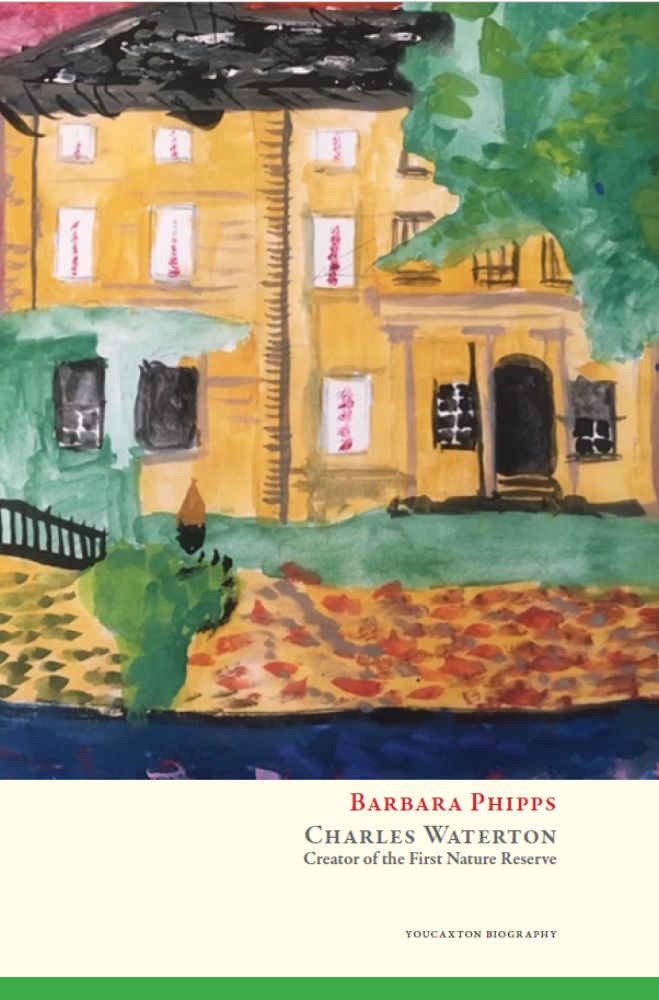
Born in 1782, Charles Waterton was the eldest child of Thomas and Anne Waterton, of Walton Hall in the West Riding of Yorkshire. Based on extensive research, Barbara Phipps's fascinating, fictionalised biography show us an intelligent, and fearless man, one gifted with humour and strongly held opinions. His early love of nature, especially of birds, meant he was often in trouble as a tree-climbing, bird-nesting boy. He travelled extensively, seeking to show others all he had observed by publishing his notes and preserving specimens. His method of taxidermy has never been bettered. He survived yellow fever and malaria, earthquakes and shipwreck, and many accidents both at home and abroad. By building a wall around his parkland, and banning the gun, he created a sanctuary for all creatures with the exception of the fox and the rat, having a particular dislike of the latter. His book, ‘Wanderings in South America, the North-West of the United States and the Antilles,’ has never been out of print. |
£15.00 (+ £3 postage) Available from Amazon | ||||||||
|
Waterton can justifiably be given credit for creating the first nature reserve. It is a concept that has spread, not just around Britain, but also right across the world. Bill Oddie |
||||||||||
|
Reviews... 28.6.2019 - Amazon, five star: Great Story Telling Took me back to my own childhood, a lovely read. Anyone with a love of nature will identify with Charles Waterton. 15.4.2020 - Amazon, five star: Easy Read An interesting book about a fascinating if accident prone man. The author writes through Waterton’s eyes bringing alive his adventures in an easy to read manner. |
A Sheffield Turner’s Tale: One Person’s Life in the Sheffield Steel Industry
Sue Allott
|
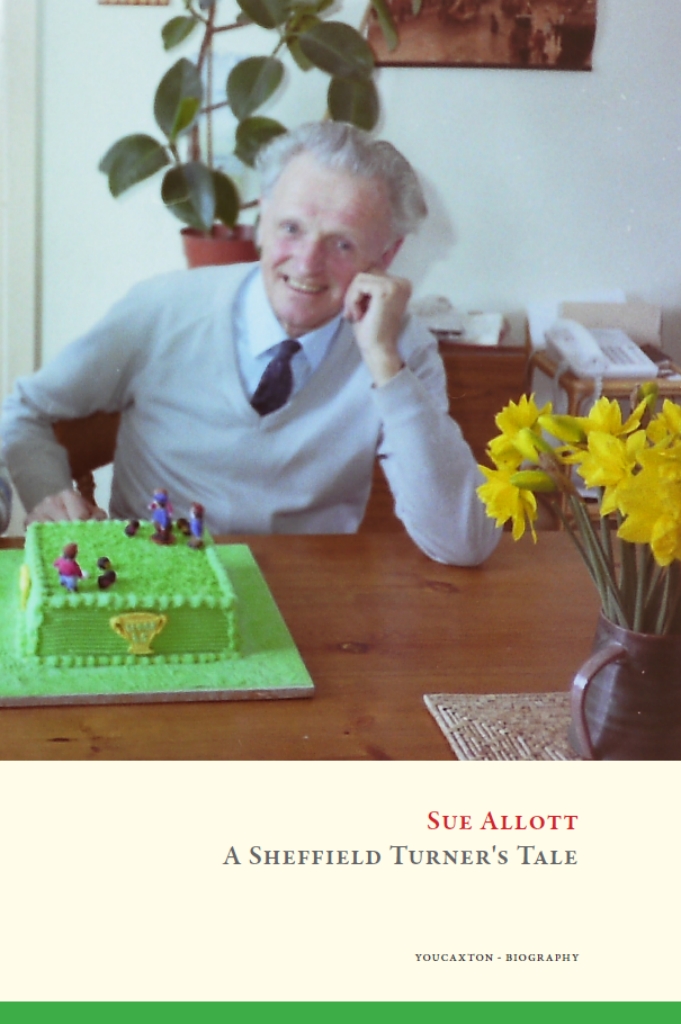
A Sheffield Turner's Tale Life with an Unsung Hero of Steel When the Sheffield steel industry dramatically collapsed in the 1980s the stories of its highly-skilled workforce were lost. People left the city in their thousands or disappeared into the army of unemployed. The part they had played in the building of the city became, overnight, unconsidered and unvalued. It has taken a generation for the city to begin to reclaim the stories of the men and women of steel. This is the tale of one of them, Frank Allott, a lad from the east end of Sheffield who began his working life as an apprentice turner on the eve of war and rose to become Manager of the vast and complex Heavy Machine Shops at Firth Brown. In his forty-four years in the firm he acquired a unique range of experience and knowledge, appreciated by those he worked with not only in Sheffield, but in Canada, Turkey and Brazil. |
UK Only: £9.99 (+ £2 postage) Also available from The Great British Bookshop |
||||||||
|
|
||||||||||
Mary Buckley, Professor, Cambridge university
Beautifully written and hard to put down, this is an engrossing and touching personal story of a father’s encouraging relationship with his daughter and of his working life in different phases of Sheffield’s steel industry. Sue Allott traces the impact on one family’s life of how and why the steel industry grew and declined as they moved from the closely-knit community of back-to-back housing, to new council house and finally to a purchased semi-detached. It is an important economic and social history of industry and life whose details and emotions should not be lost.
It is also a compelling tribute to a father from a proud daughter. It is a must-read for all only children who were daughters who had loving fathers in the 1950s and 1960s who spurred them on. It includes delightful details of the early student exchanges to Russia, essential reading for anyone who was sent on one and for those who were not.
Derek Reed, economist
A Sheffield Turner’s Tale is a moving and hilarious mixture of social history and the biography of a remarkable man. The backdrop of industrial Sheffield from the 1950s to the 1990s will strike a chord with anybody who has memories either of the working class life and upward social mobility of the fifties, sixties and seventies, or of the economic wrecking ball of the Thatcher years.
As for the book’s principal hero, Frank Allott, his humour, integrity, intellectual curiosity and occasional cussedness, as he rose from the shop floor to weighty management responsibilities in the Sheffield steel industry, no doubt bore the stamp of South Yorkshire, but there’s enough in his character and in his story to make him immediately recognisable to anyone who grew up working class in any other corner of industrial Britain. It is the story of a man who was at once unique and yet emblematic of a time and place that, just a few decades later, seem like another world.
From doomed East Prussia to Tunbridge Wells
Jane Bakowski
|
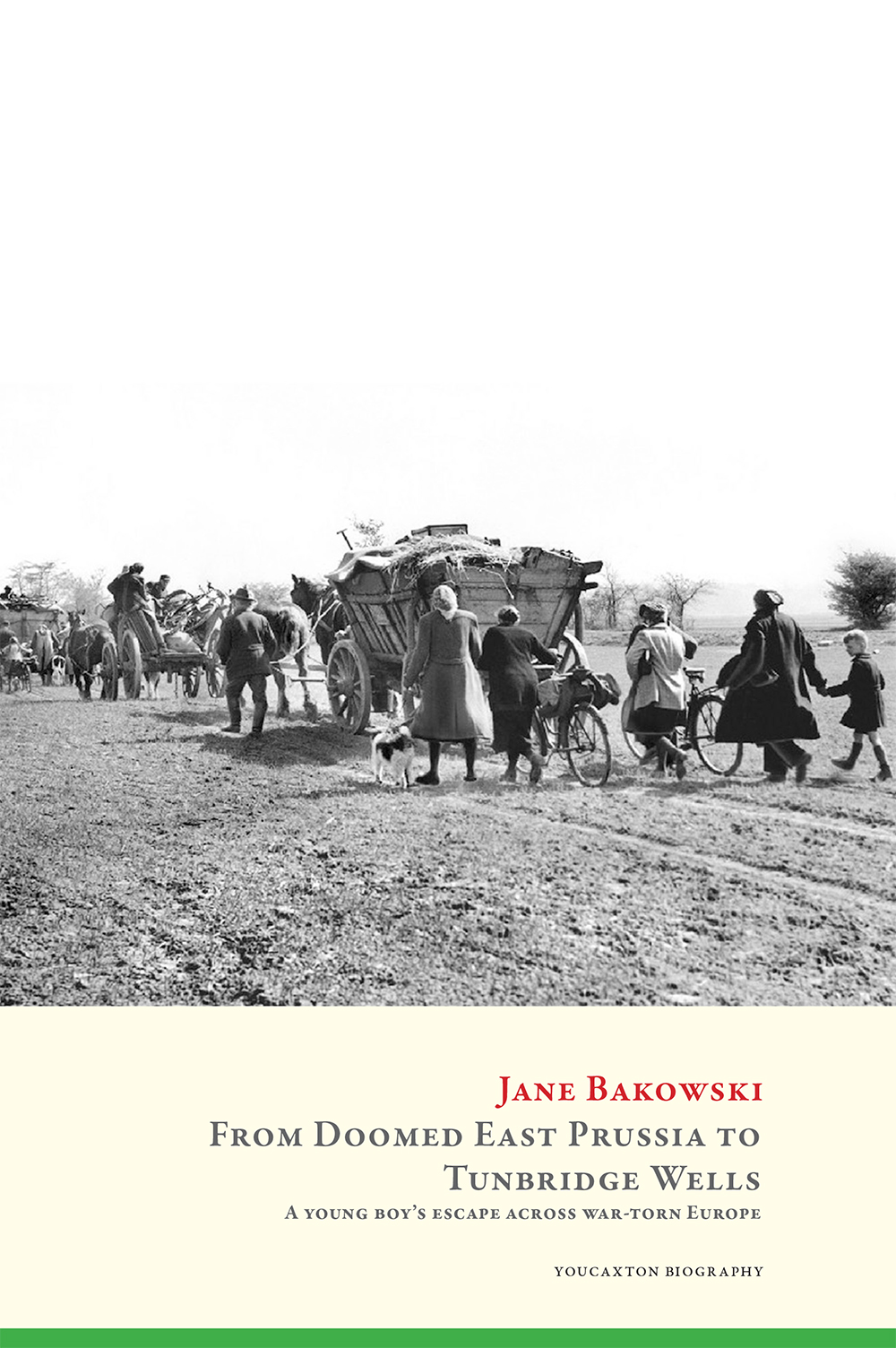
From doomed East Prussia to Tunbridge Wells A young boy's escape across war-torn Europe Dieter Teubler was just nine years old when he and his family left their farm in Memelland for the last time. Along with thousands of other terrified refugees from East Prussia, their only aim was to head west as Stalin’s vengeful Red Army forces surged in from the east. The perilous journey, which included a thirty-hour trek across cracking ice on a frozen lagoon, took five months and left the young boy with horrific images of death and suffering which would haunt him for the rest of his life. With their mother Erna, Dieter and his younger brother and three sisters eventually found refuge in the quiet seaside town of Laboe on the German Baltic Coast. But their day-to-day struggle to survive in a country still reeling from the impact of war continued long after the war ended in 1945. Food was scarce, many local people resented the huge influx of refugees and the family was almost penniless. |
£7.99 (+ £2 postage) Available from Amazon |
||||||||
|
However the persistent dream of a fresh start in America would change the young man’s life in a way he could never have envisaged. He had intended to spend time in England simply to learn the language, but the appearance of a young national tennis player from Tunbridge Wells would turn his world upsidedown. In 1960, he and Susan Waters were married, and the country boy from East Prussia began a new life in the heart of middle England. Now a father of four and with twelve grandchildren, Dieter Teubler’s dramatic story of loss and renewal continues to resound amid the human challenges of a new century. |
||||||||||