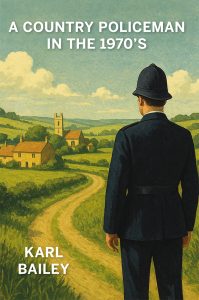
Reflection of the author’s personal experiences of the police service in the 1970s with different tale and stories of the time.
Having grown up in Little Minsterley it was time to see what there was for me outside of Sunny Shropshire by starting my police career in Runcorn. From there my career took me to Chester where I spent the rest of my time until retirement. Moving from, Wrexham back to Shropshire after retirement I now keep myself busy by being involved in local village life.
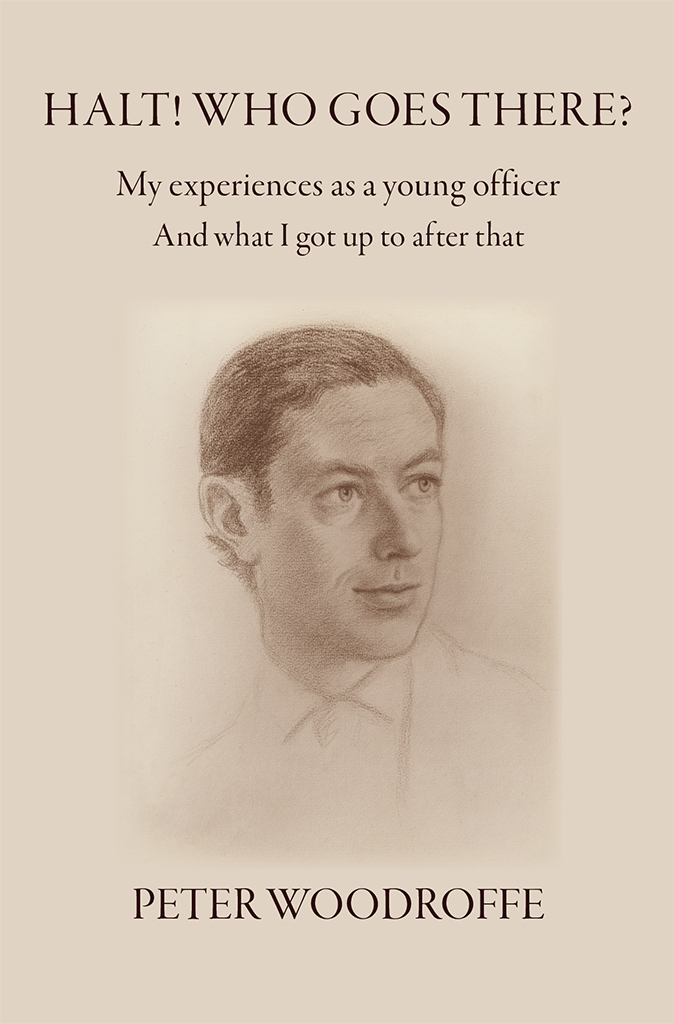
Peter Woodroffe served with the Royal Northumberland Fusiliers 1945-48 in the UK and Gibraltar. He then studied law and became a third-generation solicitor.
In his 95th year he is the oldest practicing solicitor out of the 180,000 odd in England and Wales.
Whilst writing this book, he lived at Cliff End beside the Sussex coast and swam in the English Channel. He plays tennis and golf.
The book spans the period 1945 to 2022.
Having met a multitude of attractive and famous individuals in the armed forces, business and sport, he tells a fund of riveting and at times uproarious stories.
Some of Peter’s many stories include: -
His taking on a bet to steal Robert
Redford’s girlfriend.
Experiencing the thrill and terror
whilst out of control on the Cresta
Run at St. Moritz.
All traffic forbidden inter alia
for Peter, his six year old son and
Chelsea Pensioner to march down
Whitehall.
Tail-gated in his Facel Vega by
Formula One drivers.
His unfair cross examination on
BBC news, repeated eight times in
the day.
Something about houses of ill repute.
Reviews of Halt! WHo Goes There...
General Sir Evelyn Webb-Carter Horcott House, 19 April 2023.
Peter’s reminiscences are indeed amusing and, in some places, hysterical.
There are also some wonderful pearls.
There is something in this book for everybody including stories about bigwig personalities, history, art, clubs, show-biz, cars, historic homes, fine dining and lovely ladies.
One thing is for sure: you won’t be bored.
He has made the acquaintance of many of the great and good (and not so good) and not been shy in commenting on their strengths or weaknesses.
He comes up with little-known, interesting splashes of history.
One of his quests is to give readers advice as to how to live life, like “do not leave behind what you need to take with you”.
Front-line Policing: Can, Worms, Open
The problem(s) with Response Policing
by P.C. Andy Vince
Now retired, PC Vince writes about his experiences from a career in the Police spent entirely in uniform on the front line – ‘Response’ as it is known. During that time he attended incidents from cycling matters to murders, and everything in between.
He explains procedures and shows how the Police evolved during his career, and not for the better.
He takes the reader through the gates of a police station, behind the wheel of a police car, and into the 999 world, giving opinions and his own personal feelings about the development of what was, once, a very efficient service, and now is full of nonsense.
Response bobbies will love their side of things being shown – the bosses and government, not so much
PC Vince joined the Police following time in the forces and other jobs. He spent his entire Police career on the front line in a smaller than average Police force. He is now happily retired.
Childhood in the north of Scotland was full of entertaining, and sometimes shocking events, and medical school in Aberdeen was a riot of fun and pranks as well as learning to be a doctor.
Frequent trips with my friends to the far north- west of Scotland opened the door to a number of adventures, and it was during my time as a medical student that I became a Christian, which was to change the direction of my life in years to come.
After four years in Aberdeen, I worked a further six years in Edinburgh before becoming second in command to transplant pioneer, Sir Roy Calne, in Cambridge. A year in the USA exposed some highly amusing differences in culture and language, and three months at the Chinese University Hospital in Hong Kong were a delight.
Finally, I became a consultant surgeon in Birmingham, only to step out of medicine to plant a church near the city centre, and teach the bible each year in Zambia and Uganda.
My midlife crisis was taking up boxing, and I fought in a number of tournaments before retiring to pursuits more appropriate to my age.
Hugh Thomson was born and brought up in Aberdeen, and graduated from medical school there in 1977. He subsequently worked as a doctor in Aberdeen, Edinburgh, Cambridge, North Carolina and Hong Kong before being appointed as a consultant surgeon at Heartlands Hospital in Birmingham in 1994.
He was one of the founding elders of City Church in Birmingham in 1999, and stepped out of medical practice to work full time for the church in 2002.
The Life and Times of Samuel Crompton Whispers of the Industrial Revolution
by David Leece
Revolution, war, machine breaking, assassination and abduction; how one wronged inventor and his family navigated the tumultuous change and challenges of the industrial revolution. The Life and Times of Samuel Crompton looks at this period of history in terms of the people that played their part in it.
Samuel Crompton invented the spinning mule which heralded the factory system, allowing Britain to grow as an industrial power. His life became a fight for recognition. How could a principled man deal with a duplicitous and calculating world and gain a just reward for his invention?
The reader is taken on a journey from the early days of mercantile trade to beginnings of industrial change, then through Georgian England and beyond with insights into the nature of business partnerships and the struggles of working people, Myths, legends and events are interwoven to create the feel and spirit of the times. Cotton and Samuel Crompton’s invention are brought back into the foreground of our understanding of industrial and social change.
All of this is based on detailed research using a unique archive, the Crompton Papers.
This biography is different because it has the exploration of human behaviour at its heart.
David Leece was born in Bolton in 1950. He has held professorships at both Keele University and Manchester Metropolitan University. He has worked for the Open University, involving the writing of teaching materials and making and presenting radio and TV programmes.
He has published widely in Economics, Finance, and Social Policy with an international reputation for research. This book reflects his passion for history and determination to re-establish the reputation of Samuel Crompton.
David is currently Professor Emeritus, Keele University and lives with his wife, family and their dog Molly in Staffordshire.
Reviews of The Life and Times of Samuel Crompton
We Love Reading - Ambassador 1
a fascinating read into an interesting and ever changing part of our history.
We Love Reading - Ambassador 2
Samuel Crompton’s story flows and even those like myself that were previously unfamiliar with the inventor could gain a decent understanding of his life, a credit to the author’s writing and in depth knowledge of the subject matter.
I can see this being an essential foundational reading for anyone interested in the start of the industrial age and the people behind the machines that lead to the industrial revolution.
Travels with a Dangerous Friend
Searching the world for a message in the bottle
by Anthony Fitzgerald
Circumstances lead Anthony to emigrate to America aged eighteen. Working in lowly jobs in New York he falls in love with an older woman, moves to Chicago and lives in the African-American quarter of South Chicago.
In London he enters the advertising industry and then joins an expedition driving to Australia. In Australia, the ‘lucky country’, life teaches him drinking ‘Australia style’. Then he joins an Aussie and two Americans to drive through Africa.
Back in London, now an advertising copywriter, he earns reasonable money and unreasonable drinking habits. He fathers a child and, once again, moves on.
In Kenya he starts a company, gets married and has two children. He gets his hunting licence and goes on safaris. He travels extensively in East Africa enjoying the hedonistic lifestyle of the European in Africa. His wife parts from him and back in England he joins Time Magazine.
Time Magazine sends him back to South Africa with his new wife, and then to Holland and Scandinavia with a lifestyle of conspicuous entertainment. Although successful he becomes more dependent on alcohol. The low points are frequent and disaster looms. This is the story of his journey and final redemption.
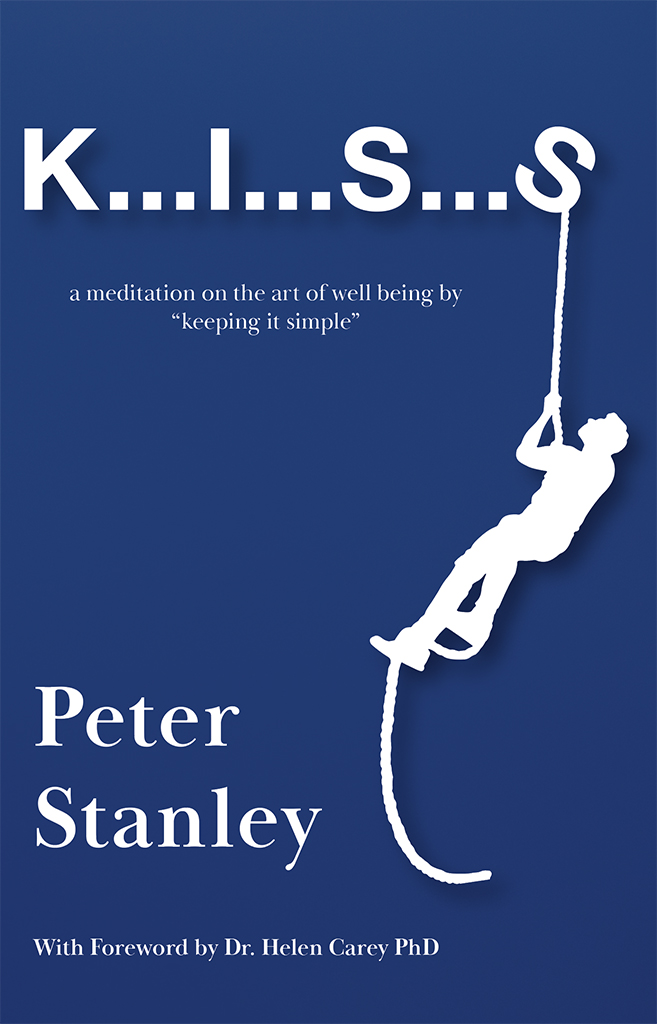
K...I...S...S
A meditation on the art of well-being by “keeping it simple”
by Peter Stanley
Find the ultimate way to live your life - although don't follow this book exactly or you may end up in trouble.
Simply take from it what you need. Live your life as YOU want to, and in doing so, have loads of fun.
This memoir incorporates all the elements of well-being with adventure, humour and a desire to ensure the readers own well-being.
A deeply personal and inspiring account of the author’s life but ultimately, this is a powerful message about the importance of the need to mitigate suffering, whether on an individual or social level.
The author shares his own experiences of overcoming adversity, as well as thoughts on how we can all work together to create a more compassionate and equitable world.
A rip roaring read but with the accent on the relief of suffering and achieving the ultimate in well being - how? - with humour – and fill your soul with music and your heart with love!
Peter spends his life having fun, or at least trying to when not extricating himself from yet another situation caused by his incessant quest to remove suffering from people’s lives with his care for others.
Sometimes dubbed a rebel with a cause, he has worked as an accountant, salesman, serial entrepreneur and chaired a public company for a number of years.
Married to Mame, a lovely lady who died a short while ago, they have two children, two grandchildren and two great grandchildren.
This is his first book.
Reviews by Amazon Readers...
KISS is a memoir that combines personal stories, insights, and humor to share the author’s journey of finding well-being and happiness in life. Peter reflects on his experiences of overcoming challenges, discovering his passions, and helping others. He also offers practical advice on how to achieve well-being by following the KISS principle of simplicity in all endeavours.The book is a captivating and inspiring read that will make you laugh, cry, and think. It is full of wisdom and compassion, as well as anecdotes from the author’s life. The book also explores various topics related to well-being, such as breathing, meditation, yoga, music, love, spirituality, and social justice. The book is written in a conversational and engaging style, with a balance of humor, drama, and insight. The book is a must-read for anyone who wants to improve their well-being and happiness, as well as to learn more about the author’s fascinating life. It is a book that will touch your heart, mind, and soul, and inspire you to live a simple, meaningful, and fulfilling life. CGPT
There is something magic about your writing, I can't put my finger on it but it makes the reader feel that no matter how difficult and dark life is, it is still worth living. What you are saying has been said many times, but not in the special way you are saying it, which really reaches out to the reader and gives them hope and courage to carry on. You have a special gift, keep up the good work, I can't wait for your next book! - MH
You are talking directly to us, Your writing is spontaneous and heartfelt and comes across in a way we can relate to. Also you write from the heart, your spirit shines out from the pages of your book, it is what we all need these days. LDN
I feel I have touched base again and back to where I was before……..I feel I have been through years of madness, trying to find myself having lost my way……….so thank you Peter. ANON
Your book grips the imagination and is never boring, it really makes you think about so many things. I loved it. A beautiful memoir with such good advice. SS
Inspiring
This is a wonderful book, both a memoir and a book about how to live in a more mindful way. Enjoyable and thought provoking, the book is full of stories to make you laugh and wisdom to make you think about what is really important.
I keep your lovely book on the table and dip into it at random when I sit down for cups of tea during the day. It is my comfort blanket and calms me down when I feel my nervous tension rising. It is such a sane, thoughtful, kind book. SAL
I started your book yesterday and finished it at 5.00pm today – that’s how much I enjoyed it !! BD
Jo kept saying the book was "absolutely incredible", she had read it twice and was going to read it a third time.
She said the book was like you climbed lots of mountains to get on to the next mountain and never complained about it at all, (she related the story of when your canoe got filled with coal). She said it was like you have been at the helm of your life, all your life and remained there, and "anyone with a spark of conscience would be moved/ affected by your book". Jo said she would recommend your book to everyone in the world! - JO
Reviews by readers...
Angela Mays - Social Scientist “There is real warmth in this writing”
Fay Pedler - Physiotherapist “This book is addictive”
Sarah Juckes, Jericho Writers “I really enjoyed reading this”
Charmaine Despres “I love every single word Peter”
Cleo Howe “I agree with your thoughts on positive thinking, such a powerful healer”
Marcella Howard “You write as if it is coming from the heart”
When you have produced the final draft of your book, it is always advisable to have the text read and checked by a professional editor or proof reader.
You may have friends that are willing and competent to do this and we can advise you on the type of editing that is required.
We can offer four levels of editing as well as proof-reading.
You choose which, if any, are appropriate in your case: 1. Edit of sample pages and short report (£30)
We will edit a few pages to highlight editorial issues so that you can look for similar problems throughout the book.
This will reduce the amount of further copy-editing required when the book is finished. 2. Broad structural editing and criticism (£5 per thousand words)
A structural review is particularly relevant for works of fiction.
The structural reviewer will address the following main areas and produce a short report for the author ” Read More 3. Copy editing (£10 per thousand words)
A copy-editor takes a close look at your text, line by line, with an eye to grammatical errors, repetition, inconsistency and lack of clarity. The copy editor will make changes to the text, with suggestions for rewriting, grammar, and punctuation. When you receive the edited version, you have the final choice about accepting of rejecting the individual changes. 4. Proof Reading (£8 per thousand words)
Proof reading is a line-by-line check that the book is ready for publication. Proof readers will make small corrections for punctuation, grammar and spelling but they will not make significant changes to the text.
A proof reader will identify any significant issues and add comments to the text so that you can make those corrections yourself. 5. Consistency Scan
If you decide your book doesn’t need a full proof reading, we offer an electronic scan to search for common errors and inconsistencies. This looks at issues such as inconsistent spelling and inconsistencies of hyphenation and capitalisation.
We can also identify inconsistencies in the spelling of proper names. 6. Cover text
The quality of the text on the cover is very important as it indicates the quality of the writing in the book.
The title, sub-title and back-cover blurb are all important elements and we can work with you to make sure that these are correct and effective.
Copy Edit
Copy-editors get the raw material into shape for publication i.e they edit the copy.
When they have finished, the designer can lay out or typeset the book and produce a proof.
It is quite normal for the author to make additional changes after a book has been copy-edited.
Working through the material, the copy-editor may identify errors in spelling, punctuation, grammar, style and usage, but also very long sentences and overuse of italic, bold, capitals and exclamation marks.
They should correct or query doubtful facts, weak arguments, plot holes and gaps in numbering.
In fiction, they should also check that characters haven’t changed their name or hair colour, look for sudden changes from first to third person among other things.
The Copy-editor is not a proof reader and should not be expected to find all of the errors in the text particularly if the text is badly written to start with.
This is the job of the proof reader.
The final proof should be checked by a proof reader or an experienced reader friend before going to print.
It is almost inevitable (and acceptable) to miss a few errors which can be corrected in a later edition.
Proof Reading
Proof reading is a line-by-line check that the book is ready for publication.
Proof readers will make small corrections for punctuation, grammar and spelling but they will not make significant changes to the text.
A proof reader will identify any significant issues and add comments to the text so that you can make those corrections yourself.
If you have decided to complete this stage of the process yourself, we will send a detailed check-list to help you.
We ask you to try and ensure that the book is completely ready before we start the layout.
Once the layout has started, we expect that you might want to to make a small number of amendments but
if there are a significant number, we may need to charge for the extra time it takes to change the layout
so best to discuss this with us first.
Structural Review
In fiction, the main areas that a structural editor will address are:
Plot: Does the plot make sense? Is it believable? Is it satisfying or does it leave the reader frustrated? Themes: Are the themes effectively handled? Are there so many that the book lacks focus? Do they interfere with the plot or complement it?
Characterisation: Are your characters well developed and believable? Are they cast in a role that fits their personality? Do they sometimes behave out of character? Point of view/voice: Is the voice consistent or is it sometimes confused? Is the voice authentic? Are you using too many or too few POVs? Pace: Does the plot move forward at an appropriate pace? Should you cut that preface? Should the action happen sooner or should the tension build more slowly? Dialogue: Do your characters sound real when they speak? Is your dialogue cluttered with adverbs and beats? Do you use clunky dialogue to move the plot forward? Flow: Is the narrative interrupted by dead-ends and tangents? Is there so much back story that the main plot is dwarfed? Are there missing plot points that would give the narrative greater integrity?
In non-fiction, the principle is the same, but the specific issues are slightly different:
Thesis: Is your thesis relevant? Is it clearly defined or is it lost among marginal issues? Exposition: Are your arguments clear and cogent? Are they well researched and properly supported? Do they have a clear relationship with your thesis? Content: Are all the necessary topics sufficiently dealt with? Are the chapters weighted correctly? Is there superfluous content? Organisation: Is the information organised logically? Are tables and illustrations used appropriately? How many levels of subheads do you need and how should they be arranged? Tone: Is the tone appropriate for the audience? Do you need to eliminate jargon? Is the text accessible? Pace: Are there passages that are bogged down in detail? Do you spend too long on detail irrelevant to the main thesis? Are there areas that need further exposition lest they be skipped over?
Cover Text
The quality of the text on the cover is very important as it indicates the quality of the writing in the book.
The title, sub-title and back-cover blurb are all important elements and we work with you to make sure that these are as effective as possible.
Consistency check
If you decide your book doesn’t need a full proof reading, we can run an electronic scan to search for common errors and inconsistencies.
This looks at issues such as inconsistent spelling, hyphenation and capitalisation.
It also checks for consistent formatting of numbers and dates as well as undefined abbreviations.
Full Script Edit
The script that you deliver to us will probably constitute what the industry would classify as the ‘Initial Rough Draft’, i.e. a full screenplay written without any other professional input or advice, and probably without a great deal of rewriting. We work through your draft, line by line, scene by scene, and come back to you with a comprehensive set of notes from which you can then work towards the official ‘1st Draft’. Some of our notes will be broad and general, dealing with such areas as the overall shape and structure, pacing, plot and character development; others will be far more specific, with corrections, clarifications and suggested cuts etc. It is of course entirely up to you whether or not to take these suggestions on board, and to what extent.
Subsequent Script Edit
It is very normal and generally beneficial for the script-editing process to go through at least a couple of cycles
i.e. the rewritten draft to be worked through once again by an experienced script practitioner – though this would be entirely at the discretion and behest of the writer.
Ongoing Support
We aim to make your self-publishing venture an enjoyable and rewarding experience.
Publishing is a complex business and we treat every book as a separate project.
We explain all of the stages at the outset and we manage the project schedule for you. This will include all of the expert services you have requested for editorial, design, printing, distribution and collection of royalties, keeping in close contact with you throughout the process.
You will be allocated a project-sheet on the YouCaxton website so that you can monitor progress and ensure that all stages are properly completed.
If you would like to see an example of a Project-Sheet…
go to My project on the menu and enter…
Username: Sample
Password : welcome.