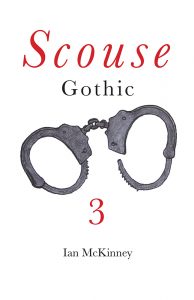
This is the third book in the Scouse Gothic series by Ian McKinney.
Life can be difficult – even when you’re dead.
Lathom lies awake. His nights are plagued by nightmares and his days by hallucinations and cravings for blood. Worse still he’s stone cold sober all the time - immortality has its drawbacks.
Melville has decided to put his past behind him and live for the future - unfortunately his past has other ideas.
Peter is worried that his research might create human vampires - and also that he may already know one.
Frank ponders how to make an omelette without breaking your favourite egg.
And Sheryl wonders if it’s unnatural for vampires to live together. Perhaps, love isn’t all you need – perhaps all you need is blood.
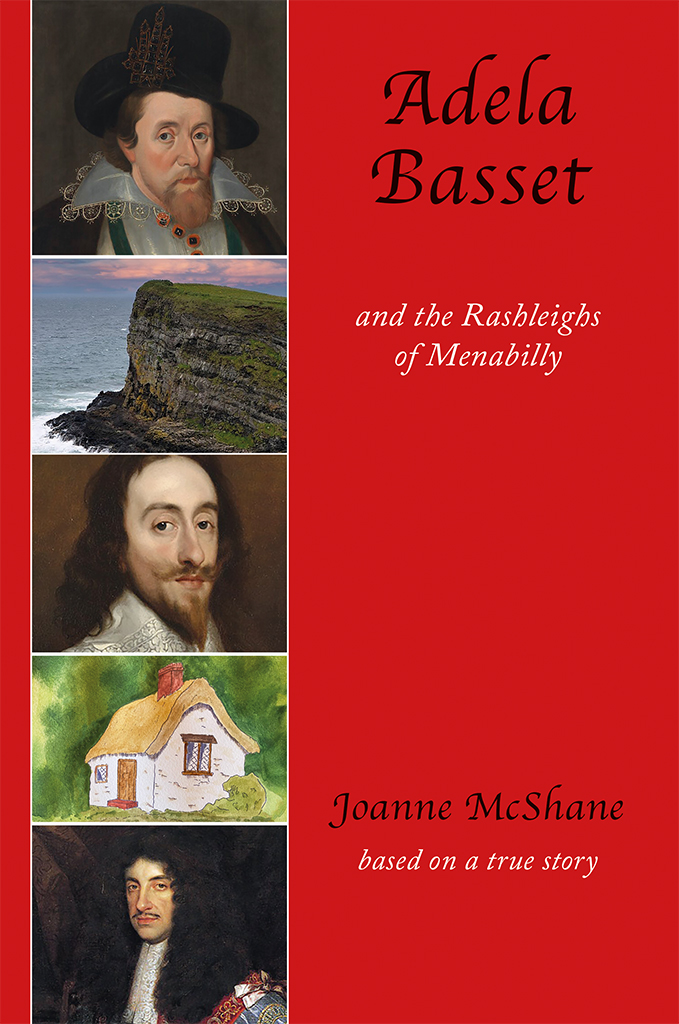
Adela Basset
In this, the sequel to Mistress Whiddon, we find ourselves in December 1611. The Basset family of Umberleigh has been bankrupted as a result of Robert Basset’s misguided notion to lodge a claim to the throne of England after the death of Elizabeth I. When a daughter is born just nine months after his return from exile both he and his traumatised wife refuse to acknowledge the child. She is rescued from an uncertain fate by her older sister, Anne, who names her Adela.
When Anne leaves Umberleigh in 1614 to marry Jonathan Rashleigh of Menabilly in Cornwall, she takes her young sister with her.
As a child Adela struggles with feelings of rejection and, as she enters her womanhood, with the conflicting emotions she feels for the two men in her life; her childhood friend, the woodcutter’s son, Gilbert, and her dashing Cavalier cousin, Thomas Basset.
Her story is told against the backdrop of the tumultuous politics of 17th century Cornwall and Jonathan Rashleigh’s own close involvement with the Royalist cause during the Civil War.
Joanne spent her childhood on a sheep and cattle farm in Tasmania, Australia. After marrying and raising a family in Tasmania she moved to Wales in 2003 and still lives there, close to the Herefordshire border.
Always a keen historian, she became fascinated by her own family history and by the lives of her ancestors - some of whom she discovered to be very colourful indeed.
This led her to begin writing. Honora and Arthur - The Last Plantagenets is her first published book.
In her own words 'I am the end product of a melting pot ranging from convicts to Royalty. There are so many stories waiting to be told. I just hope I live long enough to do it.'
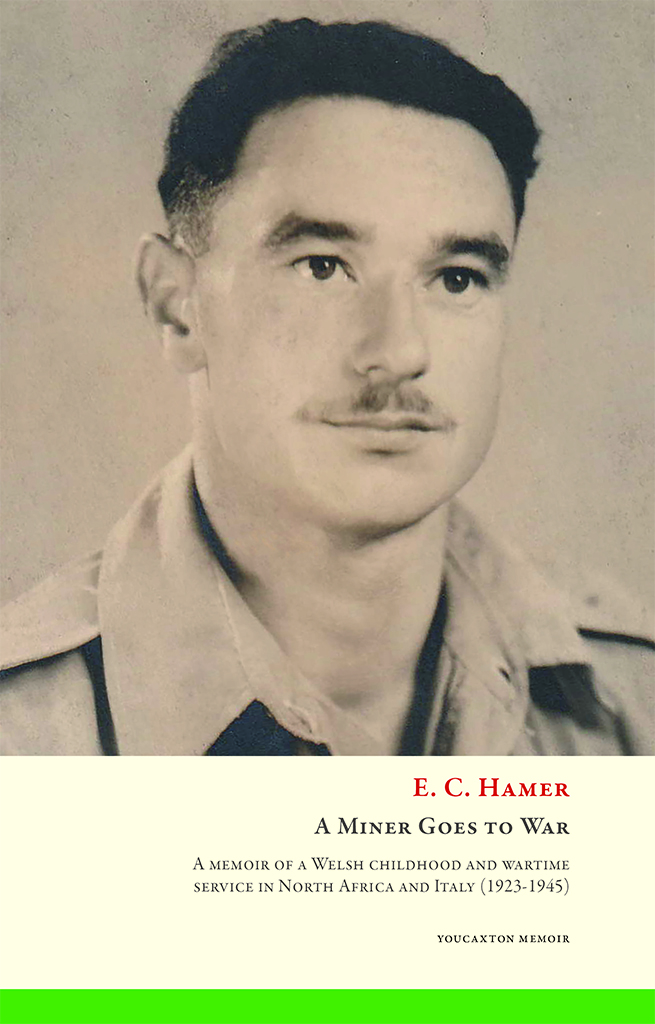
A memoir of a Welsh childhood and wartime service in North Africa and Italy (1923-1945)
Edited by Pat Wilson, Ernest Hamer and Anne Kleiser
Eddie Hamer’s memoir gives a unique insight into working-class life in the first half of the 20th century. It is often humorous, sometimes angry, and always informative. It begins with a history of his workingclass Welsh mining family, based on his own memories and on a series of discussions with his father in the 1960s - while there was still time to record first-hand accounts of his family’s story in the decades before he was born.
There follows his childhood in Huddersfi eld and North Wales in the 1920s. The poverty and hardship that his family endured is vividly described and the now-unthinkable responsibilities he had to shoulder at a young age - but this was also a boyhood of freedom, camaraderie and adventures.
The final sections of Eddie’s memoir are based on the diaries he kept during his service in World War 2: his training in the U.K. and his service in North Africa and Italy as a gunner in the Royal Artillery.
Published:
March 2021
Paperback:
286 pages
Price:
£11.99
ISBN:
9-781913-425722
£11.99 (+ £3.00 postage) Number of copies:
Eddie left school at the age of fourteen to work down Llay Main coal mine. His early working life from his first day underground comes alive, with many personal anecdotes set in context by clear explanations of how a coal mine functioned in the 1930s.
After the war he qualified and eventually became Chief Mining Surveyor in two collieries in South Wales. He was married with one son and one daughter and died in 1990.
Reader Reviews...
Alison Hembrow, The Royal Regiment of Wales Museum
This book is a gem: a combination of recollections of working-class childhood and early adulthood in the first half of the twentieth century, family stories, and war diaries – all seen through the lens of a fiercely independent man with strong socialist views. It’s a valuable first-hand insight into lives and times that are in danger of being forgotten. It’s also a gripping and eye-opening read which has been carefully brought to press by members of Eddie Hamer's family who recognise the importance of his memoir.
“A Miner Goes to War” is presented in two distinct halves. The first is recollections of childhood and early life growing up in a working-class family in Wales and Yorkshire in the 1920s and 1930s. Recorded several decades later, Eddie's strong left-wing views shine through in his emotive descriptions of his family being part of “the rabble of history”. His mother’s family were Welsh miners, his father's family woollen workers from mid-Wales, both struggling to find regular employment and make ends meet.
Moving to Yorkshire in search of work, Eddie’s family found themselves in cramped accommodation unfit for human habitation. His early teens featured trips to the abattoir to collect a bucket of intestines to provide meals, war-wounded teachers, earth closets, early deaths, and further deprivation during the General Strike.
At 14 Eddie leaves school and goes down the mine. He and his family are now in north Wales. Detailed descriptions of the working conditions, equipment used, and jobs done give an insight into a harsh world in which pit disasters and deaths were frequent. His aptitude is spotted and he starts night school classes to qualify as a mining surveyor.
Although the memories aren’t all chronological, and they are seen through the prism of Eddie's adult beliefs, they give a strong flavour of lives which were lead by many but recorded by few. Interspersed with vignettes touching on current affairs, they bring to life an existence experienced by millions in a way a more traditional historical account cannot.
Photos and hand-drawn maps and plans divide this first section from Eddie's war diaries which form the second half of the book. These diaries have a different character altogether. Written as he completed his basic training as a gunner in the Royal Artillery and served in North Africa and Italy, they have an immediacy and level of detail that gives a sobering insight into the day-to-day experiences of a soldier and the horrors of war.
Eddie brings an admirable humanity to his encounters on active service: fetching a medical orderly to dress the wound of a young Italian girl, sharing water-melons with Arab children, cooking fried tomatoes with locals. His interests are wide-ranging: he describes the workings of Italian bombs, the quality of German dugouts, the architecture of mosques, the historical interest of Pompeii compared with the squalor of Naples, and rearing Regimental turkeys for Christmas lunch. He also records the 104 degree fever he suffered, the horrors of rampant dysentery in the regiment, the limbs lost by close comrades in a premature explosion, and cemeteries full of teenage German casualties.
When Eddie's narrative ends in 1944 , his brief notes and Release Leave Certificate are included as an Afterword. His military conduct was officially described as “Exemplary”. “A Miner Goes to War” is exemplary in preserving for future generations and researchers the personal experience of an upbringing in a mining family and service in World War Two. Having just read Captain Tom Moore’s “Tomorrow Will Be A Good Day”, I can see parallels in two accounts of growing up in the 1920s and serving in World War Two from contemporaries who both bring a personal perspective to aspects of national history.
Books such as this add a different dimension to more traditional accounts, and are a valuable addition to the bookshelves of anyone wanting to find out more about aspects of life in the first half of the 20th century.
Review of “A Miner Goes to War” by Neil Wilson
I really enjoyed “A Miner Goes to War”. The memories are personal, but they seem to capture the period very well. It’s a powerful reminder of what the world was like when the welfare state was a lot smaller. Anyone who utters the words, ‘safety gone mad’, will be reminded of what the world could be like; a world where people get killed in accidents and everyone else carries on working. Reading this book made me realise how much we take for granted in modern Britain. Social improvements were hard won, and can be easily lost.
It’s a book with powerful contrasts. This was an era when kids could play on the local scrap heap, build tree houses in the woods, swim in the river and crawl under the market stalls looking for fruit. But this childhood freedom is tinged with a sense of fatalistic sadness. Once he was in the army, he never knew where he would be in a few hours. Every moment of the day was planned for him, mingled with the unexpected attack from a passing plane or an ambush.
Each memory is filled with powerful emotions, taking the reader back in time. As he walks through the woods past a house that’s supposed to be haunted, we imagine how we’d have felt as young child. There are moments of tension, when a farmer catches them stealing apples. Moments of enchantment, when his uncle dresses up as Father Christmas. Moments of anger, when workers are deliberately under paid. We see the world through E. C. Hamer’s eyes, and grow older with him. He really captures how a person thinks at different ages, but with little retrospectives showing how he saw things as an older adult. Considering how much hardship there is, from the miners’ strike to the war, there’s a positive feeling to the book. There are many moments of camaraderie, from the kids building a bonfire together, to the miners playing their instruments underground. There’s a feeling that people do come together in the face of adversity.
E. C. Hamer captures the realities of war very well. There are so many details, like the friendly fire, the shells that malfunction, trading soap for eggs with the locals, the ‘enemy’ leaving dirty protests in the houses before they retreat and the German deserters they find hiding in a cave.
His account comes across as remarkably honest. E.C Hamer has a lot to be proud of, but he also shares his regrets, including one time as a child when he was peer pressured into putting a firework through someone’s letter box. It’s a combination of stark honesty, bravery, hard work, empathy, ironic humour and self reflection, that makes E.C. Hamer such a likeable narrator.
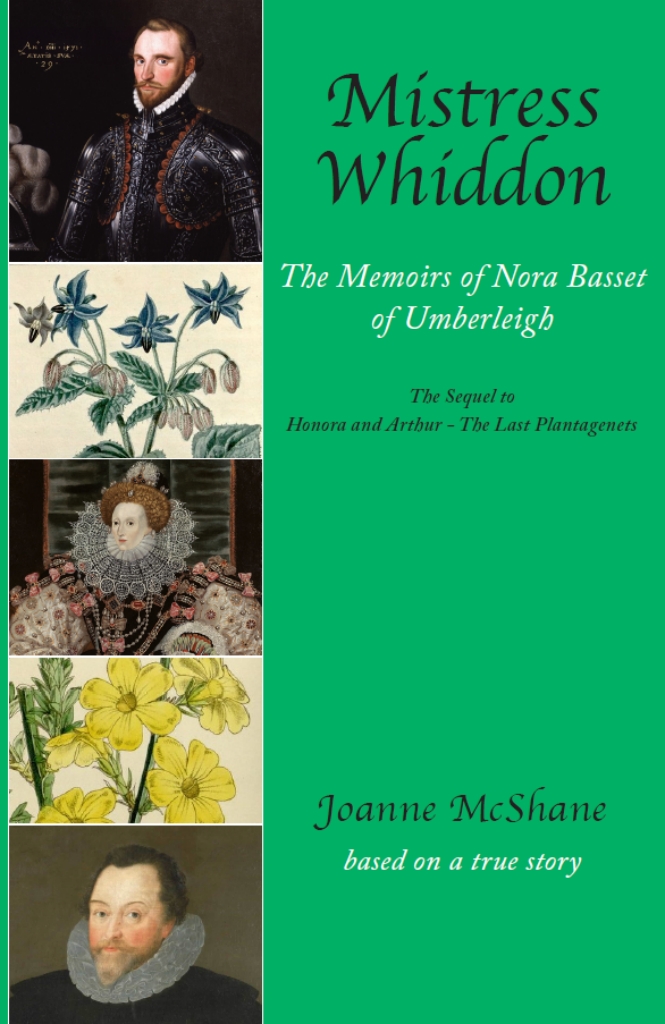
Mistress Whiddon
The Memoirs of Nora Basset of Umberleigh
Young Nora Basset has no memory of her father, John, as he died when she was very young. Her first years are spent at Umberleigh in Devon with her family. When she is three years old, she meets her grandmother, Honora Lisle, who has returned from imprisonment in Calais and has been tragically widowed. Nora and her grandmother form a close bond, as the child unwittingly assists the older woman to come to terms with her loss. The following year, Nora’s mother, Frances Plantagenet, remarries. Her new husband is Thomas Monk of Potheridge and the family leaves Umberleigh to begin their new life.
Nora spends a mostly happy childhood at Potheridge until she is called away at the age of eighteen to become a companion for her grandmother who has once again been visited by sadness. The bond between the two women becomes stronger than ever.
When she is twenty-seven Nora meets William Whiddon, the love of her life. They marry and the next years are blissful ones for the two soulmates.
When tragedy strikes, Nora must find a way to move forward in her life. The story is set against the backdrop of life in Elizabethan England and the continuing saga of the Basset family.
Bill Clewer: Truely, Joanne McShane is a great writer. Can't wait to start Lillias.
It was William's forethought to make his will, giving Nora the means to have the life "she" wanted. The book flows, and it is as if the writer is telling the book in your head. I usually read a chapter and put the book down. Mistress Whiddon was the first time that I could not put it down, because I wanted to know what was in the next chapter.
5 out of 5 stars A marvellous read
Reviewed in Australia on 3 December 2020
What a marvellous read. It is amazing how much it speaks to the woman of today. Many of the same prejudices are still found in many areas of today’s many societies.
Accepting that Nora was wealthy, educated and privileged she still showed great forthrightness in demanding a life of her own choosing. Indeed she was most fortunate to be born in the Elizabethan era of change which allowed such women able to thrive.
Mistress Whiddon is a book that will nourish the positivity, creativity and self confidence to be one’s own person in the many challenges our daily life presents us.
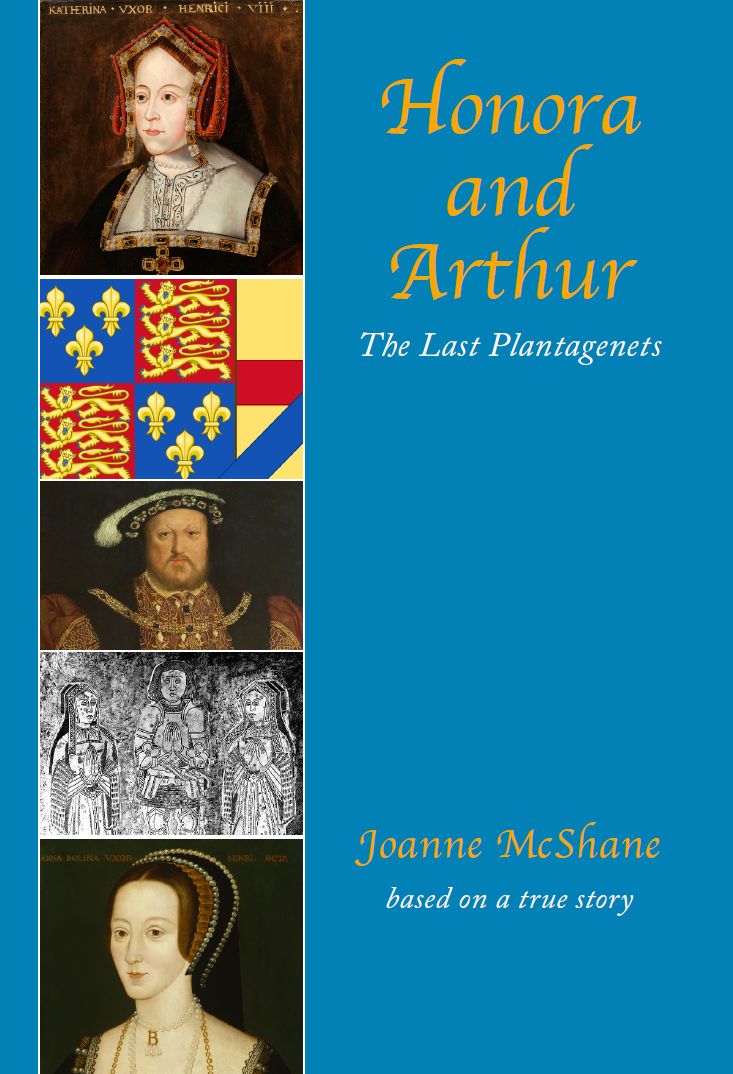
Honora and Arthur - the Last Plantagenets
At the age of 18, Honora Grenville, daughter of a wealthy Cornish landowner, is swept off her feet by Arthur Plantagenet, the handsome, illegitimate uncle of Henry VIII. Since childhood, her dreams have been of a handsome
gentleman who would whisk her away to live in far-off palaces and to wear fine clothes. Now, in Arthur Plantagenet, it seems that her dreams are about to come true.
Alas, it is not to be. Henry VIII orders Arthur to marry Elizabeth Dudley Grey, Viscountess Lisle, and poor Honora is cast into an abyss of despair.
Whilst still trying to put Arthur from her mind, she reluctantly marries John Basset, a Devonshire widower twenty-eight years her senior.
After thirteen years of what turns out to be a tranquil and fruitful marriage, John Basset dies and Arthur Plantagenet, also recently
widowed, re-enters Honora’s life. The passion, which has never died for either of them, is rekindled in an instant. They marry,
and she leaves Devon to begin her new life as a grand lady at the court of Henry VIII.
But the times are changing as Henry seeks to
divorce Catherine of Aragon and marry Anne Boleyn.
When King Henry orders Arthur to take on the role of Governor at Calais, the couple find themselves at the centre of the fast-changing and tumultuous political climate of the English Reformation.
That which began as a dream turns into a terrifying battle for survival.
Hi Jo - Just finished your book, it is brilliant, I have so enjoyed it and looking forward with great anticipation to the next one.
Reviews...
Amazon review:
Well researched and beautifully written
Honora and Arthur takes you back in time to experience life as it would have been for a woman of status in the turbulent Tudor times. The evocative text paints such a strong picture in your mind that you feel as though you are spying through a window as this true story unfolds. The tale is gently told and suitable for all ages and stages. For those that love history, and a good love story, this is a 'must read'.
Chris McShane
5 Stars - And they said history was boring. You will not be able to put this book down.
What an amazing book. A superbly entertaining historical novel, that brings the characters and the era to life.
I found it very difficult to put this book down.
It is very difficult not to become emotionally involved with the fortunes of the many characters portrayed.
Katrin Schlattmeier
5 Stars - A thrilling read about a fascinating person, full of historical facts and information.
I have devoured the novel. I bought it in a rush, and thought nothing at all about it being written in English.
The story is, however, written so grippingly that one really forgets the language in the reading of this exciting family story.
I have at the same time, learned very much about British history. I can warmly recommend this book and look forward to another book by Joanne.
London-Nanny - (Amazon reader)
5 Stars - Superb research, I could not put this down...when is the next book?
Nothing to dislike, the like was in the content of the book, well researched in immaculate detail. If you are a fan of phillipa Gregory, this book fills in the details of many characters in her books, once you have read Joanna’s book, lady lisle comes to life in a way that this does not happen in pg books.
LEO EVANS - (Amazon reader)
5 Stars - A good read
A good story, based on actual events. Well-written, and holds the reader's interest throughout. The writer has obviously done a lot of research into Tudor times, and the characters and their lives really 'come alive'.
David Hartland - (Amazon reader)
5 stars - A great read, i didn't want to put it down. It brought that period of history alive from a different perspective. I have always loved the Tudor period, but this book brought the real problems of living in those difficult times to life.
I am looking forward to Joanne McShane's next book.
Amazon reader
4 Stars - A pacy read, this book tells the story of the life of a woman who lived through tumultuous times.
Obviously well researched and based on fact, the book is a personal interpretation of the life of Honora who was close to and sometimes drawn into the dangerous machinations of the royal courts in and around the reign of Henry VIII.
Lillias
Joanne McShane
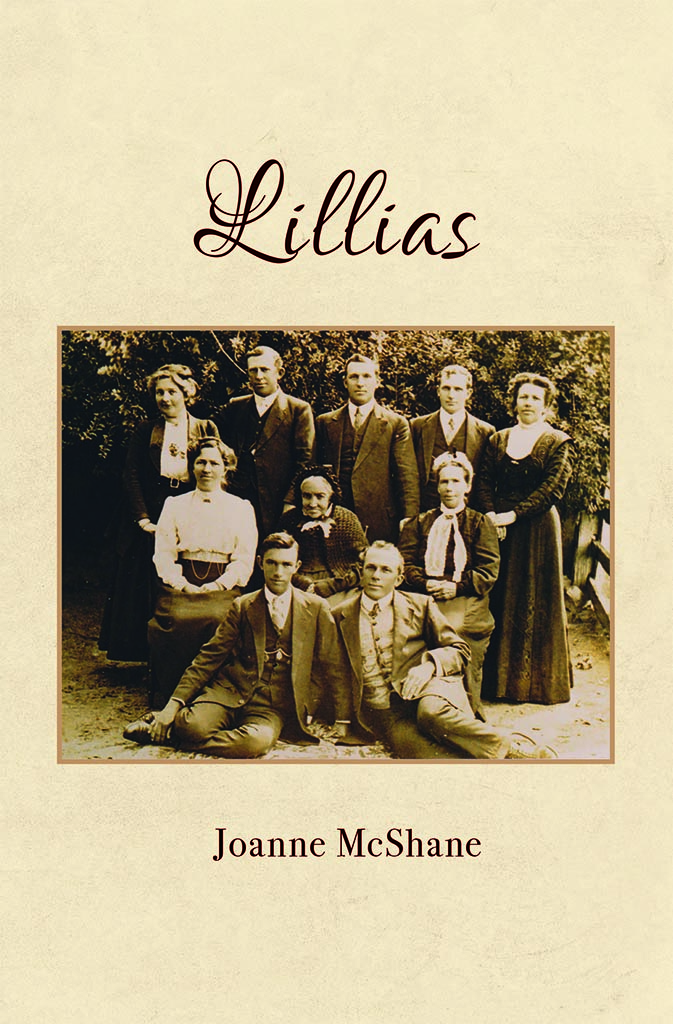
Lillias Hepburn’s life spanned ninety-six years from 1817 until 1913. It was a full life with more than its fair share of ups and downs. But there is more to Lillias’s story than simply the details of her own life, for her very existence was due to a strange combination of events. The only clue to these events was contained in a preamble which her father, Robert Hepburn, wrote to his will.
The Preamble to the will of Captain Robert Hepburn RN (1782-1866)
This is the last Will and Testament of me Robert Hepburn of Roy’s Hill in the District of Fingal in Tasmania Esquire (Lineal descendant by my father Captain Hepburn of the family of Hepburn of Keith East Lothian Scotland, and by my mother Mary Ann Roy, great grandson of Rob Roy McGregor, and by my grandmother Isabella Princess of Diabenti, daughter of the King of the Koromantic Nation of the Gold Coast of Africa I am Prince of Diabenti Lineal descendant of the King of that nation in Africa.)
For the historical details of Lillias’s life and the lives of the other people featured in the story I have used information available online and in historical documents. The rest is conjecture. It is a story, not a historical document.
Eve Schumann
I want to thank Joanne McShane for this beautifully written escape into another era. A breath of fresh air from our current pandemic reality. This book was masterfully written and researched. The author's talent proved itself by the hold and engagement it took of my mind, while making me feel as if I were right there, witnessing the story and experiencing the events. Wonderful way to hit the pause button in this nutty reality we're all sharing. Thank you, beautiful Joanne. You're a true gift.
Cynthia Brock
Loved the book. Humanity depicted as it should be lived. All its diamonds and warts on show. Power, fear, compassion and abiding love and trust. Wonderful research and engaging writing. Thank you, Joanne.
Reviewed on Amazon Australia on 23 November 2020
I found this historical novel very difficult to put down, I became totally engrossed with the lives of our family ancestors. Joanne McShane’s research has once again produced amazing results, and her interpretation of the day to day lives of all these characters, who together form our family tree, gives the reader a wonderful grasp of how their achievements and failures have influenced the lives their descendants.
★★★★★ Lidwina Taylor, 25 May 2021
Great read!
I really enjoyed reading “Lillias”. The characters were very real and engaging.
It gave such a vivid insight into the migration stories of people from Ireland, England, Africa, and Jamaica who ended up in Tasmania Australia.
★★★★★ EmJay, 24 May 2021
Loved the putting some flesh on the bones of my ancestral relations both Wood and McShane.
Thank you for your wonderful work
★★★★★ Jeannie, 10 June 2021
Wow, what a delight to read such an extraordinary history.
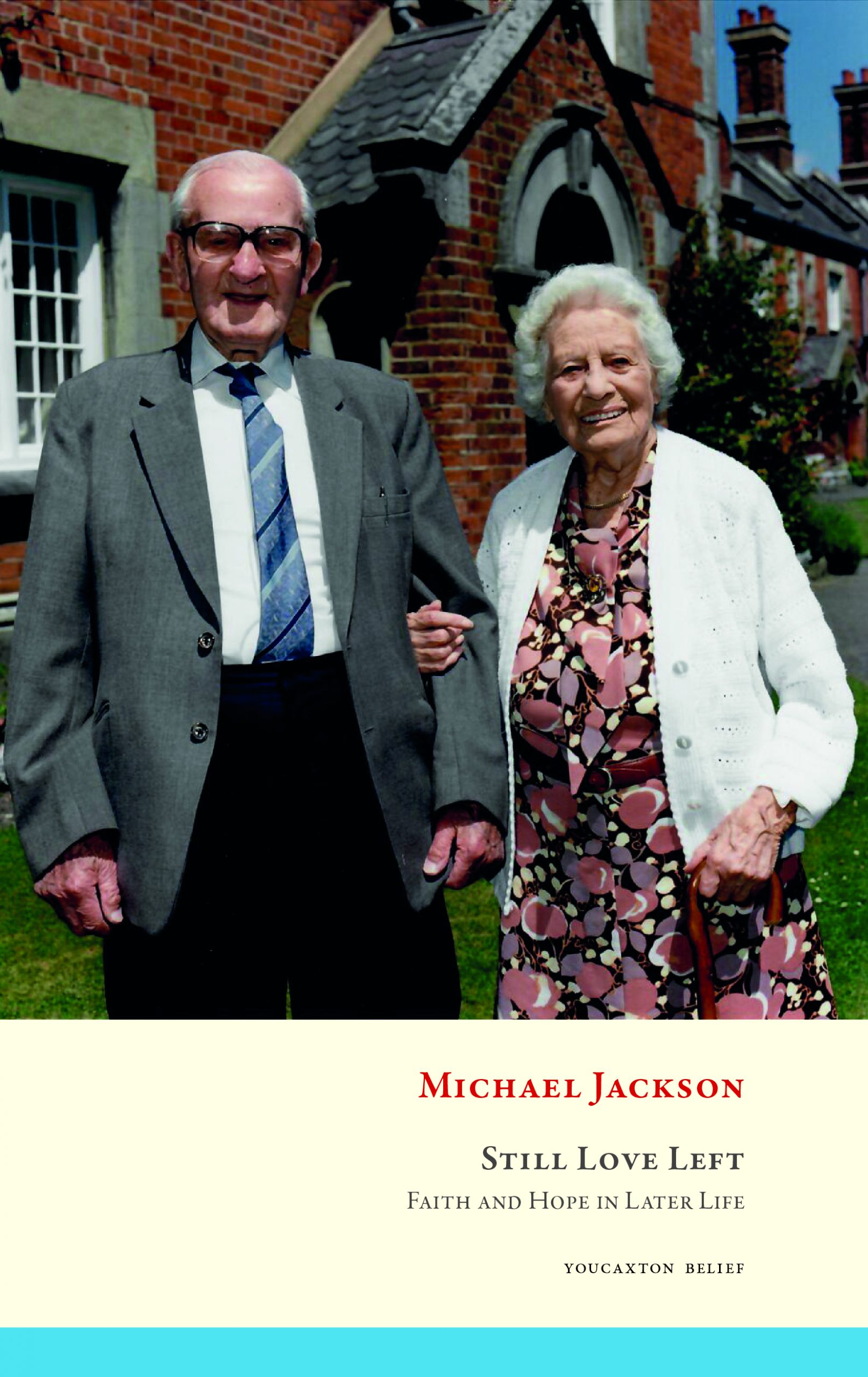
Still Love Left will help readers embrace old age in ways that strengthen their faith and help them build a deep sense of hope in later life.
In this life-afirming work, Michael Jackson draws inspiration from poets, writers and Christian theologians in order to explore his theme of ageing and spirituality and he does this with great empathy, drawing on a wide range of literary sources and comparing perspectives of past, present and future.
By using these different lenses he is able to demonstrate the spiritual gains which help us to approach old age positively and how we can develop the qualities which most exemplify a fulfilled old age. He melds many years’ experience of working with older people with current thinking on the subject, providing an exploration of the spiritual dimension of ageing rooted in the Christian faith.
The Right Reverend Paul Bayes, Bishop of Liverpool Michael Jackson brings a unique and distilled wisdom, born of long reflection on rich experience, to this subject. His book is clear-eyed, honest, unsparing and luminously hopeful. I recommend it highly to any who want to learn how to live more fully as the years pass.
Reviews...
The Reverend Canon Dr. Peter Lippiett, Former Spirituality Advisor for the Diocese of Portsmouth
This is a stunningly good book. It is rich, humane, and life-enhancing, redolent with wisdom, compassion and flashes of humour. It demonstrates how to ‘hone hard experience so that it becomes a pathway to wisdom’. Above all, in the face of contemporary views of the bleakness of old age – unflinchingly addressed, in no way dismissed or romanticised – it really positively encourages hope. Michael Jackson not only informs and stimulates, but benefits his readers. This careful, timely book is a blessing. Perhaps it may even become a classic.
Graham Hawley in Plus, the quarterly magazine of the charity Christians on Ageing:
The author has produced a very readable book full of practical wisdom from his keen observation of older people and how the ageing process affects older people and their faith over the years. He draws widely from theological, spiritual, ageing literature and literary sources in illustrating his message, but this is always in a very readable and practical format….
The Bishop of Leeds (The Rt. Revd. Nicholas Baines), in his Foreword to the book, says of the author’s work: ‘He challenges some of the popular misconceptions and looks differently at what many of us will one day experience for ourselves. And he does this with a generous and uncomplicated spirit. It is a beautiful book.’
I agree with him and commend it to our members. Buy it and be encouraged and challenged.
Debbie Thrower, Pioneer of Anna Chaplaincy for Older People and Canon Emeritus of Winchester Cathedral
I’ve been waiting for just such a book as this. I knew it was coming because I’ve worked with Michael Jackson co-leading retreats and training days on
the opportunities and challenges of growing old. Now, we have an abundance of good things gathered for us to read and reflect on. I shall plunder his
book shamelessly for so many examples to help myself, and others, regard ageing realistically and excitedly as an adventuresome path to maturity.
Andy Stoller, Hampshire and Islands AM
'The Friend', National Quaker Magazine
This 100-page book is an essential for our ageing Society. It will be an invaluable asset to our elders and ‘caring and supportive Friends’ or just anyone who is approaching later life with some trepidation. It changed my view from fearing the coming years to one of being positive, hopeful and still being able to make the most of the on-coming stages of life, facing whatever it may bring. It is in no way a heavy read despite its subject which is approached with empathy, humour, compassion and wisdom.
Still Love Left helps us come to terms with facing our own lives and personal history. The myriad of losses and ‘little deaths’ are explicitly covered, from having to down-size and part with familiar possessions to the loss of our individual identity and the inevitable and painful bereavements of friends and loved ones. Facing declining health is challenging too, but Michael demonstrates how small gestures and acts of kindness can bring comfort, blessing and solace and through these and prayer it is possible to come closer to God.
A Myth that was Lost for Centuries, Searched for by Generations but never Discovered.
When the Earl of Halfreton finds that a priceless Gold Cross belonging to the family for generations has gone missing, he is set upon by thugs trying to steal the Cross. He calls his brother for help. When the British Secret Service and then the Israeli Secret Service become involved things start to look very serious.
A young woman, an Israeli agent, is abducted by MI5 because she posed a threat to the Earl. The two brothers sail to Malta in pursuit of answers. The story wheels to its conclusion in a scintillating, fast-moving whirl of activity.
Jack Shortman was born in 1937 in Shrewsbury, Shropshire. His mother died soon after his birth and he was brought up by his uncle and aunt.
At the age of fifteen he left school and took up an apprentice as a bricklayer, until the age of eighteen when he had to enlist as a National Serviceman.
He was posted to Carlisle in the Royal Armoured Corps and was then rebadged to the Royal Horse Guards. He went with his regiment to Cyprus from 1955 to his demob in 1957 and then moved to Oswestry, Shropshire, where he met and married his wife Mary. He worked for a short time on the local railways but in 1960 he re-enlisted with his old regiment and served for two years in Knightsbridge on Her Majesty's duties. He was posted to Windsor and then to Germany until 1966.
In 1969 the regiment amalgamated with the Royal Dragoons and Jack joined the Life Guards, the other household cavalry regiment. He served with them in Windsor and Germany until his final demob in 1978.
When you have produced the final draft of your book, it is always advisable to have the text read and checked by a professional editor or proof reader.
You may have friends that are willing and competent to do this and we can advise you on the type of editing that is required.
We can offer four levels of editing as well as proof-reading.
You choose which, if any, are appropriate in your case: 1. Edit of sample pages and short report (£30)
We will edit a few pages to highlight editorial issues so that you can look for similar problems throughout the book.
This will reduce the amount of further copy-editing required when the book is finished. 2. Broad structural editing and criticism (£5 per thousand words)
A structural review is particularly relevant for works of fiction.
The structural reviewer will address the following main areas and produce a short report for the author ” Read More 3. Copy editing (£10 per thousand words)
A copy-editor takes a close look at your text, line by line, with an eye to grammatical errors, repetition, inconsistency and lack of clarity. The copy editor will make changes to the text, with suggestions for rewriting, grammar, and punctuation. When you receive the edited version, you have the final choice about accepting of rejecting the individual changes. 4. Proof Reading (£8 per thousand words)
Proof reading is a line-by-line check that the book is ready for publication. Proof readers will make small corrections for punctuation, grammar and spelling but they will not make significant changes to the text.
A proof reader will identify any significant issues and add comments to the text so that you can make those corrections yourself. 5. Consistency Scan
If you decide your book doesn’t need a full proof reading, we offer an electronic scan to search for common errors and inconsistencies. This looks at issues such as inconsistent spelling and inconsistencies of hyphenation and capitalisation.
We can also identify inconsistencies in the spelling of proper names. 6. Cover text
The quality of the text on the cover is very important as it indicates the quality of the writing in the book.
The title, sub-title and back-cover blurb are all important elements and we can work with you to make sure that these are correct and effective.
Copy Edit
Copy-editors get the raw material into shape for publication i.e they edit the copy.
When they have finished, the designer can lay out or typeset the book and produce a proof.
It is quite normal for the author to make additional changes after a book has been copy-edited.
Working through the material, the copy-editor may identify errors in spelling, punctuation, grammar, style and usage, but also very long sentences and overuse of italic, bold, capitals and exclamation marks.
They should correct or query doubtful facts, weak arguments, plot holes and gaps in numbering.
In fiction, they should also check that characters haven’t changed their name or hair colour, look for sudden changes from first to third person among other things.
The Copy-editor is not a proof reader and should not be expected to find all of the errors in the text particularly if the text is badly written to start with.
This is the job of the proof reader.
The final proof should be checked by a proof reader or an experienced reader friend before going to print.
It is almost inevitable (and acceptable) to miss a few errors which can be corrected in a later edition.
Proof Reading
Proof reading is a line-by-line check that the book is ready for publication.
Proof readers will make small corrections for punctuation, grammar and spelling but they will not make significant changes to the text.
A proof reader will identify any significant issues and add comments to the text so that you can make those corrections yourself.
If you have decided to complete this stage of the process yourself, we will send a detailed check-list to help you.
We ask you to try and ensure that the book is completely ready before we start the layout.
Once the layout has started, we expect that you might want to to make a small number of amendments but
if there are a significant number, we may need to charge for the extra time it takes to change the layout
so best to discuss this with us first.
Structural Review
In fiction, the main areas that a structural editor will address are:
Plot: Does the plot make sense? Is it believable? Is it satisfying or does it leave the reader frustrated? Themes: Are the themes effectively handled? Are there so many that the book lacks focus? Do they interfere with the plot or complement it?
Characterisation: Are your characters well developed and believable? Are they cast in a role that fits their personality? Do they sometimes behave out of character? Point of view/voice: Is the voice consistent or is it sometimes confused? Is the voice authentic? Are you using too many or too few POVs? Pace: Does the plot move forward at an appropriate pace? Should you cut that preface? Should the action happen sooner or should the tension build more slowly? Dialogue: Do your characters sound real when they speak? Is your dialogue cluttered with adverbs and beats? Do you use clunky dialogue to move the plot forward? Flow: Is the narrative interrupted by dead-ends and tangents? Is there so much back story that the main plot is dwarfed? Are there missing plot points that would give the narrative greater integrity?
In non-fiction, the principle is the same, but the specific issues are slightly different:
Thesis: Is your thesis relevant? Is it clearly defined or is it lost among marginal issues? Exposition: Are your arguments clear and cogent? Are they well researched and properly supported? Do they have a clear relationship with your thesis? Content: Are all the necessary topics sufficiently dealt with? Are the chapters weighted correctly? Is there superfluous content? Organisation: Is the information organised logically? Are tables and illustrations used appropriately? How many levels of subheads do you need and how should they be arranged? Tone: Is the tone appropriate for the audience? Do you need to eliminate jargon? Is the text accessible? Pace: Are there passages that are bogged down in detail? Do you spend too long on detail irrelevant to the main thesis? Are there areas that need further exposition lest they be skipped over?
Cover Text
The quality of the text on the cover is very important as it indicates the quality of the writing in the book.
The title, sub-title and back-cover blurb are all important elements and we work with you to make sure that these are as effective as possible.
Consistency check
If you decide your book doesn’t need a full proof reading, we can run an electronic scan to search for common errors and inconsistencies.
This looks at issues such as inconsistent spelling, hyphenation and capitalisation.
It also checks for consistent formatting of numbers and dates as well as undefined abbreviations.
Full Script Edit
The script that you deliver to us will probably constitute what the industry would classify as the ‘Initial Rough Draft’, i.e. a full screenplay written without any other professional input or advice, and probably without a great deal of rewriting. We work through your draft, line by line, scene by scene, and come back to you with a comprehensive set of notes from which you can then work towards the official ‘1st Draft’. Some of our notes will be broad and general, dealing with such areas as the overall shape and structure, pacing, plot and character development; others will be far more specific, with corrections, clarifications and suggested cuts etc. It is of course entirely up to you whether or not to take these suggestions on board, and to what extent.
Subsequent Script Edit
It is very normal and generally beneficial for the script-editing process to go through at least a couple of cycles
i.e. the rewritten draft to be worked through once again by an experienced script practitioner – though this would be entirely at the discretion and behest of the writer.
Ongoing Support
We aim to make your self-publishing venture an enjoyable and rewarding experience.
Publishing is a complex business and we treat every book as a separate project.
We explain all of the stages at the outset and we manage the project schedule for you. This will include all of the expert services you have requested for editorial, design, printing, distribution and collection of royalties, keeping in close contact with you throughout the process.
You will be allocated a project-sheet on the YouCaxton website so that you can monitor progress and ensure that all stages are properly completed.
If you would like to see an example of a Project-Sheet…
go to My project on the menu and enter…
Username: Sample
Password : welcome.