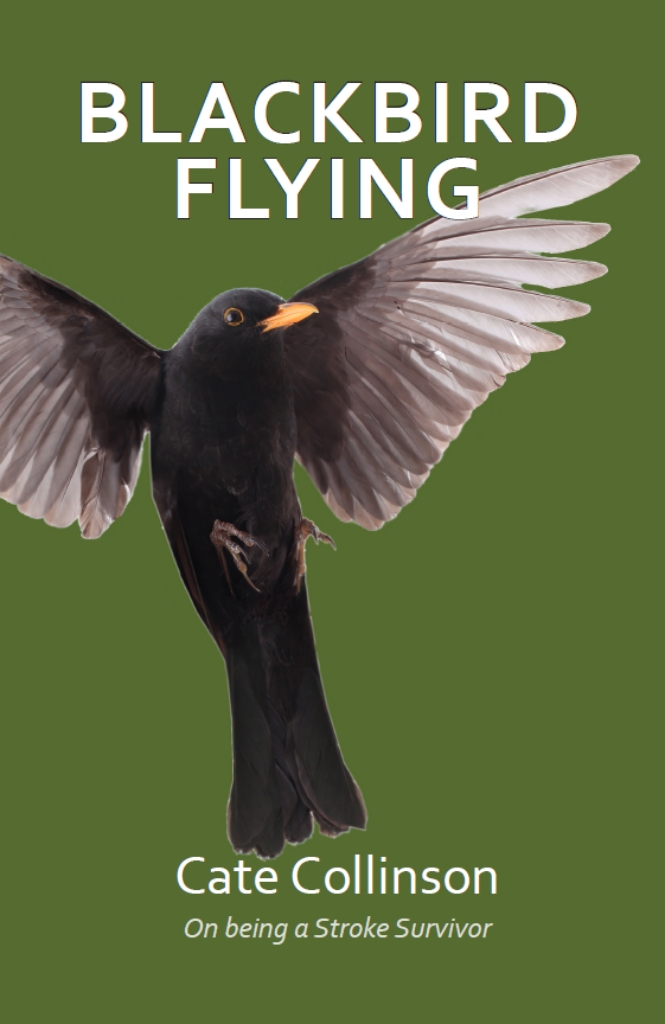
The events or, to be precise, the event that took place on the 9th June 2013 changed my whole life without question, changed it physically, psychologically, and emotionally in every way.
I would never be the same again!
This is the story of a journey back from the brink, a journey that I feel I was destined to take. I have tried to tell what I saw, and felt along the way, from the darkest of my days, staring death in the face, unsure of survival, to setting almost impossible goals; from talking to God and to my own inner demons; from the intensive coronary care unit to the high mountains of the French Alps.
It was a hell of a ride and the toughest of my life. It truly was a mountain to climb in every sense of the word.
“If only one person reads my story and takes inspiration from it, then my journey was not a wasted one.”
Two English couples, holidaying in Andalusia with their daughters, experience the nightmare that every parent dreads – one of the girls (Lucy) disappears.
Despite an extensive police search no trace of her is found and her distraught parents return to England.
But within a secretive convent beside Lake Lucerne, Lucy is being groomed for adulthood, soon to travel to England to live with the man described as her adoptive-father – the shadowy Aamir Kashani – in a luxury apartment in the City of London.
Lucy determines to trace her real parents and devises an ingenious escape plan, to free her from her captor’s grasp.
Twins by Professor David Waugh
When Daniel looks at his reflection in a mirror in a shop he notices something unusual – his reflection is not dressed the same as he is!
This book tells of the adventures which Daniel and his double, James, have when they decide to swap lives.
There are twelve stories: one written by David Waugh, and eleven others written by year five and six pupils from Our Lady and St Joseph, Brooms RCVA Primary School. David Waugh is Associate Professor at Durham University School of Education. He has written more than forty text books for primary teachers, as well as six novels for children.
David is Professor of Education at Durham University School of Education.
He has extensive teaching experience in schools and universities. Having taught in four schools in East Yorkshire for fourteen years, latterly as a deputy headteacher, he took up a post as lecturer in English for ITT at University of Hull in 1990. He went on to lead the PGCE course, which achieved successive "outstanding" grades from Ofsted in 2004 and 2007, and became Head of Department of the Centre for Educational Studies in 2005.
In 2008, he became one of two advisers for primary ITT for the National Strategies, working with universities and school-based training providers throughout England. His role included professional development for tutors and teachers; working with trainee teachers; organising and presenting at conferences; producing e-learning resources; leading projects on literacy, inclusion, and mathematics; and liaising with other agencies, including TDA, UCET and DCSF.
In 2013, David was awarded a faculty prize for his outreach work in Primary English, which includes delivering lectures to students in schools, followed by students working one-to-one with pupils putting theory into practice.
The Roaming Revelator
Dan is a man at a fork in his life looking for answers, debating if his life has been worthwhile. Troubled by his past demons which torture him mentally and drive him to problem after problem.
As he tries to outrun his past and find his future, the history of troubles are chasing him down - he must now face them head on.
A life's journey played out in front of your eyes with all the twists and turns in the search for answers. His only true friend is his motorbike, carrying him to his mental escape, until his revelations bring back the pain.
Dan has suffered the pain that drives him to be destructive and despise the past, present and the future of the modern world.
As Dan twists and turns through this winding road of life, he flees aboard his one true friend, literally trying to outrun his past and silence it, lost in the wail of exhaust noise from his motorbike.
Mark Huck was born in the 1970s, growing up in the fast paced 1980s living an adrenaline filled life, with sports and fast cars; as his life became more complex he found his solidarity in the simplicity of the open road and the world of motorbikes.
After leaving school with barely any qualifications his love of engines led him to become a vehicle mechanic, a love that would never leave him, drawing him more and more to the world he now lives in; as he moved into the world of teaching mechanical studies, he put right the poor education by completing as many qualifications as he could.
As children came a long, responsibility beckoned, life was happy and quaint, but the desire for adrenaline always bubbled. Now with all 3 children having jobs and lives of their own, Mark and his wife are living a fast paced adrenaline filled life and a desire to escape the “norms” of society.
Roaming Revelator is Mark’s first book of a trilogy, a story inspired by real life stories and events that have only happened in the depth of imagination.
Reviews...
5 out of 5 stars
Hard to put down.. you want to keep reading..
Absolutely love this book ..it had my attention from start to finish
Now I’m waiting impatiently for the next book
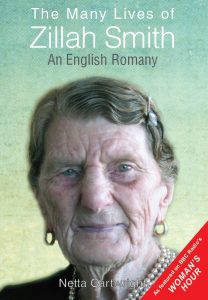
Peggy was born on the eve of the Great War and lived well into the 21st century. She grew up in rural Britain when horses jostled with cars on the streets and the country had not yet broken with the values of the previous century. Many of her experiences were shared with other women of the time. She saw her young husband leave Britain for the next war and did not meet him again for several years. She gave birth to her children when peace was new but England was a ravaged country with rationing still in place.
Peggy also experienced difficulties and tragedies that most of us are spared. She faced these challenges in her own unique way with the help and support of her sister and friends and carved out a life for herself and her children that was very different from that of her younger years in Cheshire. Her privileged childhood endowed her with the knowledge of her own worth, but equally the understanding that every individual is entitled to a good and fulfilling life.
Sue Wincent-Dodd was brought up in Cheshire and Shropshire soon after the end of the 2nd World War. She studied at the University of Newcastle-upon-Tyne before teaching English in Germany, France and Sweden. She moved to Sweden for good at the age of 28 to work for the Swedish International Aid Agency (Sida). Having retrained in Sweden as a librarian, she worked and taught at the University of Uppsala.
Jonas inherits an old cigar box from his parents containing relics which transport him back to his childhood.
However, it also contains some sinister items – a page torn out of his mother’s 1945 war diary, as well as his father’s 1939 ciné film and an undeveloped film roll.
What will these sources reveal? And where is the rest of the diary? Who has hidden it all these years and why?
Librarian Bettina reluctantly helps Jonas to discover the shocking truth about his parents’ role under the Nazis.
But what secret is she hiding from Jonas?
Will their love affair endure?
Reinhard studied English Literature, Linguistics and Politics and taught at the universities of Bristol, Palmerston North (NZ), Middlesex and Cambridge before joining the Foreign & Commonwealth Office where he spent the latter half of his career.
Reinhard writes full-time now. He also writes short stories and poetry and has now embarked on his second novel. He continues to live in Cambridge.
Online Bookclub - Official Review: My Parents' Darkroom by Reinhard Tenberg
4 out of 4 stars
"I don't know what you did in the war, Dad. I was always afraid to ask--all of us were--and now it's too late. However, I'm certain the war left deep scars on you--not just physically, but it changed who you once were. And, since you are a part of my history, I need to find out more about you."
After his mother is placed into a care home, Jonas inherits a wooden cigar box containing relics from his parents' past. The box includes some trinkets that trigger memories from his childhood, but when he discovers a 1945 page from his mother's war diary, an undeveloped film canister, and 1939 ciné film, Jonas realizes how little he knows about his parents' history. In the suspenseful historical fiction, My Parents' Darkroom: Developing the Past, by Reinhard Tenberg, Jonas tries to unravel the family secrets surrounding his parents' involvement under the Nazis during the war. In his search for answers and the rest of his mother's missing diary, he falls in love with Bettina, who seems to have her own secrets. Can their love survive the shocking truth?
Not only is the 189-page book well written and flawlessly edited, the author skillfully pairs strong characterization and a suspenseful plot. The page-turner is written in the first-person narrative from the perspective of Jonas, a professor at a London university, who teaches post-war German history. As is often the case with brothers, Jonas and Helmut are polar opposites. Jonas is compelled to find out the truth about the degree of his parents' involvement with the Nazi Party, while Helmut prefers to let sleeping dogs lie. However, both brothers are relatably flawed and believable. When Bettina enters the story, the author reveals layers of her character over the course of the story.
I most liked the suspenseful aspect; Jonas was so driven to find out the truth about his parents that it elevated the plot to a mystery that was hard to put down. Each time a question was answered; another took its place. Why was the page torn from his mother's diary, and where is the rest of it? Who are the people in the photograph with his father? Does Bettina know more than she is letting on?
There honestly isn't anything I disliked about the book. Although I tend to prefer mysteries with tidy endings wrapped in a bow, I found the not-so-wrapped-up ending satisfying, as it prompted the hope of a sequel. I'm pleased to rate the book 4 out of 4 stars. I recommend it to both fans of historical fiction and suspense lovers. However, I caution sensitive readers regarding references to the Holocaust, although they are not graphic in nature. Due to the subject matter, profanity, and a few sexual scenes, the book is intended for a mature audience.
Posted by Cecilia_L (Member of the Month) 08 Jul 2019
Women Misbehaving
Five friends, too many lies, and gossip that rocks a community
All Minty wants is an easy life but it seems that’s too much to ask. With the shadow of her baby’s death darkening her days and a growing dependence on alcohol she is spiralling out of control. Who can help her to get her life back on track? Carol is too immersed in her own struggles after a humiliating divorce, and the lovely Bridie is just too naïve and innocent to know what’s really going on. Sarah can’t help, she’s obsessed by sex and her longing to have a baby. Jules, the cleaner who comes and goes with the stealth of a cat, thinks she knows all the town’s secrets but it turns out she’s not as smart as she thinks she is.
In a small town little lies can grow out of control, and when secrets are revealed friendships and lives can be changed forever.
The Smuggler's Fingers
The Smugglers’ Fingers, a satire, which often descends into farce and outrage tells the story of the village of Plompley and its population of eccentrics who suddenly find themselves under siege from ‘Green’ energy developers who, in cahoots with a local landowner and corrupt council officials decide they’re going to build a giant wind farm in the heart of the community. The villagers mobilise but when egos and grudges tear apart the campaign groups and it becomes clear whose side the council is on, the hapless local anarchist takes the law into his own hands and the whole village resorts to ever more desperate methods, from the unorthodox to the downright dangerous. Meanwhile the wind farm developers, eager to jump on the subsidy gravy train, use every legal trick in the book to get their way, and a few not so legal, employing violence and vandalism when they deem it necessary. As the battle rages on through a wet and dismal summer the strain starts to tell on both sides and the services of the local Magistrate’s Court and general hospital find themselves increasingly in demand. Observing and commenting wryly from the wings are an ambitious local reporter and a disgraced city banker, both in pursuit of the same story. Meanwhile Mother Nature broods in the background poised to finally reveal the real secret of The Smugglers’ Fingers.
Paul Webb was born in 1959 in Berkshire. A somewhat rebellious grammar school boy and university refusenik he went straight from school into the property business where he spent most of the next 25 years running his own company in south London. During this time he also got involved in the rough and tumble of local politics, at one point attracting a libel writ from one of the major parties.
In 2000, after re-marrying and embarking on a round the world sailing race - jumping ship in The Philippines with ‘...better things to do.’ - he and his wife, Ruth decided on a radical lifestyle change and early retirement. Never comfortable in the south-east they started edging north via a series of farmhouse ‘projects’ firstly in Shropshire and then the Welsh Marches before settling on the edge of the Lake District.
They travel regularly, particularly to East Africa and southern Spain, while in Cumbria life revolves around the ‘3Bs’: boots, boats and books. Both Paul and his wife are keen fell and long distance walkers, they keep and sail a small homemade boat on the lakes and are avid readers and book collectors. They have three grown up children between them scattered round the world.
The Smugglers’ Fingers is Paul’s first book and with tongue firmly in cheek it draws on his personal experience of the property business, the internal workings of local councils and the wiles of would-be wind farm developers. It is of course a work of fiction and all the usual disclaimers apply.
Paul Webb is currently seeking an agent to represent him and promote his second book.
Reviews...
Martyn Amazon Reader - 5th August 2019 5 Stars - Hilarious read
What a refreshing change from the usual crime/detective novels.
A right rip roaring yarn that had me laughing out loud!
Thoroughly enjoyed it and can’t recommend it highly enough.
MRS ROSEMARIE D GUILOR Amazon Reader - 22 July 2019 5 Stars - An absolutely hilarious adventure
A hilarious satire of rural life, planning authorities and modern politicians that had me laughing out loud as I read this book - a sensation not experienced since reading Tom Sharpes early novels about Wilt.
Unnervingly plausible and realistic, and most sceptic of current politicians, landowners and developers its storey line moves quickly with hilarious results. I will keep this on my bookshelf to be reread. Let’s hope for a sequel
This is a book I will keep on my shelf to read again.
***** Nellie - 29 May 2019 5 Stars - Hysterically funny
Grab yourself a glass of wine, turn off your phone sit back and read this book. You will giggle knowingly and laugh out loud.
Following the shenanigans of country life as a village tries to stop the development of a wind farm. Although the book is funny it relates a very important message about the tensions for sustainable energy, local corruption (allegedly!) and business.
***** Amazon Reader - 25 May 2019 5 Stars - Eccentric villagers cause hilarity and chaos in this wonderfully observed satire.
I loved this book! If you are looking for a rollicking ride and plenty of laughs , then I would thoroughly recommend this book - a great holiday read. The plot moves quickly, and the antics of the villagers of Plompley are hilarious as they band together to foil plans of a local wind farm.
When you have produced the final draft of your book, it is always advisable to have the text read and checked by a professional editor or proof reader.
You may have friends that are willing and competent to do this and we can advise you on the type of editing that is required.
We can offer four levels of editing as well as proof-reading.
You choose which, if any, are appropriate in your case: 1. Edit of sample pages and short report (£30)
We will edit a few pages to highlight editorial issues so that you can look for similar problems throughout the book.
This will reduce the amount of further copy-editing required when the book is finished. 2. Broad structural editing and criticism (£5 per thousand words)
A structural review is particularly relevant for works of fiction.
The structural reviewer will address the following main areas and produce a short report for the author ” Read More 3. Copy editing (£10 per thousand words)
A copy-editor takes a close look at your text, line by line, with an eye to grammatical errors, repetition, inconsistency and lack of clarity. The copy editor will make changes to the text, with suggestions for rewriting, grammar, and punctuation. When you receive the edited version, you have the final choice about accepting of rejecting the individual changes. 4. Proof Reading (£8 per thousand words)
Proof reading is a line-by-line check that the book is ready for publication. Proof readers will make small corrections for punctuation, grammar and spelling but they will not make significant changes to the text.
A proof reader will identify any significant issues and add comments to the text so that you can make those corrections yourself. 5. Consistency Scan
If you decide your book doesn’t need a full proof reading, we offer an electronic scan to search for common errors and inconsistencies. This looks at issues such as inconsistent spelling and inconsistencies of hyphenation and capitalisation.
We can also identify inconsistencies in the spelling of proper names. 6. Cover text
The quality of the text on the cover is very important as it indicates the quality of the writing in the book.
The title, sub-title and back-cover blurb are all important elements and we can work with you to make sure that these are correct and effective.
Copy Edit
Copy-editors get the raw material into shape for publication i.e they edit the copy.
When they have finished, the designer can lay out or typeset the book and produce a proof.
It is quite normal for the author to make additional changes after a book has been copy-edited.
Working through the material, the copy-editor may identify errors in spelling, punctuation, grammar, style and usage, but also very long sentences and overuse of italic, bold, capitals and exclamation marks.
They should correct or query doubtful facts, weak arguments, plot holes and gaps in numbering.
In fiction, they should also check that characters haven’t changed their name or hair colour, look for sudden changes from first to third person among other things.
The Copy-editor is not a proof reader and should not be expected to find all of the errors in the text particularly if the text is badly written to start with.
This is the job of the proof reader.
The final proof should be checked by a proof reader or an experienced reader friend before going to print.
It is almost inevitable (and acceptable) to miss a few errors which can be corrected in a later edition.
Proof Reading
Proof reading is a line-by-line check that the book is ready for publication.
Proof readers will make small corrections for punctuation, grammar and spelling but they will not make significant changes to the text.
A proof reader will identify any significant issues and add comments to the text so that you can make those corrections yourself.
If you have decided to complete this stage of the process yourself, we will send a detailed check-list to help you.
We ask you to try and ensure that the book is completely ready before we start the layout.
Once the layout has started, we expect that you might want to to make a small number of amendments but
if there are a significant number, we may need to charge for the extra time it takes to change the layout
so best to discuss this with us first.
Structural Review
In fiction, the main areas that a structural editor will address are:
Plot: Does the plot make sense? Is it believable? Is it satisfying or does it leave the reader frustrated? Themes: Are the themes effectively handled? Are there so many that the book lacks focus? Do they interfere with the plot or complement it?
Characterisation: Are your characters well developed and believable? Are they cast in a role that fits their personality? Do they sometimes behave out of character? Point of view/voice: Is the voice consistent or is it sometimes confused? Is the voice authentic? Are you using too many or too few POVs? Pace: Does the plot move forward at an appropriate pace? Should you cut that preface? Should the action happen sooner or should the tension build more slowly? Dialogue: Do your characters sound real when they speak? Is your dialogue cluttered with adverbs and beats? Do you use clunky dialogue to move the plot forward? Flow: Is the narrative interrupted by dead-ends and tangents? Is there so much back story that the main plot is dwarfed? Are there missing plot points that would give the narrative greater integrity?
In non-fiction, the principle is the same, but the specific issues are slightly different:
Thesis: Is your thesis relevant? Is it clearly defined or is it lost among marginal issues? Exposition: Are your arguments clear and cogent? Are they well researched and properly supported? Do they have a clear relationship with your thesis? Content: Are all the necessary topics sufficiently dealt with? Are the chapters weighted correctly? Is there superfluous content? Organisation: Is the information organised logically? Are tables and illustrations used appropriately? How many levels of subheads do you need and how should they be arranged? Tone: Is the tone appropriate for the audience? Do you need to eliminate jargon? Is the text accessible? Pace: Are there passages that are bogged down in detail? Do you spend too long on detail irrelevant to the main thesis? Are there areas that need further exposition lest they be skipped over?
Cover Text
The quality of the text on the cover is very important as it indicates the quality of the writing in the book.
The title, sub-title and back-cover blurb are all important elements and we work with you to make sure that these are as effective as possible.
Consistency check
If you decide your book doesn’t need a full proof reading, we can run an electronic scan to search for common errors and inconsistencies.
This looks at issues such as inconsistent spelling, hyphenation and capitalisation.
It also checks for consistent formatting of numbers and dates as well as undefined abbreviations.
Full Script Edit
The script that you deliver to us will probably constitute what the industry would classify as the ‘Initial Rough Draft’, i.e. a full screenplay written without any other professional input or advice, and probably without a great deal of rewriting. We work through your draft, line by line, scene by scene, and come back to you with a comprehensive set of notes from which you can then work towards the official ‘1st Draft’. Some of our notes will be broad and general, dealing with such areas as the overall shape and structure, pacing, plot and character development; others will be far more specific, with corrections, clarifications and suggested cuts etc. It is of course entirely up to you whether or not to take these suggestions on board, and to what extent.
Subsequent Script Edit
It is very normal and generally beneficial for the script-editing process to go through at least a couple of cycles
i.e. the rewritten draft to be worked through once again by an experienced script practitioner – though this would be entirely at the discretion and behest of the writer.
Ongoing Support
We aim to make your self-publishing venture an enjoyable and rewarding experience.
Publishing is a complex business and we treat every book as a separate project.
We explain all of the stages at the outset and we manage the project schedule for you. This will include all of the expert services you have requested for editorial, design, printing, distribution and collection of royalties, keeping in close contact with you throughout the process.
You will be allocated a project-sheet on the YouCaxton website so that you can monitor progress and ensure that all stages are properly completed.
If you would like to see an example of a Project-Sheet…
go to My project on the menu and enter…
Username: Sample
Password : welcome.