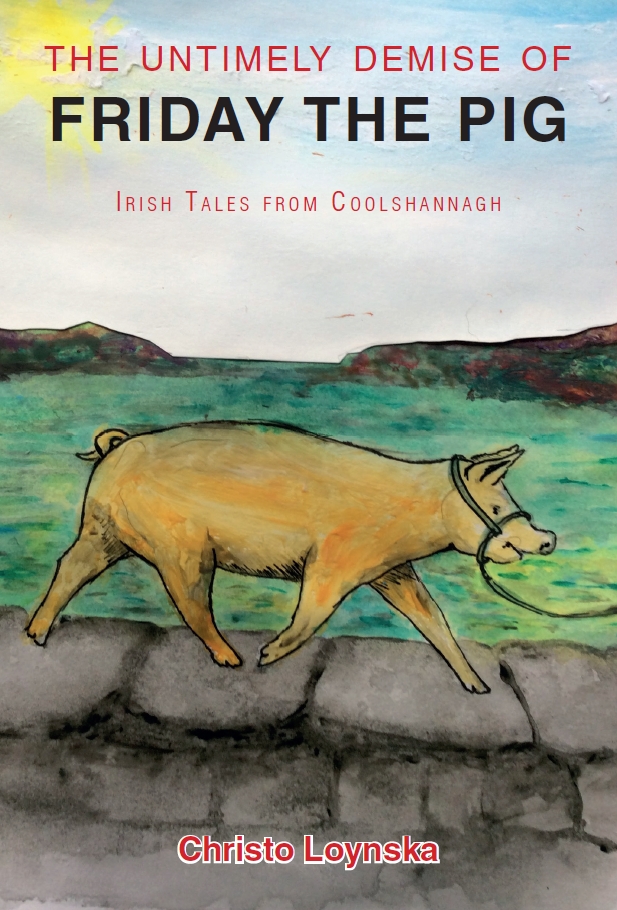
The Untimely Demise of Friday the Pig
Irish Tales from Coolshannagh
Coolshannagh is an ordinary Irish village situated on the coast halfway between Dublin and Belfast.
The villagers are pretty ordinary too; Father Joe, a clubfooted priest who likes to dance; Duffy the bar owner who runs a great pub; Stochelo a Gypsy bandolier and his mighty son Miquel; Eamonn McGarvey who loved his pet pig; Ludmilla the one handed Ukrainian Headmistress who escaped the anti-Jewish pogroms of 1881; Mary-Ellen the village elder, wise-woman, and nurse in the Crimean War; Vincenti Quilto the Italian Matchmaker and teller of unlikely fables; Father Dan, a guilt ridden whiskey priest decorated for bravery in the First World war and The Diabhal (Devil) also comes calling intent upon mischief.
So, just an unremarkable Irish village going about its daily business; hum-drum times punctuated by birth, death, love, not much hate (except the Devil for whom hate is his only purpose).
And every word is true…
at least according to my father who came from Coolshannagh and passed these tales on!
Reviews...
Debbie Turfrey - Authorised buyer
5 out of 5 stars Beautifully written Irish tale This is a wonderful book, a whimsical yarn which flows beautifully!
In true Irish story teller style, the author weaves the threads of the story together.
I would highly recommend it to anyone!
Twins by Professor David Waugh
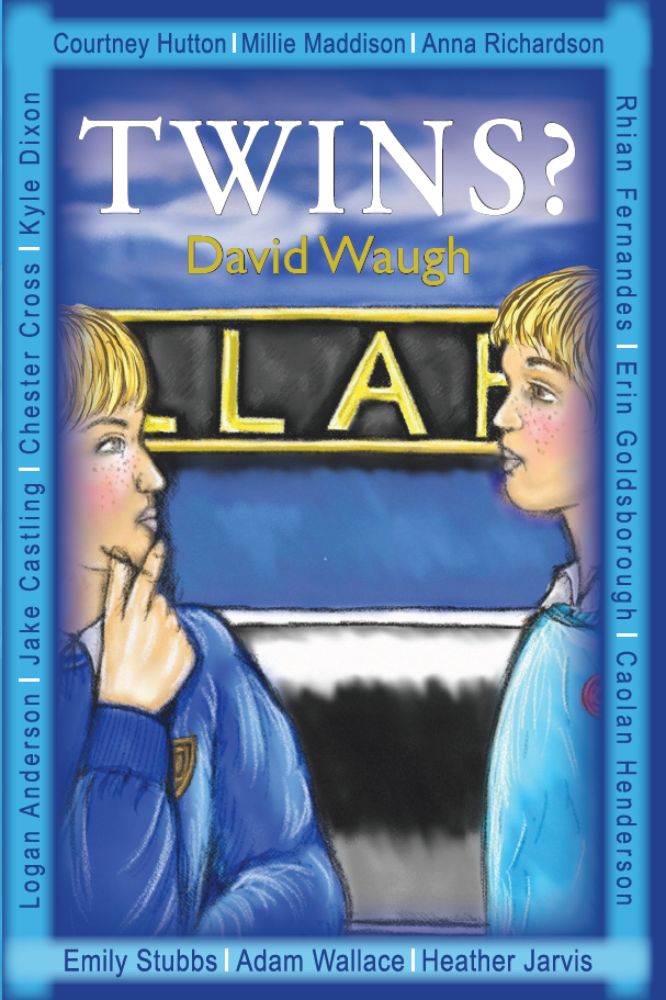
When Daniel looks at his reflection in a mirror in a shop he notices something unusual – his reflection is not dressed the same as he is!
This book tells of the adventures which Daniel and his double, James, have when they decide to swap lives.
There are twelve stories: one written by David Waugh, and eleven others written by year five and six pupils from Our Lady and St Joseph, Brooms RCVA Primary School. David Waugh is Associate Professor at Durham University School of Education. He has written more than forty text books for primary teachers, as well as six novels for children.
David is Professor of Education at Durham University School of Education.
He has extensive teaching experience in schools and universities. Having taught in four schools in East Yorkshire for fourteen years, latterly as a deputy headteacher, he took up a post as lecturer in English for ITT at University of Hull in 1990. He went on to lead the PGCE course, which achieved successive "outstanding" grades from Ofsted in 2004 and 2007, and became Head of Department of the Centre for Educational Studies in 2005.
In 2008, he became one of two advisers for primary ITT for the National Strategies, working with universities and school-based training providers throughout England. His role included professional development for tutors and teachers; working with trainee teachers; organising and presenting at conferences; producing e-learning resources; leading projects on literacy, inclusion, and mathematics; and liaising with other agencies, including TDA, UCET and DCSF.
In 2013, David was awarded a faculty prize for his outreach work in Primary English, which includes delivering lectures to students in schools, followed by students working one-to-one with pupils putting theory into practice.
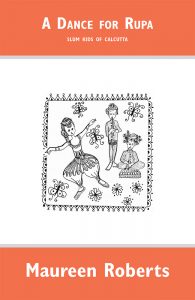
Rupa (fourteen) is an Indian rubbish picker. She lives in a makeshift shelter and is solely responsible for her sister Amrita (seven). When she sees Shanti (ten), a crippled beggar, being set up by a street gang, she rescues him and takes him home. But Shanti, who plays the xylophone won’t stay without Hamid (eleven) a blind flute player and his busking partner. Suddenly Rupa finds herself in charge of two extra children and a stray dog Amrita has befriended.
A Dance for Rupa:
Achieved the long list in the Sunday Times Children’s’ Fiction Competition
'Told with economy and humour, this story tugs at the heart strings whilst remaining totally unsentimental. One of my highlights.'
Chicken House/Sunday Times Review
After teaching small children, for many years, I retired and now have six grandchildren and two step-great grandchildren.
My early retirement was spent backpacking around India. On returning to England I had many photos but no intention of writing a children’s story.
However, Shanti, who we met at a bus station, kept emerging in my memories of the street children in India. Because of this, I became obsessed with the thought that I had to write a story about four of the children, who lived and smiled in the face of horrendous misfortune.
The spirit of Garnesh is the first of a trilogy. The other two being A Dance for Rupa and Shanti.
I wanted a child with a physical handicap to be central to a story. Shanti and his special friend Ashiq are real children and as such were a special inspiration to me.
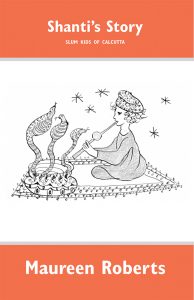
Shanti is a disabled Indian boy. He charms snakes, rides underneath a lorry, joins a group of puppeteers and meets a wonderful friend, Ashiq, but because of a terrible tragedy he loses everything. Hope arises when he hears Hamid, a blind boy, playing a flute and the two boys become a musical duo.
Shanti and Hamid have the good fortune to be taken into Rupa’s family and so the story goes …
After teaching small children, for many years, I retired and now have six grandchildren and two step-great grandchildren.
My early retirement was spent backpacking around India. On returning to England I had many photos but no intention of writing a children’s story.
However, Shanti, who we met at a bus station, kept emerging in my memories of the street children in India. Because of this, I became obsessed with the thought that I had to write a story about four of the children, who lived and smiled in the face of horrendous misfortune.
The spirit of Garnesh is the first of a trilogy. The other two being A Dance for Rupa and Shanti.
I wanted a child with a physical handicap to be central to a story. Shanti and his special friend Ashiq are real children and as such were a special inspiration to me.
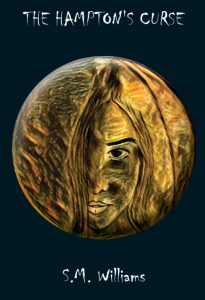
How much more suspicious can you get when everyone is lying to you?
Kara Hampton, a fourteen-year-old girl, is suddenly whisked away to her aunt's household. Confused? Yes. Kara is unaware of the new world she is about to encounter.
The strangeness of her cousins and the frightful presence of a creature who is on the prowl have most certainly got the better of Kara.
With curious mysteries to unveil, the girl finds many unusual threads to her fate, which turns into an unruly turmoil.
Finding her body changing, and new senses arousing, Kara is bewildered with shock as she's suddenly dragged into conflict with another pack of ancestral spirits.
As she's dragged into a supernatural adventure, Kara gradually realises what her family's paradox is, and what she is about to become...
Allow yourself to enter a world of doubt, dispute and excitement with Kara Hampton, as she reveals the long-kept secret of her family.
Generally, creating something unreal is what I enjoy most and imagination is my main influence. I’m more of a fantasy-type person in terms of books. Although I like to write day to day, normal life stories, I tend to weigh more over to the wacky, supernatural stories, and you can say that’s what inspired me to write this book as one of my first. Hopefully it portrays a phantasmagorical yet a humorous tale to teenagers, as I wrote this when I was 13/14, so this is mainly aimed at the younger generation who can relate to the language in the book. I really do hope you enjoy this book as much as I loved writing it!
S.M.Williams
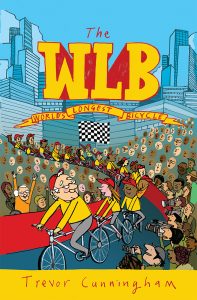
Em and Bill are twelve-year-old twins. After their mum and dad die, they live with their wonderful grandparents, Pops and Grannie. Together, they invent an amazing, snake-like bicycle that can seat up to a hundred children - and it even has ten superseats for those who can’t ride by themselves. The amazing bicycle is able to bend round corners and can even wind up and down the aisles of a supermarket. Everyone wants to know about it and it becomes a world-famous super-bicycle when they ride round Monaco in front of the world’s TV cameras.
The World’s Longest Bicycle is for every child with no exceptions. It is completely inclusive, no matter who you are, your situation, or your ability. And it’s the first of its type in the entire world. A bicycle for up to 100 children to ride together, in a circle, in zig zags, even up and down the aisles of a supermarket. And in no time at all, it becomes famous across the entire globe.
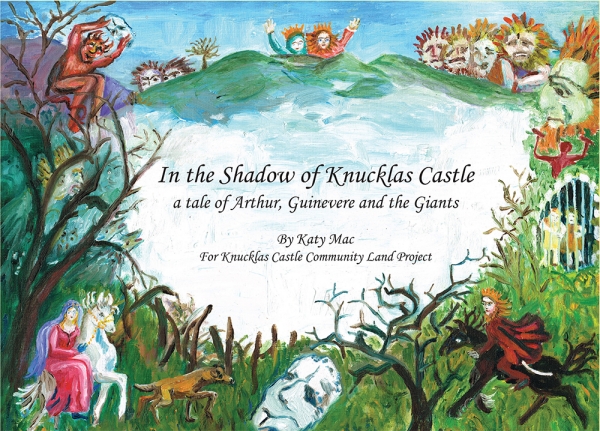
This is a story about Knucklas Castle Hill, a special hill on the Welsh border It retells an ancient legend of King Arthur’s marriage to Guinevere, daughter of a giant. Today, in the upper Teme Valley, you can still fi nd traces of the story – not least in the river’s Welsh name, Afon Tefeidiad, so-called after Arthur’s words. There’s a huge stone in a field that looks like a giant’s head; a rock where the devil sat, and the old castle hill itself where the wedding took place.
But how did the stone get into the field? And were there really giants here? Surely this ancient hill knows the answers.
Reader Reviews...
Tom Levy, Teacher
This is a little known story of King Arthur, based on an ancient Welsh legend.
All will enjoy the vibrant illustrations, which jump off the page and truly bring the story to life. There are lumpy giants, dark woods, a smiling castle hill that perhaps knows all, and a brightly coloured wedding feast in Knucklas Castle. There are also lovely photographs and a fanciful, but usable map. So you can actually visit the rock where the giant sat; you can see the amazing face of a giant that Arthur turned to stone, and you can walk up to the top of the old castle hill, where Arthur married Guinevere - a truly breath-taking spot. It’s a lovely book for anyone who wants to experience the magic of this small part of the Welsh borders.
As someone who works in education, I recommend this book. It's just the right combination of engaging and educational. Young children will enjoy having it read to them as a mysterious tale, older children will wonder where his¬¬tory ends and myth begins, and for the Arthurian there are references to the sources at the end of the book. A beautiful book!
Frances Brett, Lecturer in Early Childhood
This vibrantly illustrated book shines a light on the secrets of a “special hill” on the Marches borderland, Knucklas Castle, quickly inviting the reader into a startling, ancient landscape where they can travel with Guinevere as she makes a dangerous journey to find Arthur, the one person who can free her brothers from the giants that occupy the land on the far side of the River Teme.
Written as if it is a story being told close to your ear, or as if being performed live in front of you, the author walks a teasing line between knowledge, speculation and pure mystery, creating an atmosphere in which almost anything might happen – and then it does! It is beguiling and funny, with no claims being made for certainties, but a suggestion that to be intrigued, and to ask questions about the landscape around you, is satisfying and important.
And by the end of the story there is a surprising twist in the tale that brings you back into the lap of fact, with photographs supporting this shift back to the present live landscape. Additional geographical, historical and archaeological detail offers information to help find, explore and make sense or story of a real place that can be visited. The move from the beautifully realised imagined lands within the opening pages, to the OS grid references at the end, captures the book’s journey – one that is well worth making, for children and adults alike.
Philippa Boast, grandmother and artist
Katy Mac treads a tight rope between fact and fantasy, history and mythology in this charming and informative book she has produced to help the Knucklas Castle Community Land Project. Colourful and whimsical illustrations enhance the story perfectly and we can smile as we learn more about the beautiful Teme Valley.
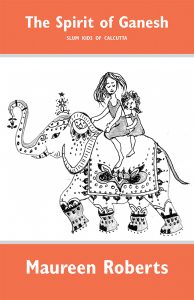
Many children have a very hard life in India. They sort through rubbish heaps, work in factories and beg on the streets.
This is a story, the first of three, that tells of the lives of Rupa and her little sister Amrita. It tells of the hardships they endure, the adventures they have and the many people they meet.
Lonely rich girl Aisha lives in the big house. Rupa and Aisha become friends and defeat the horrible Mr. Biswas. Danva, the dog, saves Amrita and becomes her best friend. Shanti and Hamid appear at the end of the book ready to continue the ‘Slum Kids’ story in Book 2.
The ‘Spirit of Ganesh’ is a mixture of fun, drama, sadness and love, all watched over by the benevolent smile of the Elephant God.
After teaching small children, for many years, I retired and now have six grandchildren and two step-great grandchildren.
My early retirement was spent backpacking around India. On returning to England I had many photos but no intention of writing a children’s story.
However, Shanti, who we met at a bus station, kept emerging in my memories of the street children in India. Because of this, I became obsessed with the thought that I had to write a story about four of the children, who lived and smiled in the face of horrendous misfortune.
The spirit of Garnesh is the first of a trilogy. The other two being A Dance for Rupa and Shanti.
I wanted a child with a physical handicap to be central to a story. Shanti and his special friend Ashiq are real children and as such were a special inspiration to me.
When you have produced the final draft of your book, it is always advisable to have the text read and checked by a professional editor or proof reader.
You may have friends that are willing and competent to do this and we can advise you on the type of editing that is required.
We can offer four levels of editing as well as proof-reading.
You choose which, if any, are appropriate in your case: 1. Edit of sample pages and short report (£30)
We will edit a few pages to highlight editorial issues so that you can look for similar problems throughout the book.
This will reduce the amount of further copy-editing required when the book is finished. 2. Broad structural editing and criticism (£5 per thousand words)
A structural review is particularly relevant for works of fiction.
The structural reviewer will address the following main areas and produce a short report for the author ” Read More 3. Copy editing (£10 per thousand words)
A copy-editor takes a close look at your text, line by line, with an eye to grammatical errors, repetition, inconsistency and lack of clarity. The copy editor will make changes to the text, with suggestions for rewriting, grammar, and punctuation. When you receive the edited version, you have the final choice about accepting of rejecting the individual changes. 4. Proof Reading (£8 per thousand words)
Proof reading is a line-by-line check that the book is ready for publication. Proof readers will make small corrections for punctuation, grammar and spelling but they will not make significant changes to the text.
A proof reader will identify any significant issues and add comments to the text so that you can make those corrections yourself. 5. Consistency Scan
If you decide your book doesn’t need a full proof reading, we offer an electronic scan to search for common errors and inconsistencies. This looks at issues such as inconsistent spelling and inconsistencies of hyphenation and capitalisation.
We can also identify inconsistencies in the spelling of proper names. 6. Cover text
The quality of the text on the cover is very important as it indicates the quality of the writing in the book.
The title, sub-title and back-cover blurb are all important elements and we can work with you to make sure that these are correct and effective.
Copy Edit
Copy-editors get the raw material into shape for publication i.e they edit the copy.
When they have finished, the designer can lay out or typeset the book and produce a proof.
It is quite normal for the author to make additional changes after a book has been copy-edited.
Working through the material, the copy-editor may identify errors in spelling, punctuation, grammar, style and usage, but also very long sentences and overuse of italic, bold, capitals and exclamation marks.
They should correct or query doubtful facts, weak arguments, plot holes and gaps in numbering.
In fiction, they should also check that characters haven’t changed their name or hair colour, look for sudden changes from first to third person among other things.
The Copy-editor is not a proof reader and should not be expected to find all of the errors in the text particularly if the text is badly written to start with.
This is the job of the proof reader.
The final proof should be checked by a proof reader or an experienced reader friend before going to print.
It is almost inevitable (and acceptable) to miss a few errors which can be corrected in a later edition.
Proof Reading
Proof reading is a line-by-line check that the book is ready for publication.
Proof readers will make small corrections for punctuation, grammar and spelling but they will not make significant changes to the text.
A proof reader will identify any significant issues and add comments to the text so that you can make those corrections yourself.
If you have decided to complete this stage of the process yourself, we will send a detailed check-list to help you.
We ask you to try and ensure that the book is completely ready before we start the layout.
Once the layout has started, we expect that you might want to to make a small number of amendments but
if there are a significant number, we may need to charge for the extra time it takes to change the layout
so best to discuss this with us first.
Structural Review
In fiction, the main areas that a structural editor will address are:
Plot: Does the plot make sense? Is it believable? Is it satisfying or does it leave the reader frustrated? Themes: Are the themes effectively handled? Are there so many that the book lacks focus? Do they interfere with the plot or complement it?
Characterisation: Are your characters well developed and believable? Are they cast in a role that fits their personality? Do they sometimes behave out of character? Point of view/voice: Is the voice consistent or is it sometimes confused? Is the voice authentic? Are you using too many or too few POVs? Pace: Does the plot move forward at an appropriate pace? Should you cut that preface? Should the action happen sooner or should the tension build more slowly? Dialogue: Do your characters sound real when they speak? Is your dialogue cluttered with adverbs and beats? Do you use clunky dialogue to move the plot forward? Flow: Is the narrative interrupted by dead-ends and tangents? Is there so much back story that the main plot is dwarfed? Are there missing plot points that would give the narrative greater integrity?
In non-fiction, the principle is the same, but the specific issues are slightly different:
Thesis: Is your thesis relevant? Is it clearly defined or is it lost among marginal issues? Exposition: Are your arguments clear and cogent? Are they well researched and properly supported? Do they have a clear relationship with your thesis? Content: Are all the necessary topics sufficiently dealt with? Are the chapters weighted correctly? Is there superfluous content? Organisation: Is the information organised logically? Are tables and illustrations used appropriately? How many levels of subheads do you need and how should they be arranged? Tone: Is the tone appropriate for the audience? Do you need to eliminate jargon? Is the text accessible? Pace: Are there passages that are bogged down in detail? Do you spend too long on detail irrelevant to the main thesis? Are there areas that need further exposition lest they be skipped over?
Cover Text
The quality of the text on the cover is very important as it indicates the quality of the writing in the book.
The title, sub-title and back-cover blurb are all important elements and we work with you to make sure that these are as effective as possible.
Consistency check
If you decide your book doesn’t need a full proof reading, we can run an electronic scan to search for common errors and inconsistencies.
This looks at issues such as inconsistent spelling, hyphenation and capitalisation.
It also checks for consistent formatting of numbers and dates as well as undefined abbreviations.
Full Script Edit
The script that you deliver to us will probably constitute what the industry would classify as the ‘Initial Rough Draft’, i.e. a full screenplay written without any other professional input or advice, and probably without a great deal of rewriting. We work through your draft, line by line, scene by scene, and come back to you with a comprehensive set of notes from which you can then work towards the official ‘1st Draft’. Some of our notes will be broad and general, dealing with such areas as the overall shape and structure, pacing, plot and character development; others will be far more specific, with corrections, clarifications and suggested cuts etc. It is of course entirely up to you whether or not to take these suggestions on board, and to what extent.
Subsequent Script Edit
It is very normal and generally beneficial for the script-editing process to go through at least a couple of cycles
i.e. the rewritten draft to be worked through once again by an experienced script practitioner – though this would be entirely at the discretion and behest of the writer.
Ongoing Support
We aim to make your self-publishing venture an enjoyable and rewarding experience.
Publishing is a complex business and we treat every book as a separate project.
We explain all of the stages at the outset and we manage the project schedule for you. This will include all of the expert services you have requested for editorial, design, printing, distribution and collection of royalties, keeping in close contact with you throughout the process.
You will be allocated a project-sheet on the YouCaxton website so that you can monitor progress and ensure that all stages are properly completed.
If you would like to see an example of a Project-Sheet…
go to My project on the menu and enter…
Username: Sample
Password : welcome.
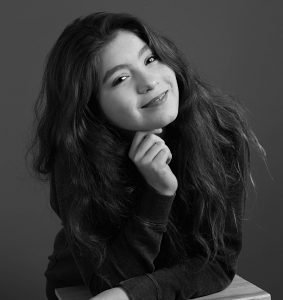 Generally, creating something unreal is what I enjoy most and imagination is my main influence. I’m more of a fantasy-type person in terms of books. Although I like to write day to day, normal life stories, I tend to weigh more over to the wacky, supernatural stories, and you can say that’s what inspired me to write this book as one of my first. Hopefully it portrays a phantasmagorical yet a humorous tale to teenagers, as I wrote this when I was 13/14, so this is mainly aimed at the younger generation who can relate to the language in the book. I really do hope you enjoy this book as much as I loved writing it!
S.M.Williams
Generally, creating something unreal is what I enjoy most and imagination is my main influence. I’m more of a fantasy-type person in terms of books. Although I like to write day to day, normal life stories, I tend to weigh more over to the wacky, supernatural stories, and you can say that’s what inspired me to write this book as one of my first. Hopefully it portrays a phantasmagorical yet a humorous tale to teenagers, as I wrote this when I was 13/14, so this is mainly aimed at the younger generation who can relate to the language in the book. I really do hope you enjoy this book as much as I loved writing it!
S.M.Williams