
|
|
£12.99 (+ £2 postage) |
||||||||
|
|
|
£12.99 (+ £2 postage) |
||||||||
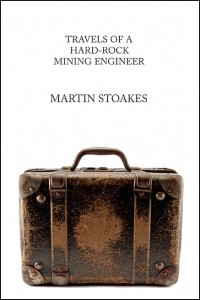
Publication of Martin Stoakes’s Travels of a Hard-Rock Mining Engineer is due shortly. The book is a chronicle of the travels and experiences of one of Britain’s most successful mining engineers during the last half of the Twentieth Century. It gives a vivid and an instructive insight into the generally little known subject of hard-rock mining (the excavation of hard materials such as gold, nickel or lead and a source of conflict in some countries), often in remote locations. Various mining projects are described in detail and provide a fascinating insight into the complexities of mine design and evaluation.
Martin Stoakes worked on 125 mining projects in thirty-seven different countries over a forty-four year period. His graphic account of the sometimes nerve-racking conditions and locales that he experienced includes encounters with Shining Path guerrilla fighters in Peru, MNLF Islamic fundamentalists in the Philippines and the RPF guerrillas in Rwanda/Uganda. Hard rock mining was never for the faint-hearted.

|
YouCaxton Charity Ball For the benefit of With the superb One Ticket (£16) Two Tickets (£24) or send a cheque to YouCaxton Publications, 23 High Street, Bishop’s Castle, SY9 5BE |
|
Footloose Dance Orchestra
Leader / Musical Director Andy Bate
Orchestra Manager Jan Mentha
Contact details info@fdo.org.uk
 |
Those were the Days by David Corbett |
The Great British Bookshop |
||||||||
| This book is the only comprehensive survey of this unique form of radio entertainment. Not only does it describe, in detail, how the music changed but it also charts the development and decline of old-time dancing which is such an important part of our heritage, being the original form of ballroom dancing. Anyone who is interested in light orchestral music or melodies in a more popular vein from the music hall to popular standards, will find here a rich reserve. Those whose passion is for dancing will discover the original old-time dances and the names of the people and dances involved in the old-time revival as well as the interaction between old-time and modern sequence dancing. | ||||||||||
|
|
and Kindle e-books |
||||||||
|
| ||||||||||
The Heritage Lottery Fund granted nearly £60,000 in June this year for the digitisation of the Express and Star’s photographic archive. The Star was founded in 1880 as a liberal news paper and was joined with the conservative Express (founded 1874) in 1889 under Andrew Carnegie, so the the archive contains over a hundred years of Wolverhampton’s history. Once digitised, will be of even greater value to researchers than it is already.
The Molineux Building, in which the Archives are now housed, is itself of historical interest. It was built for the Molineux family over three hundred years ago and became a hotel in the 1870s – the Oak Room was once used as changing room by the town footballers. It was derelict for thirty years from 1979 but, after an arson attack in 2003, it was bought and later restored by the City Council.
YouCaxton has a stand at the Wellington Literary Festival this Saturday, 11 October, 1914, and on Saturday 25 October. We’ll be happy to answer any questions concerning publishing and printing.

Dr Lempert’s talk, ‘What is Lost’, at the latest YouCaxton Literary Lecture in the Pengwern Bookshop, Shrewsbury, was full to capacity last night. Those who attended heard Dr Lempert’s articulate and passionate description of the effect of religious belief on medical practice in the modern world. (Dr Lempert is Chair of the Secular Medical Forum.) His talk touched on religious fundamentalism in countries such as Pakistan and Israel as well as nearer home in Britain and Europe. It looked at how medical interventions based on custom and belief rather than medical necessity, such as circumcision both male and female, have been sanctioned or tacitly tolerated due to pressure from religious authorities. His description of legal threats and of the machinations of multinational bodies was rivetting.