In this highly engaging, instructive and even inspirational inquiry, Jonathan Mirvis illuminates the tapestry of Jewish education innovation with the lens of the work and theory of social entrepreneurship. He tells us how and why some Jewish educational innovators succeed and how to recognize the most promising ventures in the field. This work will appeal to anyone engaged in Jewish educational change or social entrepreneurship of any kind, as it contributes to our understanding of both worlds of thought – Jewish education and the applied theory of social innovation. Professor Steven M. Cohen Research Professor of Jewish Social Policy, Hebrew Union College-Jewish Institute of Religion
Jonathan Mirvis has written a provocative and invaluable tract for our times, and for the uncertain times ahead. Whether Jewish “peoplehood” will have any meaning for the next generation in Israel and the Diaspora, depends largely on whether Jewish education can re-invent itself. Not only for our children and grand-children, but for “adults” and whole communities as well. Jerry Silverman President/CEO, Jewish Federations of North America
Australia : AUS$ 25.00 Discount price: AUS$16.99 Free delivery
South Africa : Israel: Discount price: £14.99 Free delivery by Courier
The good news is that Mirvis believes it can happen. He shows us how to build on the trailblazing initiatives of some of the visionary Jewish educators and funders who’ve “changed the rules” – and whose stories Mirvis tells with great warmth and insight. And, critically for the author, by adapting his theory of change as it applies to social entrepreneurship marketing, and the online knowledge revolution. This is not just an important book about the need for more “disruptive innovation” in the Jewish world; Mirvis is himself the “disruptive innovator”. He’s brought together his wide experience in adult Jewish education internationally, his deep immersion in Yiddishkeit, and some novel, even radical thinking about – dare we say it – how to market and sell a social product. Ever the teacher, he’s given educators, funders, policy-makers, and community leaders essential homework to complete. Read this book!
Dr. Jonathan Mirvis is a senior lecturer at the Melton Centre for Jewish Education at The Hebrew University of Jerusalem. He specializes in social entrepreneurship, social innovation and adult education. He lectures in these areas to graduate students studying Jewish education, nonprofit management, business administration, and community development.
Reviews...
Jewish Philanthropy.
Dr. Jonathan Mirvis has just released a very exciting book, It’s Our Challenge: A Social Entrepreneurship Approach to Jewish Education. Its most surprising aspect is that it has implications not just for Jewish education providers but also for all Jewish organizations and their professional and volunteer leadership around the globe. Dr. Mirvis, who is a senior lecturer at The Hebrew University’s Melton Centre for Jewish Education , is a pioneer in teaching social entrepreneurship to students in education, nonprofit management and business administration. Although the book gives a spot-on analysis of entrepreneurship in Jewish education, its salient contribution is demonstrating not only the importance of creative and innovative thinking but also the impact that volunteer leaders and professionals can have in the Jewish community by thinking differently about what they do and how they do it.
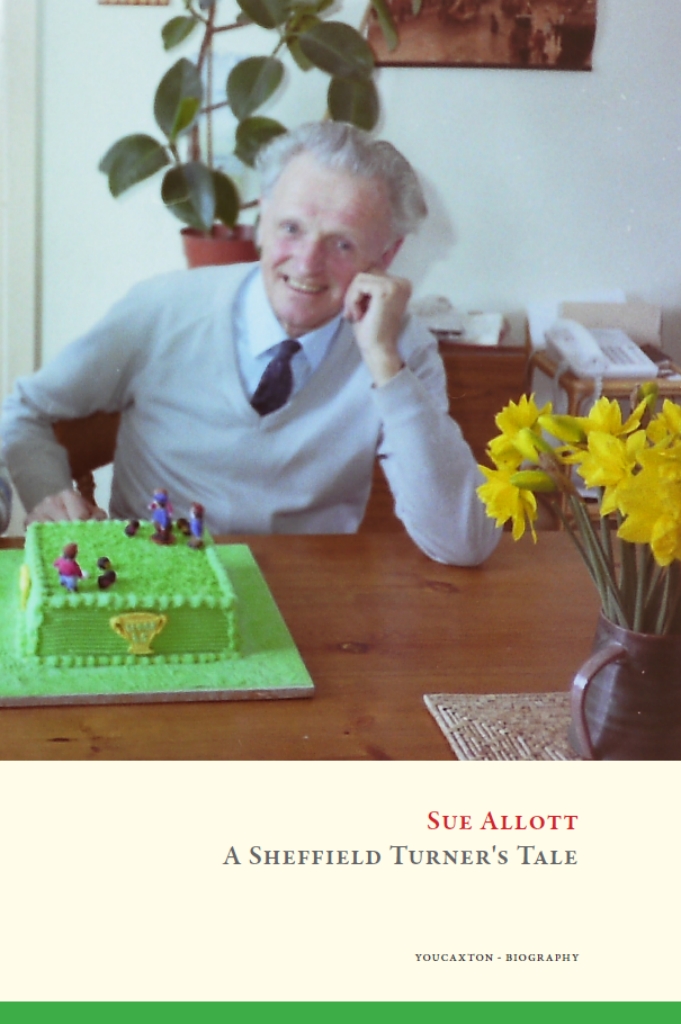
A Sheffield Turner's Tale
Life with an Unsung Hero of Steel
When the Sheffield steel industry dramatically collapsed in the 1980s the stories of its highly-skilled workforce were lost. People left the city in their thousands or disappeared into the army of unemployed. The part they had played in the building of the city became, overnight, unconsidered and unvalued. It has taken a generation for the city to begin to reclaim the stories of the men and women of steel.
This is the tale of one of them, Frank Allott, a lad from the east end of Sheffield who began his working life as an apprentice turner on the eve of war and rose to become Manager of the vast and complex Heavy Machine Shops at Firth Brown. In his forty-four years in the firm he acquired a unique range of experience and knowledge, appreciated by those he worked with not only in Sheffield, but in Canada, Turkey and Brazil.
A self-taught engineer and linguist, amateur singer and artist, and Football League linesman, he was widely known and loved not merely for his outstanding skills but also for his extraordinary humanity and humour. It is a portrait not only of a remarkable man, but also of the times in which he lived, the historic company he served and the city that made them both.
Reader Reviews...
Mary Buckley, Professor, Cambridge university Beautifully written and hard to put down, this is an engrossing and touching personal story of a father’s encouraging relationship with his daughter and of his working life in different phases of Sheffield’s steel industry. Sue Allott traces the impact on one family’s life of how and why the steel industry grew and declined as they moved from the closely-knit community of back-to-back housing, to new council house and finally to a purchased semi-detached. It is an important economic and social history of industry and life whose details and emotions should not be lost.
It is also a compelling tribute to a father from a proud daughter. It is a must-read for all only children who were daughters who had loving fathers in the 1950s and 1960s who spurred them on. It includes delightful details of the early student exchanges to Russia, essential reading for anyone who was sent on one and for those who were not.
Derek Reed, economist A Sheffield Turner’s Tale is a moving and hilarious mixture of social history and the biography of a remarkable man. The backdrop of industrial Sheffield from the 1950s to the 1990s will strike a chord with anybody who has memories either of the working class life and upward social mobility of the fifties, sixties and seventies, or of the economic wrecking ball of the Thatcher years.
As for the book’s principal hero, Frank Allott, his humour, integrity, intellectual curiosity and occasional cussedness, as he rose from the shop floor to weighty management responsibilities in the Sheffield steel industry, no doubt bore the stamp of South Yorkshire, but there’s enough in his character and in his story to make him immediately recognisable to anyone who grew up working class in any other corner of industrial Britain. It is the story of a man who was at once unique and yet emblematic of a time and place that, just a few decades later, seem like another world.
A poetry book full of treasures for the reader. The treasurers will make you laugh, feel happy, be thought provoking, bring you comfort and peace. The poet has brought to the fore front one poem which describes a person collecting water from the well and used this as a focus to use the proceeds from half of every book to fundraise for the charity CAFOD. She wants to do this as she believes that each poem has been written for other people’s enrichment.
Details of CAFOD projects are found on their website cafod.org.uk
As a result of the incredible response and feedback to my autobiography, A Reason To Love Me, I felt A Reason To Love Them to be the most logical follow up. Although not a sequel per se, the two are very much linked. Whilst offering further insight into my life experiences, with this book I aim to challenge views and beliefs by suggesting alternative perspectives, perspectives which have helped me heal and take my life back.
Although it can be incredibly hard at times for us to love ourselves, it can feel almost impossible for us to love ’them’, those whom we view as the perpetrators. A lesson without which inner peace cannot be achieved.
A book that offers techniques, methods and alternative perspectives which deal with overcoming trauma and abuse. From mental health to physical abuse the author through her own life experience as a survivor, with courage, love and acceptance, proves that nothing is insurmountable.
Daniela began her journey in rural Italy, surrounded by scrutiny and judgement, searching for love, acceptance and purpose. Her determination and hopes led her on a tumultuous journey that has seen her deal with the dramatic realities of her life. Using the strength and knowledge gained she has sought and found a balance and tranquillity she now channels into guiding and supporting others. Through her counselling and public speaking, she is now dedicated to helping others face and overcome their difficulties and demons in life and continues to deliver her message of love, hope and peace.
Reader Reviews...
5.0 out of 5 stars A very beautiful and powerful book
This beautifully written book has the potential to be life changing for its reader.
Using her own experiences, Daniela takes you on a journey of deep self-reflection and offers you a different way of perceiving the world. She tackles the most difficult topics with such awareness and understanding, consistently promoting messages of love, compassion and kindness. Each chapter delves into a different topic, always finishing with a ‘reason to love them’. This is a powerful way of guiding you through a shift in perception, and the process of forgiveness.
Daniela has clearly experienced some very dark moments- as have many of us - but she has has found a way to shine light onto them and in doing so has become free from their chains. In reading this book, I guarantee you will be inspired to do the same. I thank her for sharing the story of her own healing to help others.
Bob Fowke, YouCaxton’s Managing Editor, will be giving a talk entitled Opium & Pagodas Aspects of life in 18th Century India at the Church Barn, Bishop’s Castle, Sunday 23rd February at 2.00 pm, admission free.
In July 1775, Maharaja Nuncomar and Joseph Fowke were tried in Calcutta for conspiracy against Governor Warren Hastings. Nuncomar was hanged for a parallel offence; Joseph got off with a fine of fifty rupees. Two years later, Philip Francis, Hastings’s chief opponent on the Council and a friend of Joseph, was caught in flagrante with a ladder beneath the bedroom of beautiful Mrs Grand, who went on to marry Prince Tallyrand while he was foreign minister to Napoleon. Two years after that, Francis challenged Hastings to a duel but neither man knew how to shoot a pistol and Francis was wounded but survived. In the meantime, Joseph gambled away his second fortune and sailed for home, having sold his Stradivarius cello and complaining about the new-fangled music of Haydn.
Life for British residents in Calcutta in the late eighteenth century was incestuous but colourful. Bob Fowke explores some aspects of this exotic world in his illustrated talk.
Avraham Infeld’s book takes the reader on a journey through Jewish Peoplehood, that powerful yet intangible idea that connects Jews together, no matter where they live or how they practice. Starting with the core components of Peoplehood, and ending with his ideas about the future of the Jewish People, the book contains powerful messages about how to achieve unity without uniformity in today’s global world. Through his trademark stories and accessible messages, Infeld offers Jewish leaders and educators – indeed any interested Jew – the opportunity to engage with ideas that can change the Jewish world.
Published:
November 2017
Paperback:
192 pages
UK Price:
£11.99
US Price:
$14.99
ISBN:
9-781911-175957
US Edition
Available from YouCaxton
$14.99 - (plus $3 postage)
AVRAHAM INFELD
Based in Jerusalem, but a tireless traveler to all parts of the globe, Avraham Infeld has dedicated his long and distinguished career to helping Jews find meaning and joy in their Jewish identities. Born in South Africa and raised in a Zionist family, Avraham made aliyah to Israel and studied Jewish History and Bible at the Hebrew University, and Law at Tel Aviv University.
Embarking thereafter on what would become a career in Jewish education, Avraham served among other roles in the following leadership positions:
• Program Director at Ulpan Akiva
• First Community Shaliach in the US, serving Baltimore and Washington
• Founder and President of Melitz Centers of Jewish Zionist Education
• Director of Shalom Hartman Institute
• Director of the Jewish Agency for Israel’s Youth Department for English-Speaking Europe
• Director of Planning Process of Taglit Birthright Israel
• International President and CEO of Hillel: The Foundation for Jewish Campus Life
• President of the Chais Family Foundation
• Mentor to the Reut Institute for Tikkun Olam and Jewish Peoplehood
In recognition of his contributions to Jewish education, Avraham is the recipient of the Hebrew University’s prestigious Samuel Rothberg Prize for Jewish Education, Hillel’s Renaissance Award, and honorary doctorates from Muhlenberg College and Hebrew Union College – Jewish Institute of Religion.
Reviews...
Rabbi Lord Jonathan Sacks An engaging and inspiring set of reflections by one of the master educators of today’s Jewish world – full of delightful stories, compelling analysis and generosity of spirit. Read it and your faith in the Jewish future will be renewed.
Leon Wieseltier The intensity of Avraham Infeld’s commitment to his people is matched by its intelligence and its generosity. There are stimulations on every page of this candid and ebullient book. Infeld’s soulful monument to ahavat yisrael demonstrates by example that love is best when it is not blind. I am honored to share a people with this man.
Lynn Schusterman Avraham Infeld is a giant among giants whose philosophy and teachings will shape Jewish life and learning for generations to come. I have seen firsthand how scores of young Jews have found in his personal story and in his vision a Jewish future that speaks directly to their passions and values. This book is a beautiful distillation of his life’s work to ensure the centrality of Israel, tikkun olam and pluralism to the narrative of the Jewish people. It could not come at a more crucial time, given the cultural, demographic and geopolitical shifts we are experiencing in the Jewish community, in Israel and in society more broadly.
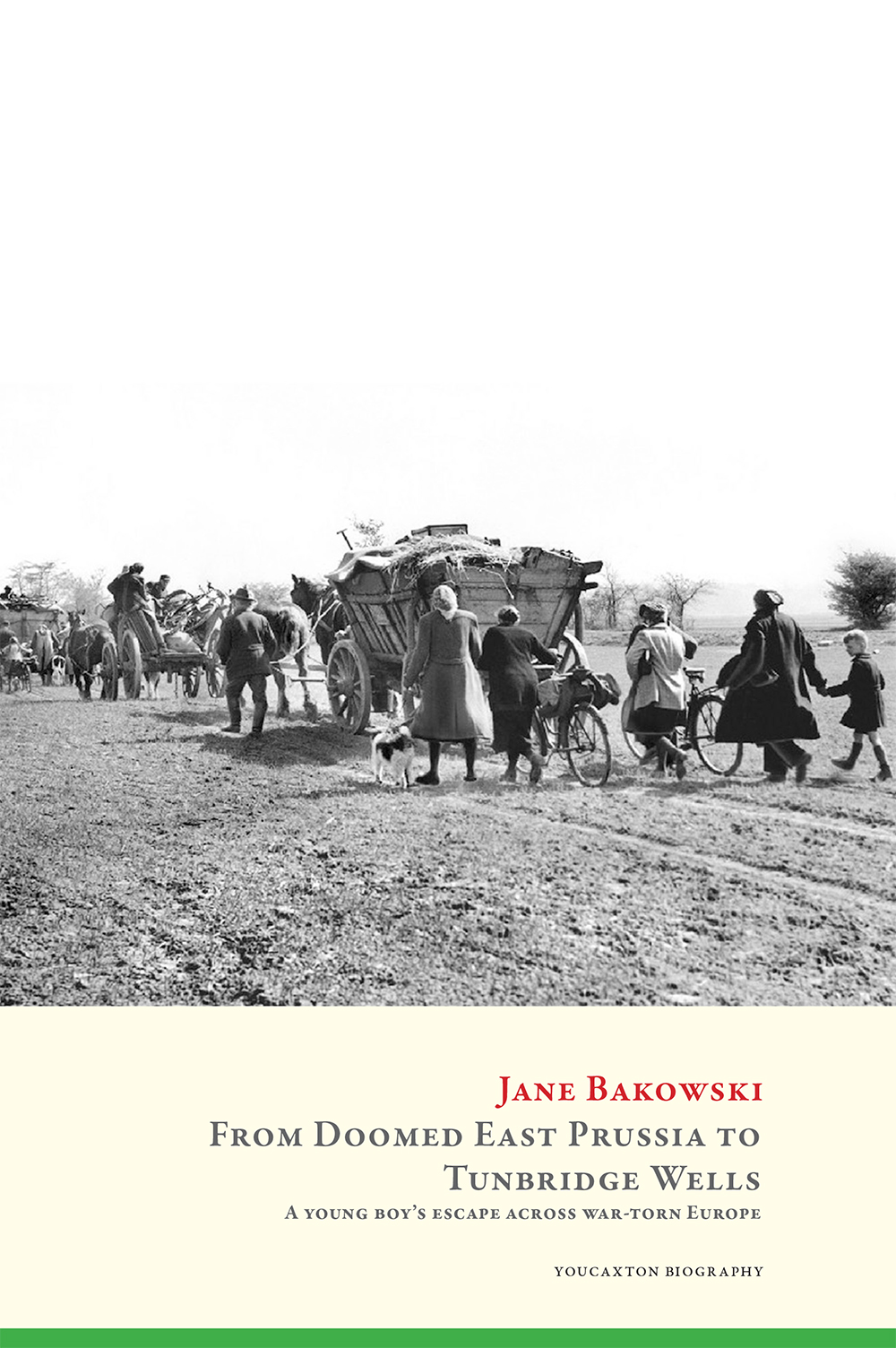
From doomed East Prussia to Tunbridge Wells
A young boy's escape across war-torn Europe
Dieter Teubler was just nine years old when he and his family left their farm in Memelland for the last time. Along with thousands of other terrified refugees from East Prussia, their only aim was to head west as Stalin’s vengeful Red Army forces surged in from the east. The perilous journey, which included a thirty-hour trek across cracking ice on a frozen lagoon, took five months and left the young boy with horrific images of death and suffering which would haunt him for the rest of his life.
With their mother Erna, Dieter and his younger brother and three sisters eventually found refuge in the quiet seaside town of Laboe on the German Baltic Coast. But their day-to-day struggle to survive in a country still reeling from the impact of war continued long after the war ended in 1945. Food was scarce, many local people resented the huge influx of refugees and the family was almost penniless.
However the persistent dream of a fresh start in America would change the young man’s life in a way he could never have envisaged. He had intended to spend time in England simply to learn the language, but the appearance of a young national tennis player from Tunbridge Wells would turn his world upsidedown. In 1960, he and Susan Waters were married, and the country boy from East Prussia began a new life in the heart of middle England.
Now a father of four and with twelve grandchildren, Dieter Teubler’s dramatic story of loss and renewal continues to resound amid the human challenges of a new century.
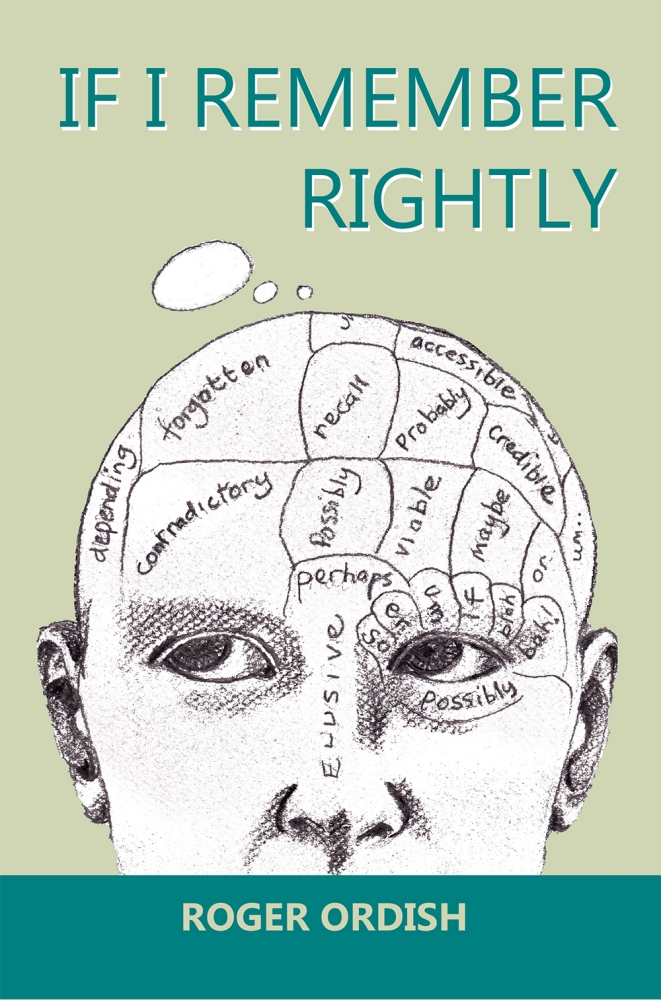
Roger Ordish was a producer in what was then called ‘Light Entertainment’ firstly with B.B.C. Radio and then for thirty years with B.B.C. Television.
For twenty years he was the only producer of the hugely successful ‘Jim’ll Fix It’ programmes. Then in 2012 the shock revelations of Savile’s misdeeds changed everything.
The Dame Janet Smith inquiry on Savile cleared Roger of having ‘turned a blind eye’ to Savile’s paedophilia but in his own words “Despite having frequently topped the combined B.B.C/I.T.V. audience charts, the very existence of the programme has been airbrushed from the B.B.C.s Kremlin balcony”.
From memories of wartime in Kent, Roger goes on to describe working with such names as Bruce Forsyth, Kenneth Williams, Michael Parkinson, Paul Daniels, Helen Fielding,
Terry Wogan, Stephen Fry and Hugh Laurie, with delightful anecdotes about Edith Evans, Sammy Davis Junior, Gina Lollobrigida, John McEnroe and Princess Margaret and others. In 1968 he was one of a trio of B.B.C. producers, who posed as the Albanian entrants for the Eurovision Song Contest in a hoax that dumbfounded their boss.
Roger Ordish was a television producer for thirty years, producing ‘Parkinson’, ‘Wogan’, ‘A Bit of Fry and Laurie’ ‘Paul Daniels Magic Show’ and many other successful shows.
Reviews...
Tim Waterstone, founder of Waterstone's Bookshops. If I Remember Rightly arrived yesterday, and I started reading it this morning, at 6.30 am, over my first-of-the-day mug of tea. Thereafter I couldn't put it down, effectively reading it all through at one sitting.Roger - I really loved it. And, perhaps more importantly, really admired it, and indeed, from it, you. We were such close friends as teenagers, and it is a real pleasure for me to now realise, more fully perhaps than I had before, what a wonderfully rich and rewarding career, and life, that you have led. Your description of it absolutely holds the reader. And you write so well - the 'voice' is delightful - sometimes very funny indeed - (my absolute favourite of all your wonderful anecdotes being the little Ken Dodd piece) - sometimes unexpectedly vulnerable and exposed. Ace stuff, all of it.So well done, my friend.
When you have produced the final draft of your book, it is always advisable to have the text read and checked by a professional editor or proof reader.
You may have friends that are willing and competent to do this and we can advise you on the type of editing that is required.
We can offer four levels of editing as well as proof-reading.
You choose which, if any, are appropriate in your case: 1. Edit of sample pages and short report (£30)
We will edit a few pages to highlight editorial issues so that you can look for similar problems throughout the book.
This will reduce the amount of further copy-editing required when the book is finished. 2. Broad structural editing and criticism (£5 per thousand words)
A structural review is particularly relevant for works of fiction.
The structural reviewer will address the following main areas and produce a short report for the author ” Read More 3. Copy editing (£10 per thousand words)
A copy-editor takes a close look at your text, line by line, with an eye to grammatical errors, repetition, inconsistency and lack of clarity. The copy editor will make changes to the text, with suggestions for rewriting, grammar, and punctuation. When you receive the edited version, you have the final choice about accepting of rejecting the individual changes. 4. Proof Reading (£8 per thousand words)
Proof reading is a line-by-line check that the book is ready for publication. Proof readers will make small corrections for punctuation, grammar and spelling but they will not make significant changes to the text.
A proof reader will identify any significant issues and add comments to the text so that you can make those corrections yourself. 5. Consistency Scan
If you decide your book doesn’t need a full proof reading, we offer an electronic scan to search for common errors and inconsistencies. This looks at issues such as inconsistent spelling and inconsistencies of hyphenation and capitalisation.
We can also identify inconsistencies in the spelling of proper names. 6. Cover text
The quality of the text on the cover is very important as it indicates the quality of the writing in the book.
The title, sub-title and back-cover blurb are all important elements and we can work with you to make sure that these are correct and effective.
Copy Edit
Copy-editors get the raw material into shape for publication i.e they edit the copy.
When they have finished, the designer can lay out or typeset the book and produce a proof.
It is quite normal for the author to make additional changes after a book has been copy-edited.
Working through the material, the copy-editor may identify errors in spelling, punctuation, grammar, style and usage, but also very long sentences and overuse of italic, bold, capitals and exclamation marks.
They should correct or query doubtful facts, weak arguments, plot holes and gaps in numbering.
In fiction, they should also check that characters haven’t changed their name or hair colour, look for sudden changes from first to third person among other things.
The Copy-editor is not a proof reader and should not be expected to find all of the errors in the text particularly if the text is badly written to start with.
This is the job of the proof reader.
The final proof should be checked by a proof reader or an experienced reader friend before going to print.
It is almost inevitable (and acceptable) to miss a few errors which can be corrected in a later edition.
Proof Reading
Proof reading is a line-by-line check that the book is ready for publication.
Proof readers will make small corrections for punctuation, grammar and spelling but they will not make significant changes to the text.
A proof reader will identify any significant issues and add comments to the text so that you can make those corrections yourself.
If you have decided to complete this stage of the process yourself, we will send a detailed check-list to help you.
We ask you to try and ensure that the book is completely ready before we start the layout.
Once the layout has started, we expect that you might want to to make a small number of amendments but
if there are a significant number, we may need to charge for the extra time it takes to change the layout
so best to discuss this with us first.
Structural Review
In fiction, the main areas that a structural editor will address are:
Plot: Does the plot make sense? Is it believable? Is it satisfying or does it leave the reader frustrated? Themes: Are the themes effectively handled? Are there so many that the book lacks focus? Do they interfere with the plot or complement it?
Characterisation: Are your characters well developed and believable? Are they cast in a role that fits their personality? Do they sometimes behave out of character? Point of view/voice: Is the voice consistent or is it sometimes confused? Is the voice authentic? Are you using too many or too few POVs? Pace: Does the plot move forward at an appropriate pace? Should you cut that preface? Should the action happen sooner or should the tension build more slowly? Dialogue: Do your characters sound real when they speak? Is your dialogue cluttered with adverbs and beats? Do you use clunky dialogue to move the plot forward? Flow: Is the narrative interrupted by dead-ends and tangents? Is there so much back story that the main plot is dwarfed? Are there missing plot points that would give the narrative greater integrity?
In non-fiction, the principle is the same, but the specific issues are slightly different:
Thesis: Is your thesis relevant? Is it clearly defined or is it lost among marginal issues? Exposition: Are your arguments clear and cogent? Are they well researched and properly supported? Do they have a clear relationship with your thesis? Content: Are all the necessary topics sufficiently dealt with? Are the chapters weighted correctly? Is there superfluous content? Organisation: Is the information organised logically? Are tables and illustrations used appropriately? How many levels of subheads do you need and how should they be arranged? Tone: Is the tone appropriate for the audience? Do you need to eliminate jargon? Is the text accessible? Pace: Are there passages that are bogged down in detail? Do you spend too long on detail irrelevant to the main thesis? Are there areas that need further exposition lest they be skipped over?
Cover Text
The quality of the text on the cover is very important as it indicates the quality of the writing in the book.
The title, sub-title and back-cover blurb are all important elements and we work with you to make sure that these are as effective as possible.
Consistency check
If you decide your book doesn’t need a full proof reading, we can run an electronic scan to search for common errors and inconsistencies.
This looks at issues such as inconsistent spelling, hyphenation and capitalisation.
It also checks for consistent formatting of numbers and dates as well as undefined abbreviations.
Full Script Edit
The script that you deliver to us will probably constitute what the industry would classify as the ‘Initial Rough Draft’, i.e. a full screenplay written without any other professional input or advice, and probably without a great deal of rewriting. We work through your draft, line by line, scene by scene, and come back to you with a comprehensive set of notes from which you can then work towards the official ‘1st Draft’. Some of our notes will be broad and general, dealing with such areas as the overall shape and structure, pacing, plot and character development; others will be far more specific, with corrections, clarifications and suggested cuts etc. It is of course entirely up to you whether or not to take these suggestions on board, and to what extent.
Subsequent Script Edit
It is very normal and generally beneficial for the script-editing process to go through at least a couple of cycles
i.e. the rewritten draft to be worked through once again by an experienced script practitioner – though this would be entirely at the discretion and behest of the writer.
Ongoing Support
We aim to make your self-publishing venture an enjoyable and rewarding experience.
Publishing is a complex business and we treat every book as a separate project.
We explain all of the stages at the outset and we manage the project schedule for you. This will include all of the expert services you have requested for editorial, design, printing, distribution and collection of royalties, keeping in close contact with you throughout the process.
You will be allocated a project-sheet on the YouCaxton website so that you can monitor progress and ensure that all stages are properly completed.
If you would like to see an example of a Project-Sheet…
go to My project on the menu and enter…
Username: Sample
Password : welcome.