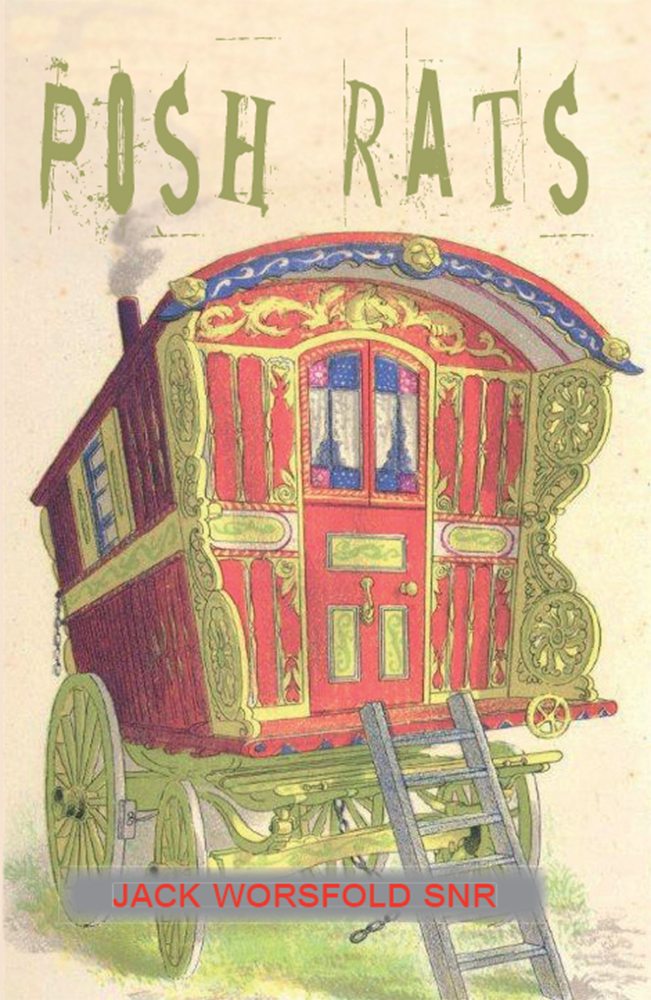
Peggy's Life Falls Apart when her husband, Eben, is brutally beaten to death on a winter’s night in 1932.
As he’s bleeding in the freezing mud, he beseeches her to tell everyone that he was trampled by the horse, everyone, that is, except his older brother, Larcey. With
his last words to her, Eden extracts a promise from Peggy that she will tell Larcey the name of his killer.
The killer is Rapley, the game keeper.
Left alone with only a gypsy caravan to call her own, and with three young children, Peggy seeks refuge at her brother-in-law’s small-holding.
Custom in the travelling community dictates that Larcey look after his brother’s widow and children. But because Larcey knows that his brother’s death was no accident, his grief turns to seething hatred.
The funeral provides another opportunity for him to show his generosity with the promise of free food and flowing liquer, and a large number of mourners turn up at the holding. However Peggy is shunned for ‘speaking posh’ as are her children who are teased. Danny has stayed at the small-holding to support Peggy and to help Larcey with the funeral. Whilst the funeral is in full swing, Larcey, with murder on his mind, confides to Danny that he plans to kill Rapley.
This is a story to chill the blood.
Jack Worsfold Snr. was born in Surrey in 1924, the son of a coal merchant. At nineteen years old he joined the RAF as a rear gunner on Lancasters under the command of Flight Lieutenant John Keards, flying out of Ludord Magna with 101 Squadron. On the 3rd May they were one of twenty one Lancaster bombers ordered to participate in a raid on Mailly-Le-Camp, intended to be an attack on the German depot, south of Reims in France. 340 Lancaster bombers took part in total, forty-two were shot down including Jack's. They had only bombed once when they were attacked with cannon fire. At that point the Lancaster broke up and Jack fell to earth, trapped in the tail section and with his parachute was on fire. He heard himself say; " Make it quick," and he passed out.
He spiralled to the ground 7.500 feet, crashing through a power line and fir trees before coming to rest in gorse near the village of Aubeterre, ten miles south Mailly. Jack was too badly injured to escape but was rescued by the French resistance. They put him in the woods but were rumbled by the Germans which actually turned out to be fortunate because he was taken off to Paris where his broken leg was expertly fixed by a German doctor. He was then transported to a pow camp in Poland and held for one year until the war had finished. The rest of Jack's crew mates died in the crash.
In 1773, Parliament passed the Regulating Act: in return for a loan of £1.4 million, the East India Company agreed to accept a Governor General appointed by Parliament and Warren Hastings was appointed to the post. In addition, the Regulating Act called for the appointment of three counsellors whose job was to oversee the Governor General. Unfortunately, these cousellors were hostile to Hastings from the start, in particular Philip Francis (lover of Mrs Grand see previous email, re ladders against windows and Prince Talleyrand). Francis sought to undermine Hastings’s authority at every opportunity.
By May 1780, Hastings had had enough. He decided that it had to be death or victory. He insulted Francis in a memorandum to the Council; Francis took the bait and challenged Hastings to a duel.
At 5.30 am on 16th August the two principle members of the Calcutta Council met in the grey light of morning on the Alipur Road, both middle-aged, neither of them with much interest in exercise or fighting. Francis had never fired a pistol before and Hastings could remember doing so ‘only once or twice’. Their seconds measured fourteen paces. Hastings defered his fire while Francis misfired twice. The third time they both fired simultaneously. Francis narrowly missed but Hastings’s bullet struck Francis on the right side and lodged under his left shoulder blade. Francis called out ‘I’m dead’ and fell to the ground.
‘Good God, I hope not!’ Hastings called back and hurried over. Having checked on the damage, he rushed home in his palanquin and sent for the surgeon general and his own doctor. Philip Francis staged a remarkably swift recovery but he left for England that December.
It’s Not About Shakespeare, Aspects of Ordinary Life in Stratford-upon-Avon 1775-1915 by Val Horton, published by YouCaxton Publications, has received a long and favourabel review in the Stratford Herald:
‘Prepare to be transfixed by chapters on slavery, insurrection, the workhouse, education, housing, suffragettes and more … We tend to think the past is largely about strong men dominating the scene but strong women are also key in this tale and, of course, some of the financial details are fascinating – seeing how much landmark buildings once cost and realising that the seemingly trifling sums quoted are considerable in today’s terms.
Indeed, the house that started it all was sold for the first time, a few years old, for £450 in May 1911 and in 1930 reached the giddy heights of £650 when it was sold again. But we’re drifting again into the detail.
Let’s just say this is the kind of book that is certain to add to what most of us will know of Stratford’s past, linking every aspect of life across the years. As others have said, it is brilliantly researched at the treasure trove that is the birthplace trust’s archives, with some of the evidence coming from past editions of the Herald.’
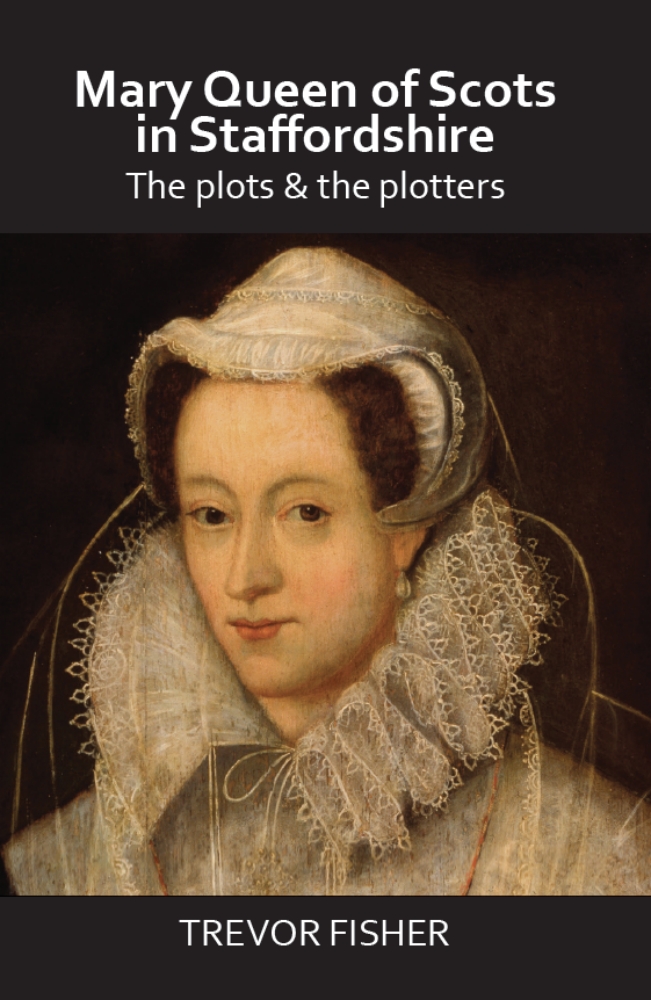
Mary Queen of Scots in Staffordshire
This is a local history with national and international dimensions. It has always been known that Queen Mary was imprisoned in Staffordshire, and other Midlands counties, but the crucial role of this county in the many plots launched around the captive Queen has been underestimated. The times when the Queen was put in Staffordshire always meant that the plots and plotting which followed her had reached crisis proportions. Staffordshire was a highly secure backwater, but her jailers could not isolate herf - until the very end, and then with unexpected consequences.
At first the government of Elizabeth, her cousin, knew she was plotting but not how. In the first year of her captivity she sought a court intrigue to marry a Duke - and was caught up in the Earls revolt. In the final eighteen months in the county the spymaster Francis Walsingham organised a ground-breaking counter plot to find out what was going on. But was his counter plot a trap? This was an illegal captivity - but was Mary making political choices which triggered her downfall? Staffordshire was the crucial stage for the key developments in her English captivity, explored here for the first time in unique detail.
In the summer of 1936 a young Englishman is sitting in a Siena café when he is approached by a stranger. It is an uncomfortable encounter but the man’s words draw him inexorably into the lives of a writer, his wife and their immediate friends. Eventually their identities become clear to him but he keeps this to himself at further, seemingly chance, meetings. Overtaken by events in Europe and the war that is to come he can eventually return to his notes.
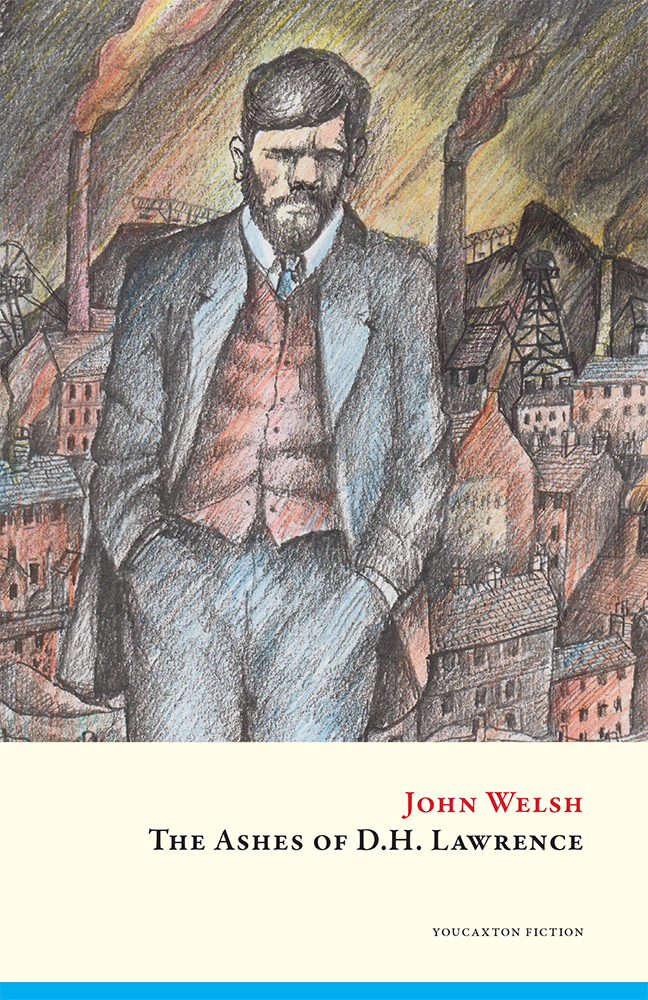
After the success of Lady Chatterley’s Lover, D.H. Lawrence is able to travel from Italy to France no longer beset by a lack of money. His friendships and the relationship with his wife are tested as, increasingly constrained by ill-health, he is beset with reminiscences, regrets, and contradictory emotions about his past and present life.
With thanks to John Farrington for the cover image.
The author was born into a Fife mining community in 1938. After Grammar School he worked briefly in banking until joining the Royal Air Force and subsequently entering college. Following a short teaching career and a post-graduate course at Reading University he again changed course to gain a Masters degree, lead an economic research team in the Midlands and was invited to the Triplex Lloyd Chair of Management in Brno a few months after the 1989 Czechoslovak revolution.
Now retired, he lives in Shrophire and walks, writes and plays golf, both at Crail Golfing Society on the banks of the Firth of Forth and at Ludlow. He also travels frequently through central Europe by car and is familiar with some of the locations in which the Ashes of D.H. Lawrence is set..
Reader Reviews
Amazon Reader Lovely read, heard about the book thanks to local newspaper.
Read in a day - could not put it down.
Characters were believable. Liked the time hopping element.
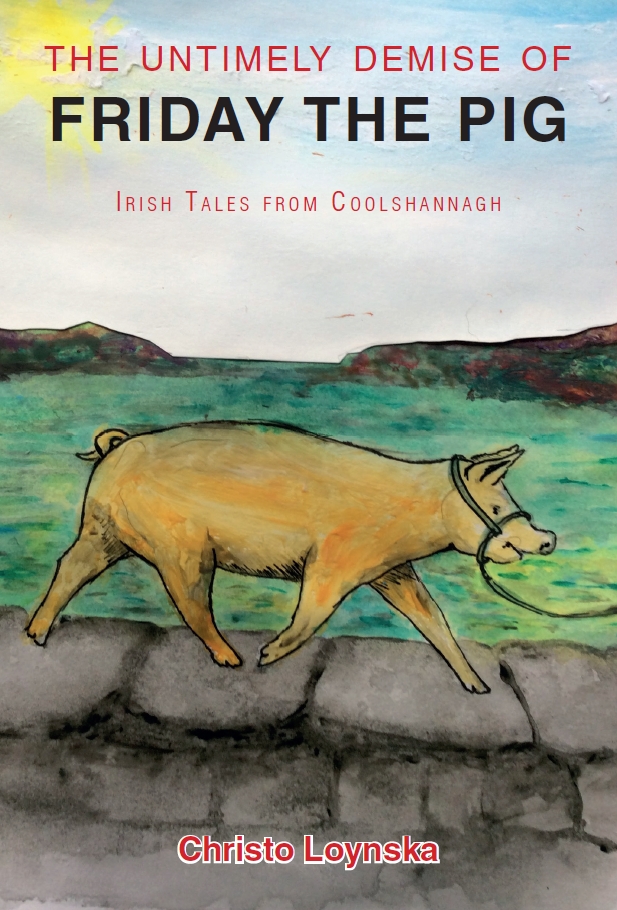
The Untimely Demise of Friday the Pig
Irish Tales from Coolshannagh
Coolshannagh is an ordinary Irish village situated on the coast halfway between Dublin and Belfast.
The villagers are pretty ordinary too; Father Joe, a clubfooted priest who likes to dance; Duffy the bar owner who runs a great pub; Stochelo a Gypsy bandolier and his mighty son Miquel; Eamonn McGarvey who loved his pet pig; Ludmilla the one handed Ukrainian Headmistress who escaped the anti-Jewish pogroms of 1881; Mary-Ellen the village elder, wise-woman, and nurse in the Crimean War; Vincenti Quilto the Italian Matchmaker and teller of unlikely fables; Father Dan, a guilt ridden whiskey priest decorated for bravery in the First World war and The Diabhal (Devil) also comes calling intent upon mischief.
So, just an unremarkable Irish village going about its daily business; hum-drum times punctuated by birth, death, love, not much hate (except the Devil for whom hate is his only purpose).
And every word is true…
at least according to my father who came from Coolshannagh and passed these tales on!
Reviews...
Debbie Turfrey - Authorised buyer
5 out of 5 stars Beautifully written Irish tale This is a wonderful book, a whimsical yarn which flows beautifully!
In true Irish story teller style, the author weaves the threads of the story together.
I would highly recommend it to anyone!
When you have produced the final draft of your book, it is always advisable to have the text read and checked by a professional editor or proof reader.
You may have friends that are willing and competent to do this and we can advise you on the type of editing that is required.
We can offer four levels of editing as well as proof-reading.
You choose which, if any, are appropriate in your case: 1. Edit of sample pages and short report (£30)
We will edit a few pages to highlight editorial issues so that you can look for similar problems throughout the book.
This will reduce the amount of further copy-editing required when the book is finished. 2. Broad structural editing and criticism (£5 per thousand words)
A structural review is particularly relevant for works of fiction.
The structural reviewer will address the following main areas and produce a short report for the author ” Read More 3. Copy editing (£10 per thousand words)
A copy-editor takes a close look at your text, line by line, with an eye to grammatical errors, repetition, inconsistency and lack of clarity. The copy editor will make changes to the text, with suggestions for rewriting, grammar, and punctuation. When you receive the edited version, you have the final choice about accepting of rejecting the individual changes. 4. Proof Reading (£8 per thousand words)
Proof reading is a line-by-line check that the book is ready for publication. Proof readers will make small corrections for punctuation, grammar and spelling but they will not make significant changes to the text.
A proof reader will identify any significant issues and add comments to the text so that you can make those corrections yourself. 5. Consistency Scan
If you decide your book doesn’t need a full proof reading, we offer an electronic scan to search for common errors and inconsistencies. This looks at issues such as inconsistent spelling and inconsistencies of hyphenation and capitalisation.
We can also identify inconsistencies in the spelling of proper names. 6. Cover text
The quality of the text on the cover is very important as it indicates the quality of the writing in the book.
The title, sub-title and back-cover blurb are all important elements and we can work with you to make sure that these are correct and effective.
Copy Edit
Copy-editors get the raw material into shape for publication i.e they edit the copy.
When they have finished, the designer can lay out or typeset the book and produce a proof.
It is quite normal for the author to make additional changes after a book has been copy-edited.
Working through the material, the copy-editor may identify errors in spelling, punctuation, grammar, style and usage, but also very long sentences and overuse of italic, bold, capitals and exclamation marks.
They should correct or query doubtful facts, weak arguments, plot holes and gaps in numbering.
In fiction, they should also check that characters haven’t changed their name or hair colour, look for sudden changes from first to third person among other things.
The Copy-editor is not a proof reader and should not be expected to find all of the errors in the text particularly if the text is badly written to start with.
This is the job of the proof reader.
The final proof should be checked by a proof reader or an experienced reader friend before going to print.
It is almost inevitable (and acceptable) to miss a few errors which can be corrected in a later edition.
Proof Reading
Proof reading is a line-by-line check that the book is ready for publication.
Proof readers will make small corrections for punctuation, grammar and spelling but they will not make significant changes to the text.
A proof reader will identify any significant issues and add comments to the text so that you can make those corrections yourself.
If you have decided to complete this stage of the process yourself, we will send a detailed check-list to help you.
We ask you to try and ensure that the book is completely ready before we start the layout.
Once the layout has started, we expect that you might want to to make a small number of amendments but
if there are a significant number, we may need to charge for the extra time it takes to change the layout
so best to discuss this with us first.
Structural Review
In fiction, the main areas that a structural editor will address are:
Plot: Does the plot make sense? Is it believable? Is it satisfying or does it leave the reader frustrated? Themes: Are the themes effectively handled? Are there so many that the book lacks focus? Do they interfere with the plot or complement it?
Characterisation: Are your characters well developed and believable? Are they cast in a role that fits their personality? Do they sometimes behave out of character? Point of view/voice: Is the voice consistent or is it sometimes confused? Is the voice authentic? Are you using too many or too few POVs? Pace: Does the plot move forward at an appropriate pace? Should you cut that preface? Should the action happen sooner or should the tension build more slowly? Dialogue: Do your characters sound real when they speak? Is your dialogue cluttered with adverbs and beats? Do you use clunky dialogue to move the plot forward? Flow: Is the narrative interrupted by dead-ends and tangents? Is there so much back story that the main plot is dwarfed? Are there missing plot points that would give the narrative greater integrity?
In non-fiction, the principle is the same, but the specific issues are slightly different:
Thesis: Is your thesis relevant? Is it clearly defined or is it lost among marginal issues? Exposition: Are your arguments clear and cogent? Are they well researched and properly supported? Do they have a clear relationship with your thesis? Content: Are all the necessary topics sufficiently dealt with? Are the chapters weighted correctly? Is there superfluous content? Organisation: Is the information organised logically? Are tables and illustrations used appropriately? How many levels of subheads do you need and how should they be arranged? Tone: Is the tone appropriate for the audience? Do you need to eliminate jargon? Is the text accessible? Pace: Are there passages that are bogged down in detail? Do you spend too long on detail irrelevant to the main thesis? Are there areas that need further exposition lest they be skipped over?
Cover Text
The quality of the text on the cover is very important as it indicates the quality of the writing in the book.
The title, sub-title and back-cover blurb are all important elements and we work with you to make sure that these are as effective as possible.
Consistency check
If you decide your book doesn’t need a full proof reading, we can run an electronic scan to search for common errors and inconsistencies.
This looks at issues such as inconsistent spelling, hyphenation and capitalisation.
It also checks for consistent formatting of numbers and dates as well as undefined abbreviations.
Full Script Edit
The script that you deliver to us will probably constitute what the industry would classify as the ‘Initial Rough Draft’, i.e. a full screenplay written without any other professional input or advice, and probably without a great deal of rewriting. We work through your draft, line by line, scene by scene, and come back to you with a comprehensive set of notes from which you can then work towards the official ‘1st Draft’. Some of our notes will be broad and general, dealing with such areas as the overall shape and structure, pacing, plot and character development; others will be far more specific, with corrections, clarifications and suggested cuts etc. It is of course entirely up to you whether or not to take these suggestions on board, and to what extent.
Subsequent Script Edit
It is very normal and generally beneficial for the script-editing process to go through at least a couple of cycles
i.e. the rewritten draft to be worked through once again by an experienced script practitioner – though this would be entirely at the discretion and behest of the writer.
Ongoing Support
We aim to make your self-publishing venture an enjoyable and rewarding experience.
Publishing is a complex business and we treat every book as a separate project.
We explain all of the stages at the outset and we manage the project schedule for you. This will include all of the expert services you have requested for editorial, design, printing, distribution and collection of royalties, keeping in close contact with you throughout the process.
You will be allocated a project-sheet on the YouCaxton website so that you can monitor progress and ensure that all stages are properly completed.
If you would like to see an example of a Project-Sheet…
go to My project on the menu and enter…
Username: Sample
Password : welcome.