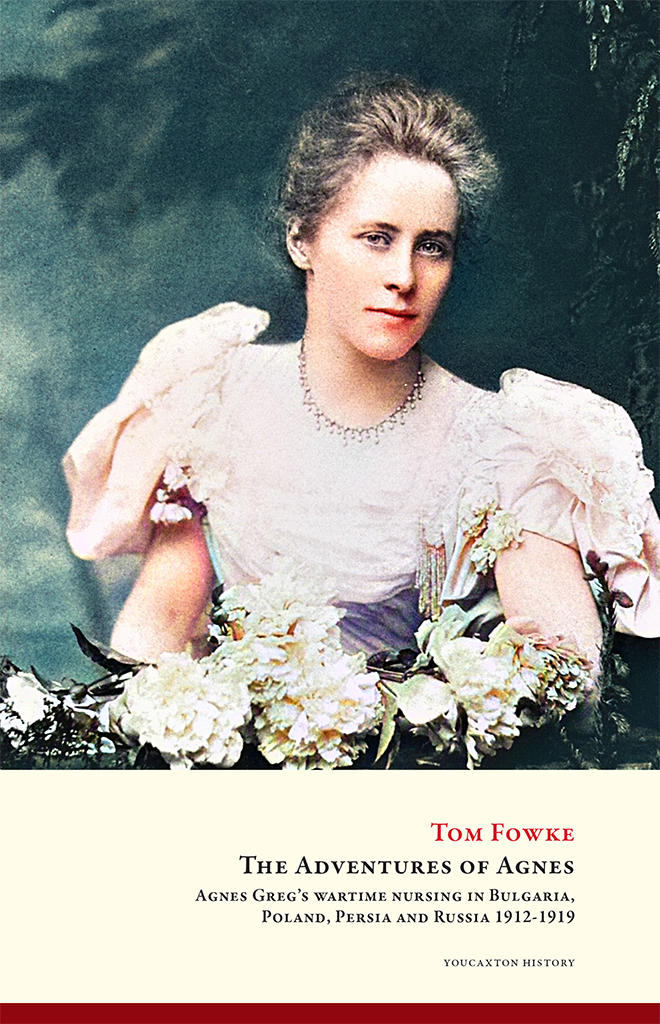
Agnes Greg was born into a wealthy Lancashire cotton family. In 1912 a middle-aged Edwardian lady at a loose end, she decided to try her hand at nursing. Providentially, after many years of peace, Europe just then became engulfed in war and opportunities arose. Barred from nursing for the British, for seven years she worked behind the front lines of friendly or allied armies in the Balkans, Poland, Persia and Russia often in improvised field hospitals and dressing stations in difficult conditions and she journeyed long distances between them, often by primitive means. She had a traveller’s eye for landscapes and places of interest and mixed easily with local and expatriate populations. She nursed Turkish prisoners of war in Bulgaria, local peasants, Russian soldiers fighting Austrians and Germans in Poland and fighting Turks in Persia. At times she was seriously ill herself and she was trapped in the Caucasus for nearly two years during the Russian revolution and civil war.
This book uses Agnes’s extensive correspondence with family and friends so that the reader hears her adventures described in her own vivid and amusing words and all intermingled with private and domestic concerns illustrative of her epoch and circumstances. Additional background material provides the political, military and family contexts.
Tom Fowke was formerly a civil engineer in various areas of the water industry. He is a great-nephew of Agnes Greg, and is married with two children and two grandchildren. Now retired to England, he previously worked for periods in Qatar, Iran and New Zealand, and lived for some years in Spain.
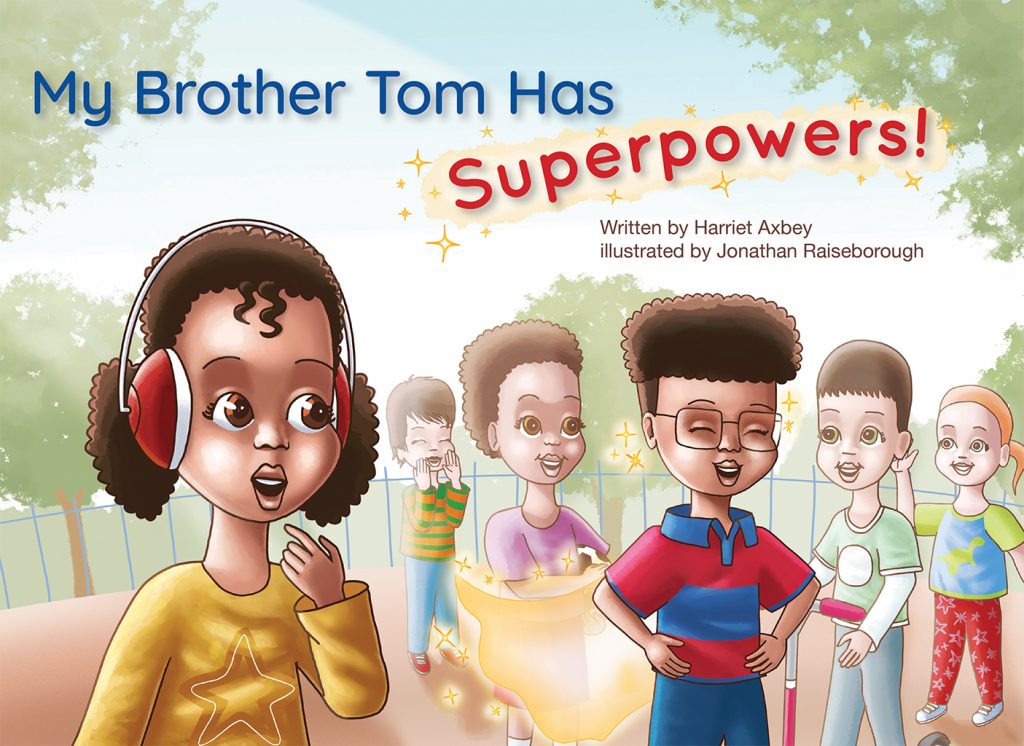
Grace is sure her brother Tom can read minds; he knows exactly what everyone's thinking!
Grace just has to guess (which can be hard at times).
But things might not be exactly as they seem with Tom's powers.
A story about the different gifts all have, as seen from an autistic perspective.
Created by both autistic author & illustrator.
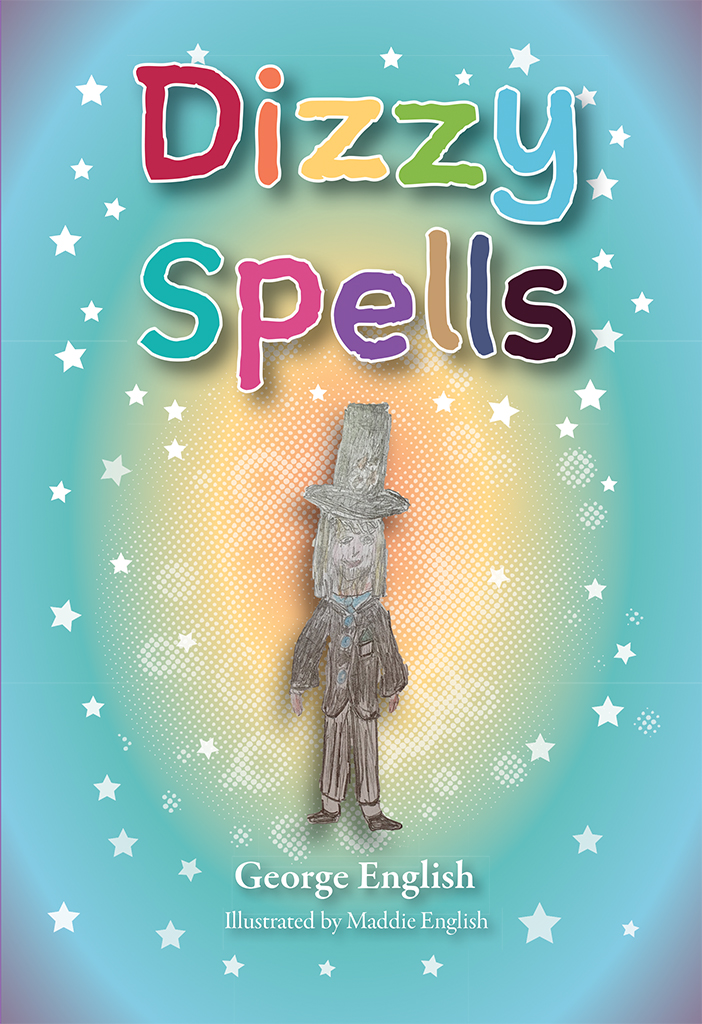
Dizzy Spells by George English
“There used to be a wizard living in my street.” So begins Micky Carter’s adventures, meeting wizards and council officials as he and his friends try to protect the local community. Lots of fun and danger along the way as Micky, cook and “Knockie Nine Doors” champion, finds himself in places and situations he could never have imagined.
George English – Former radio broadcaster, Further Education lecturer and reviewer of children’s books.
Mid-May 2020 seemed an unlikely time to set off on a new publishing venture. The world of bike racing journalism was temporarily in crisis along with the rest of the sports profession. There was no live cycling to write about, and budgets were being slashed left right and centre as recession hit hard. Most cycling writers are freelance, and in the UK at least there wasn’t a lot of help coming from the government.
But the idea of putting a website on line to bring cycling fans the best writing that a group of long-standing cycling journalists could provide had been kicking around my mind for a while. In a moment of optimism a few years ago, I’d even registered a name that I liked and that I knew had resonance with lovers of the sport –
lacourseentete.com
OJ Borg is lacourseentete podcast specialist. A broadcaster of long standing who is currently with BBC Radio Two, when not out on his bike, be that road, mud or virtual. During his tenure as BBC cycling correspondent he undertook two hour record attempts shockingly failing in both, learnt how to look good in lycra from David Millar, blew up a bicycle on l’Alpe d’Huez and almost killed Rob Hayles while reporting on Paris-Roubaix.
Nick Bull was drawn to cycling aged nine when the Rochester International Classic World Cup race took place on local roads in 1997. He joined Cycling Weekly and Cycle Sport as a reporter in 2011, and went on to become the magazines’ news editor. A regular contributor to BBC Radio 5 Live’s BeSpoke cycling show, he is also
the PR & digital manager for the Tour of Britain and Women’s Tour races. He tweets @nickbull21.
Peter Cossins devoured Phil Liggett’s reports in his dad’s newpspaper in the 70s and began work at Cycling Weekly as the magazine was preparing to launch Cycle Sport. He was procycling editor between 2006 and 2009 and currently specialises in writing books about the sport. An award winner for both Full Gas (2018) and The Yellow Jersey (2019), Pete currently lives with his family in the Pyrenees, with an office overlooking the Prat d’Albis climb.
William Fotheringham is lead cycling writer at The Guardian and has covered 26 Tours de France. A former writer at Cycling Weekly, he helped launch Cycle Sport before founding procycling together with Jeremy Whittle. His best-selling books include Put Me Back on My Bike: in search of Tom Simpson (2002), Fallen Angel: the Passion of Fausto Coppi (2008), and Merckx: Half-Man, Half-Bike (2012).
Matt Morris is a Shropshire based designer who started his own company in 2008 and has worked with cycling brands Orbea, Scott, Bianchi and Viner as well as a number of blue-chip companies and the Lawn Tennis Association. Like many, he was drawn to cycling by Channel Four’s Tour coverage and currently enjoys thrashing his gravel bike around the lanes.
Sadhbh O’Shea was born in Ireland and raised in the cycling hotbed that is the Isle of Man. After working as an intern at Eurosport after graduating in journalism, she went on to a spell at procycling followed by working at cyclingnews.com and is currently working at the BBC in the Isle of Man. Most of her time is spent interviewing politicians but cycling is never far from her mind.
Sophie Smith has covered cycling since 2010 and reported from eight Tours de France, working as a journalist and television presenter for Australian and British press. She cut her teeth at the 2010 world road championships before moving to England in 2012 to join Cycling Weekly and Cycle Sport magazines. Now based out of Melbourne, she travels to WorldTour races as a regular contributor to media outlets in Australia and the UK.
Jeremy Whittle began covering cycling in 1993, for Winning magazine, where his first assignment was interviewing a Texan upstart named Lance Armstrong. He has covered the Tour de France for 25 years, for the Times and currently for the Guardian, and joined William in launching procycling in 1999. His books Bad Blood and Racing Through the Dark (with David Millar) were shortlisted for the William Hill Sports Book of the Year.
SWPix.com provide lacourseentete with photographs; they are an independent mainly sports specific picture agency, whose live and archive imagery appears in national and regional newspapers and across many digital platforms. The swpix.com archive holds nearly a million images; or more information contact Simon Wilkinson on simon@swpix.com
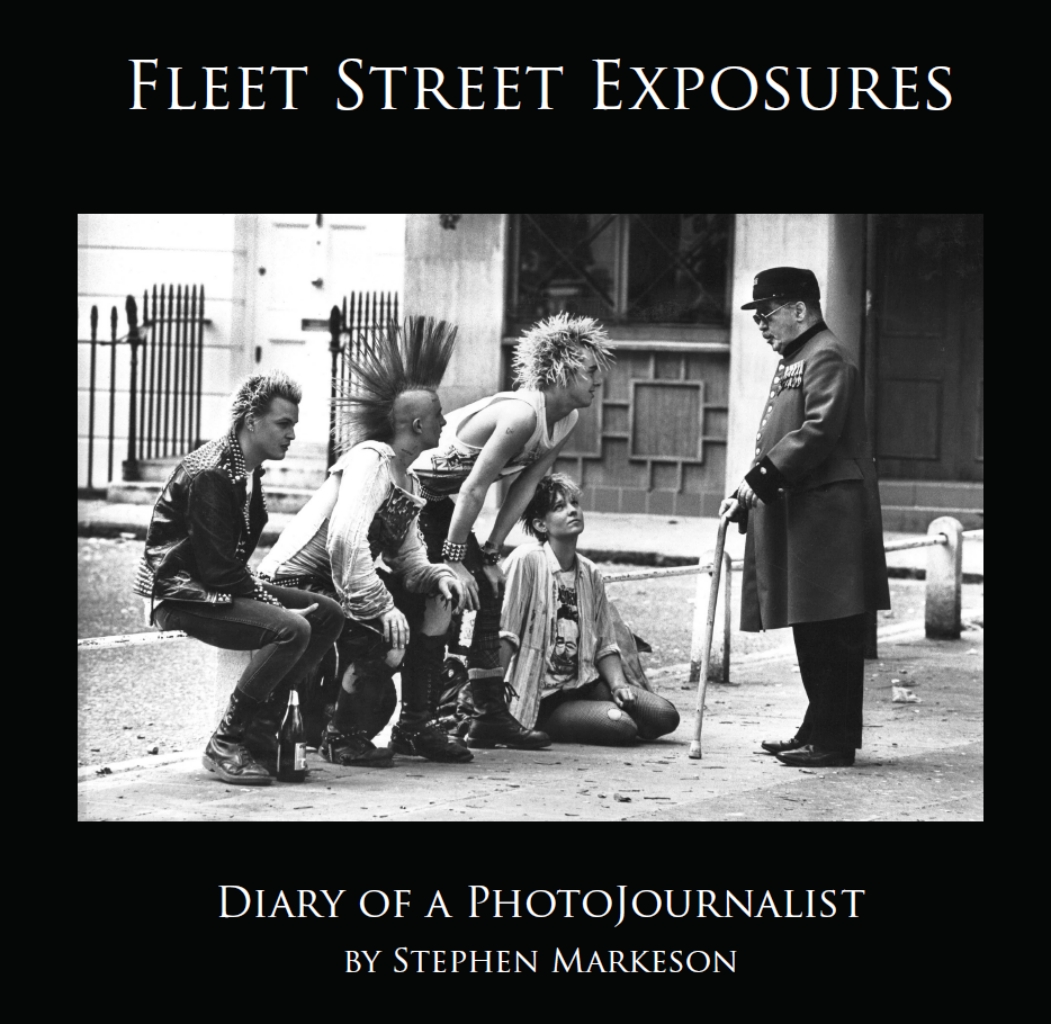
Stephen Markeson is, undoubtedly, one of the legendary photojournalists of the golden era of Fleet Street and his lens a witness to the making of history.
Ron Morgans
Picture editor Daily Express, Today, Daily Mirror
AUTHOR-SIGNED COPIES
Promo-code:
No of copies:
Total (£) :
30.00
Discount:
0.00
Delivery (£) :
3.00
UK Mainland: £3.00
Rest of the World: £10.00
Order Total:
£ 33.00
For Trade sales
Please contact: sales@youcaxton.co.uk
The career of a Fleet Street photographer can be made or stalled in an instant…the millisecond it takes for the camera shutter to capture an iconic image that speaks a thousand words or just yet another frame destined to be discarded on the darkroom floor.
Stephen allows the photographs to speak for themselves but brilliantly lets us in on some of the circumstances, opportunities and fortune that framed the story behind the story.
Charles Wilson
Editor of The Times 1985-1990
Stephen Markeson is, undoubtedly, one of the legendary photojournalists of the golden era of Fleet Street and his lens a witness to the making of history.
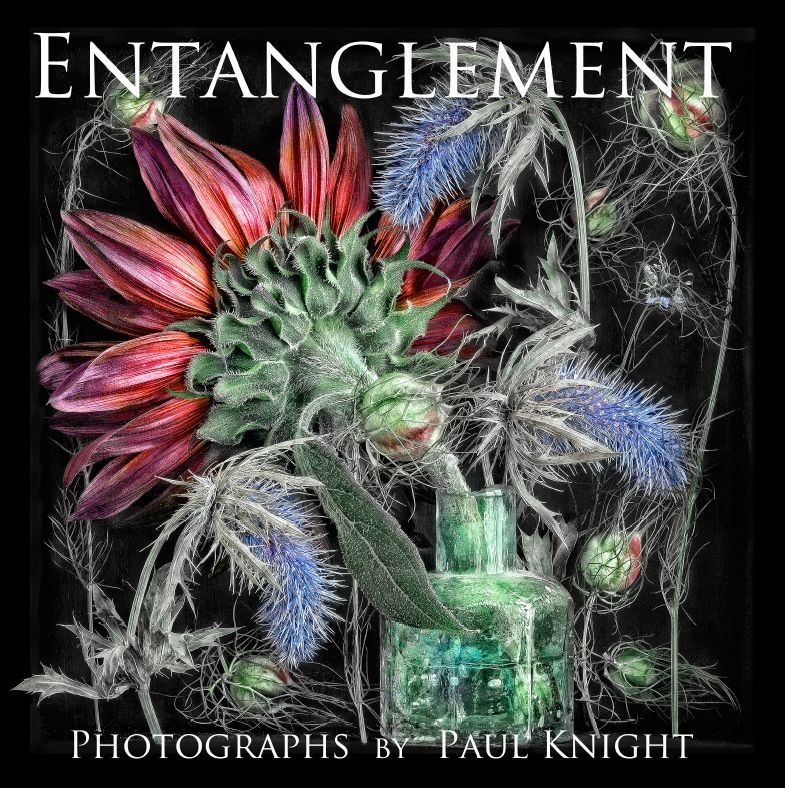
Entanglement Paul Knight
My first passion as a teenager was photographing the parks of central London at dusk when most people had left for the day.
I then discovered the Lake District through a friend and together we toured the Lakes with our 5x4 and medium format cameras; this quickly became the course I would follow.
After living in Windermere over a period of two years I found my new direction in the Ancient sites of this country, and Egypt as well as producing pictures for album and book covers.
However, when I was asked to submit some images to illustrate an album of Schumann’s Dichterliebe, I read the poems from Lyrisches Intermezzo and I realised that landscapes were not going to represent how I felt about the piece.
Published:
December 2020
Hardback:
110 pages
Size:
265 x 265 mm
Price:
£25.00
ISBN:
9-781913-425319
£25.00 (+ £3.50 postage)
Number of copies:
I decided to move away from landscape photography and instead create a collection that captured the essence of nature and the spirit of mystery. This requires control of every element within the image, creating new dynamics and relationships of the usually familiar.
This series of still life photographs use a technique known as Painting With Light.
It involves long camera exposures and a moving light source to create a soft painterly quality which is reminiscent of the paintings from the Dutch Golden Age of Art and can be seen in still life studies, landscapes and portraiture of that period.
Review
As someone who ordinarily, never purchases photography books, the cover image drew me in. It is a captivating collection of art work, be it in the form of photographs. It is hard to believe, such is the skill of the photographer, that these are in fact, photographs. It is a truly beautiful book. Noticing something new each time you visit it, it is a book you could come back to time and time again, and never tire of.
An ideal purchase for any keen photographer, or gift for any lover of art.
This book was produced by YouCaxton for the exhibition of paintings and drawings by Alan Kestner at the Poolhaus Gallery in Hamburg
For UK orders
Promo-code:
No of copies:
Total (£) :
30.00
Discount:
0.00
P&P (UK Only)
2.80
Order Total:
£ 32.80
for Non-UK orders
Please visit Artcircus Books
or contact: sales@youcaxton.co.uk
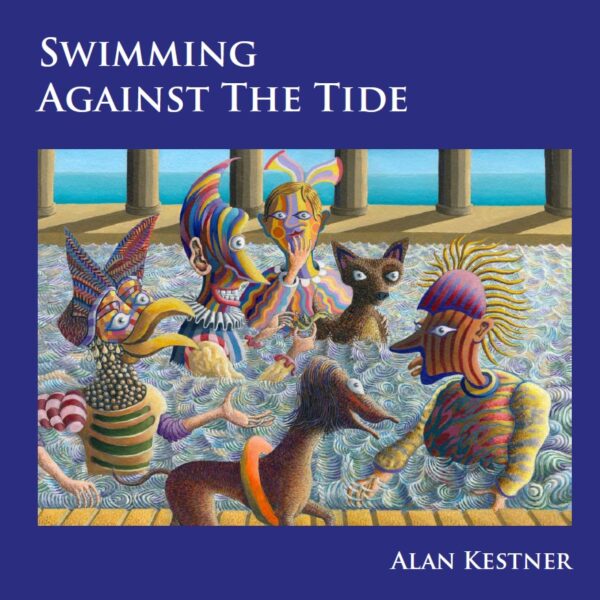
Swimming Against The Tide
This book was produced for an exhibition by Alan Kestner
at the Poolhaus Gallery in Hamburg
Publication Date: 15th November 2021
Hardback: 86 pages
ISBN: 978-1-914424-29-1
I am intrigued by the confused and fluid nature of memories and often present these as a complex juxtaposition of conflicting vignettes. They need to be read like the chapters of a story, but unlike a book, there is no particular order. The viewer must decide the sequence which in turn results in a complex, interactive experience.
The drawings, either complete or sometimes just a detail, become the basis for my paintings. I tend to resist contemporary movements, preferring instead to explore my own thoughts about what is happening in the world around me. And for this reason have always: swum against the tide.
Three Seasons by Sam Branton
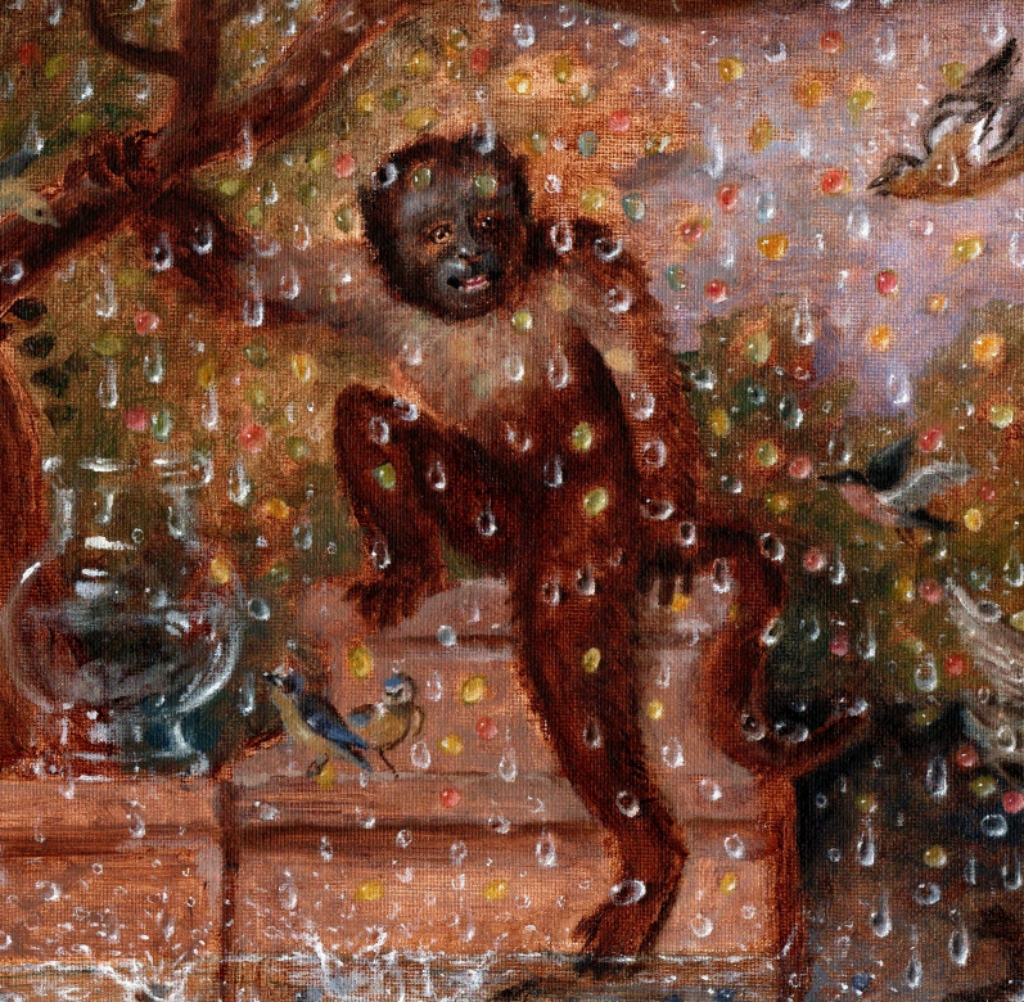
Three Seasons is a collection of drawings and paintings produced over the last five years based on the same underlying theme but divided into three distinct styles.
The underlying theme is a presentation of animals in unlikely settings or improbable pairings which results in a sometimes surreal and sometimes humerous impression on the viewer. Some of the images include references to animals in classical paintings but an essential feature of my work is to present animals in a playful rather than hostile setting.
The first season, Deluge, is a collection of tranquil monochrome drawings using red pencil. Most of these are drawn to a small scale and they are printed in the book at actual size. The drawings are set in neo-classical landscapes and they never quite tell the entire story, but should instead be considered as a frame or still image from a bigger story to be imagined or created by the viewer.
Published:
Jan 2021
Hardback:
140 pages
Size:
265 x 265 mm
Price:
£30.00
ISBN:
9-781913-425753
£30.00 (+ £3.50 postage)
Number of copies:
Season two, Holy Ground, is a collection of small oil paintings, building on the theme of animals in neo-classical landscapes and partial story telling but now introducing an extra element of mystery in some of the paintings by only showing a fragment of an entire painting. This was influenced by seeing remnants of images found in ancient remains in Greece and Italy which create a puzzle for historians to reimagine the complete original picture and the story being depicted.
Season three, Luciferase, builds on the Deluge theme, but now uses black pencil drawings to present the animals in a night-time setting using curious natural light sources to provide illumination. The monochrome images and lighting are sometimes used to create the illusion that the drawings represents a sculpture rather than living animals.
The endpapers in this book are taken from the triptych, Roses Within.
When you have produced the final draft of your book, it is always advisable to have the text read and checked by a professional editor or proof reader.
You may have friends that are willing and competent to do this and we can advise you on the type of editing that is required.
We can offer four levels of editing as well as proof-reading.
You choose which, if any, are appropriate in your case: 1. Edit of sample pages and short report (£30)
We will edit a few pages to highlight editorial issues so that you can look for similar problems throughout the book.
This will reduce the amount of further copy-editing required when the book is finished. 2. Broad structural editing and criticism (£5 per thousand words)
A structural review is particularly relevant for works of fiction.
The structural reviewer will address the following main areas and produce a short report for the author ” Read More 3. Copy editing (£10 per thousand words)
A copy-editor takes a close look at your text, line by line, with an eye to grammatical errors, repetition, inconsistency and lack of clarity. The copy editor will make changes to the text, with suggestions for rewriting, grammar, and punctuation. When you receive the edited version, you have the final choice about accepting of rejecting the individual changes. 4. Proof Reading (£8 per thousand words)
Proof reading is a line-by-line check that the book is ready for publication. Proof readers will make small corrections for punctuation, grammar and spelling but they will not make significant changes to the text.
A proof reader will identify any significant issues and add comments to the text so that you can make those corrections yourself. 5. Consistency Scan
If you decide your book doesn’t need a full proof reading, we offer an electronic scan to search for common errors and inconsistencies. This looks at issues such as inconsistent spelling and inconsistencies of hyphenation and capitalisation.
We can also identify inconsistencies in the spelling of proper names. 6. Cover text
The quality of the text on the cover is very important as it indicates the quality of the writing in the book.
The title, sub-title and back-cover blurb are all important elements and we can work with you to make sure that these are correct and effective.
Copy Edit
Copy-editors get the raw material into shape for publication i.e they edit the copy.
When they have finished, the designer can lay out or typeset the book and produce a proof.
It is quite normal for the author to make additional changes after a book has been copy-edited.
Working through the material, the copy-editor may identify errors in spelling, punctuation, grammar, style and usage, but also very long sentences and overuse of italic, bold, capitals and exclamation marks.
They should correct or query doubtful facts, weak arguments, plot holes and gaps in numbering.
In fiction, they should also check that characters haven’t changed their name or hair colour, look for sudden changes from first to third person among other things.
The Copy-editor is not a proof reader and should not be expected to find all of the errors in the text particularly if the text is badly written to start with.
This is the job of the proof reader.
The final proof should be checked by a proof reader or an experienced reader friend before going to print.
It is almost inevitable (and acceptable) to miss a few errors which can be corrected in a later edition.
Proof Reading
Proof reading is a line-by-line check that the book is ready for publication.
Proof readers will make small corrections for punctuation, grammar and spelling but they will not make significant changes to the text.
A proof reader will identify any significant issues and add comments to the text so that you can make those corrections yourself.
If you have decided to complete this stage of the process yourself, we will send a detailed check-list to help you.
We ask you to try and ensure that the book is completely ready before we start the layout.
Once the layout has started, we expect that you might want to to make a small number of amendments but
if there are a significant number, we may need to charge for the extra time it takes to change the layout
so best to discuss this with us first.
Structural Review
In fiction, the main areas that a structural editor will address are:
Plot: Does the plot make sense? Is it believable? Is it satisfying or does it leave the reader frustrated? Themes: Are the themes effectively handled? Are there so many that the book lacks focus? Do they interfere with the plot or complement it?
Characterisation: Are your characters well developed and believable? Are they cast in a role that fits their personality? Do they sometimes behave out of character? Point of view/voice: Is the voice consistent or is it sometimes confused? Is the voice authentic? Are you using too many or too few POVs? Pace: Does the plot move forward at an appropriate pace? Should you cut that preface? Should the action happen sooner or should the tension build more slowly? Dialogue: Do your characters sound real when they speak? Is your dialogue cluttered with adverbs and beats? Do you use clunky dialogue to move the plot forward? Flow: Is the narrative interrupted by dead-ends and tangents? Is there so much back story that the main plot is dwarfed? Are there missing plot points that would give the narrative greater integrity?
In non-fiction, the principle is the same, but the specific issues are slightly different:
Thesis: Is your thesis relevant? Is it clearly defined or is it lost among marginal issues? Exposition: Are your arguments clear and cogent? Are they well researched and properly supported? Do they have a clear relationship with your thesis? Content: Are all the necessary topics sufficiently dealt with? Are the chapters weighted correctly? Is there superfluous content? Organisation: Is the information organised logically? Are tables and illustrations used appropriately? How many levels of subheads do you need and how should they be arranged? Tone: Is the tone appropriate for the audience? Do you need to eliminate jargon? Is the text accessible? Pace: Are there passages that are bogged down in detail? Do you spend too long on detail irrelevant to the main thesis? Are there areas that need further exposition lest they be skipped over?
Cover Text
The quality of the text on the cover is very important as it indicates the quality of the writing in the book.
The title, sub-title and back-cover blurb are all important elements and we work with you to make sure that these are as effective as possible.
Consistency check
If you decide your book doesn’t need a full proof reading, we can run an electronic scan to search for common errors and inconsistencies.
This looks at issues such as inconsistent spelling, hyphenation and capitalisation.
It also checks for consistent formatting of numbers and dates as well as undefined abbreviations.
Full Script Edit
The script that you deliver to us will probably constitute what the industry would classify as the ‘Initial Rough Draft’, i.e. a full screenplay written without any other professional input or advice, and probably without a great deal of rewriting. We work through your draft, line by line, scene by scene, and come back to you with a comprehensive set of notes from which you can then work towards the official ‘1st Draft’. Some of our notes will be broad and general, dealing with such areas as the overall shape and structure, pacing, plot and character development; others will be far more specific, with corrections, clarifications and suggested cuts etc. It is of course entirely up to you whether or not to take these suggestions on board, and to what extent.
Subsequent Script Edit
It is very normal and generally beneficial for the script-editing process to go through at least a couple of cycles
i.e. the rewritten draft to be worked through once again by an experienced script practitioner – though this would be entirely at the discretion and behest of the writer.
Ongoing Support
We aim to make your self-publishing venture an enjoyable and rewarding experience.
Publishing is a complex business and we treat every book as a separate project.
We explain all of the stages at the outset and we manage the project schedule for you. This will include all of the expert services you have requested for editorial, design, printing, distribution and collection of royalties, keeping in close contact with you throughout the process.
You will be allocated a project-sheet on the YouCaxton website so that you can monitor progress and ensure that all stages are properly completed.
If you would like to see an example of a Project-Sheet…
go to My project on the menu and enter…
Username: Sample
Password : welcome.