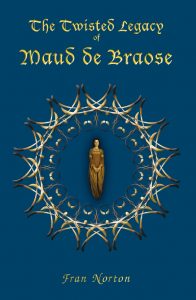
In 1230 William de Braose , Lord of Abergavenny, is hanged on the orders of Llywelyn ap Iowerth, Prince of Wales for adultery with his wife. William’s widow, Eva Marshal, daughter of the legendary knight, William Marshal, Earl of Pembroke, decides to keep the true facts of his death from his favourite daughter, Maud. Nonetheless, the little girl finds her life has changed forever, due to the sin of her father. Subsequently she inherits the twisted legacy of pride and shame; a legacy from which there is no escape.
As Maud grows towards adulthood she falls in love, but her forbidden love only complicates her efforts to fulfil her family duty as she faces the fact she is expected to marry the young Roger Mortimer, heir to the Marcher barony of Wigmore.
Maud, feisty, fearless and shrewd, plays a unique role in the history of England during the disastrous reign of Henry III: a period, riven by wars and dissent. Troubles in Wales and Gascony, and eventually civil war, see the nation fall into poverty and unrest. The loyalties of the magnates are tested when the charismatic leader of the Barons’ party, Simon de Montfort, challenges the authority of the king. It is a time when friends become enemies and families are divided by their loyalties, as warring factions fight for democracy.
Roger Mortimer is immortalised for slaying de Montfort on the bloody field at Evesham, a place where honour and friendships are sacrificed and where the future king, Edward Plantagenet, gives the fateful order of ‘no quarter’, heralding death to anyone who dares oppose him. Edward orders de Montfort’s head to be sent to Maud at Wigmore Castle in recognition of her part in his victory.
Factual events are woven with fiction to bring the eventful life of this extraordinary woman to the reader. Now let us step back into the thirteenth century and meet Lady Maud de Braose, daughter of the March.
We live our lives through reflections,
see our guilt mirrored in glass eyes
and shatter into tiny pieces impossible
to glue back together. But we try. I tried.
The death of my mother made me question
love, suicide, life, death and sanity.
On the way, I studied words in my own
personal hell before realising that above
everything else, I failed her. And so, I end my
inferno with an answer to a question none
of us are brave enough to ask…
…broken will always be broken.
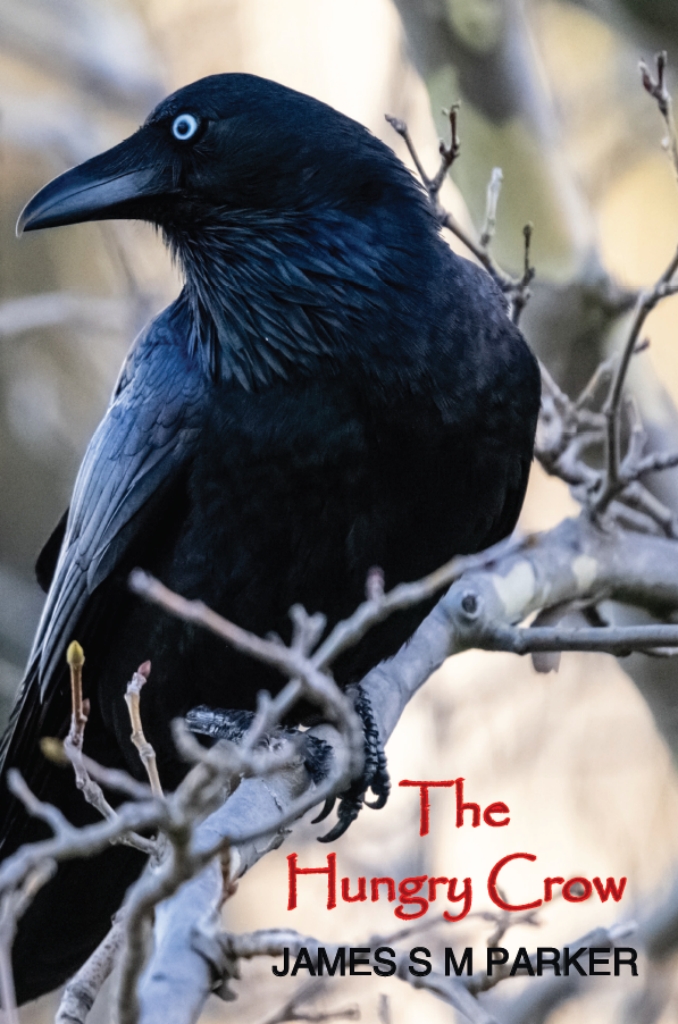
The Hungry Crow devours and feasts, it pecks away at Love, claws over Madness, consumes Death and digests Truth.
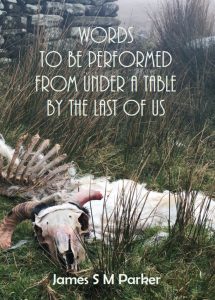
Through poetry and a mid-section collection of short stories, James S M Parker attempts to make sense of broken relationships, unrequited love and the absolute loneliness life has now brought him.
Harsh, uncompromising and as always, honest, The Hungry Crow speaks from the heart, weeps from the soul and revels in something lost never to be found again.
This is a collection of poems written over the last forty-five years: from childhood memories to life in Cyprus as a teenager in the 1970’s, to policing in London during the 1980s and 1990s and time with Customs and Excise.
Tim is still in law enforcement.
His current role is as an investigator with The Illegal Money Lending Team.
He writes about mums and dads and daughters and discusses the question what is love? Homelessness is close to his heart, as the poem about the YMCA and The Tramp illustrates. Then there are his beloved pets, Captain and Brenda, both immortalised in verse.
The author shares his raw emotions about Depression and thoughts of suicide and talks about tragedies such as Dunblane and the Twin Tower attacks.
Tim was born in Germany and lived in Aden and Cyprus before settling down as a Metropolitan policeman in 1979. After twenty years' service he was medically retired.
Later he joined Customs & Excise looking at counterfeit goods. He became an expert on the subject and lectured around the world to his counterparts.
In 2011 he reconnected with his childhood sweetheart Michelle and they married. They moved in together in 2013 when Tim moved to Birmingham where they currently live. He has one son and two married daughters, two sons-in-law, three granddaughters and a grandson on his way.
First there was Love and Suicide.
Then, we felt a heat and hell closing in.
Soon there will be the realisation that
broken will always be broken.
But now, we follow the writer, the observer and the lost mind through the various stages of one man’s life using poetry, sketches, short stories and observations.
A writer, an observer, a lost mind.
A journey inside, outside and
beyond the musings of one man.
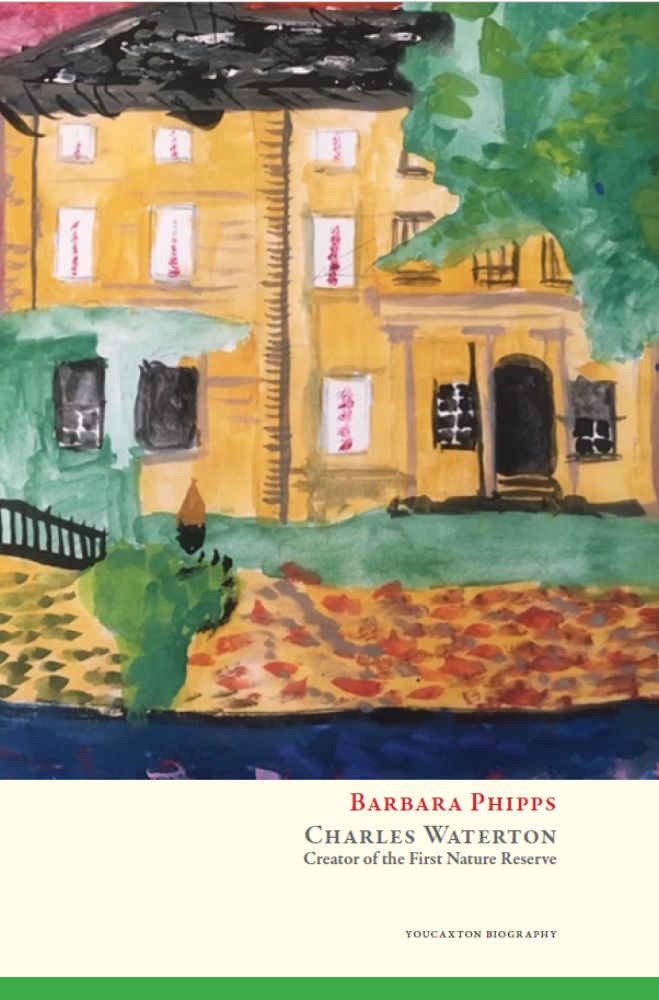
Born in 1782, Charles Waterton was the eldest child of Thomas and Anne Waterton, of Walton Hall in the West Riding of Yorkshire. Based on extensive research, Barbara Phipps's fascinating, fictionalised biography show us an intelligent, and fearless man, one gifted with humour and strongly held opinions. His early love of nature, especially of birds, meant he was often in trouble as a tree-climbing, bird-nesting boy. He travelled extensively, seeking to show others all he had observed by publishing his notes and preserving specimens. His method of taxidermy has never been bettered. He survived yellow fever and malaria, earthquakes and shipwreck, and many accidents both at home and abroad.
By building a wall around his parkland, and banning the gun, he created a sanctuary for all creatures with the exception of the fox and the rat, having a particular dislike of the latter. His book, ‘Wanderings in South America, the North-West of the United States and the Antilles,’ has never been out of print.
Waterton can justifiably be given credit for creating the first nature reserve. It is a concept that has spread, not just around Britain, but also right across the world. Bill Oddie
Reviews...
28.6.2019 - Amazon, five star: Great Story Telling Took me back to my own childhood, a lovely read. Anyone with a love of nature will identify with Charles Waterton.
15.4.2020 - Amazon, five star: Easy Read An interesting book about a fascinating if accident prone man. The author writes through Waterton’s eyes bringing alive his adventures in an easy to read manner.
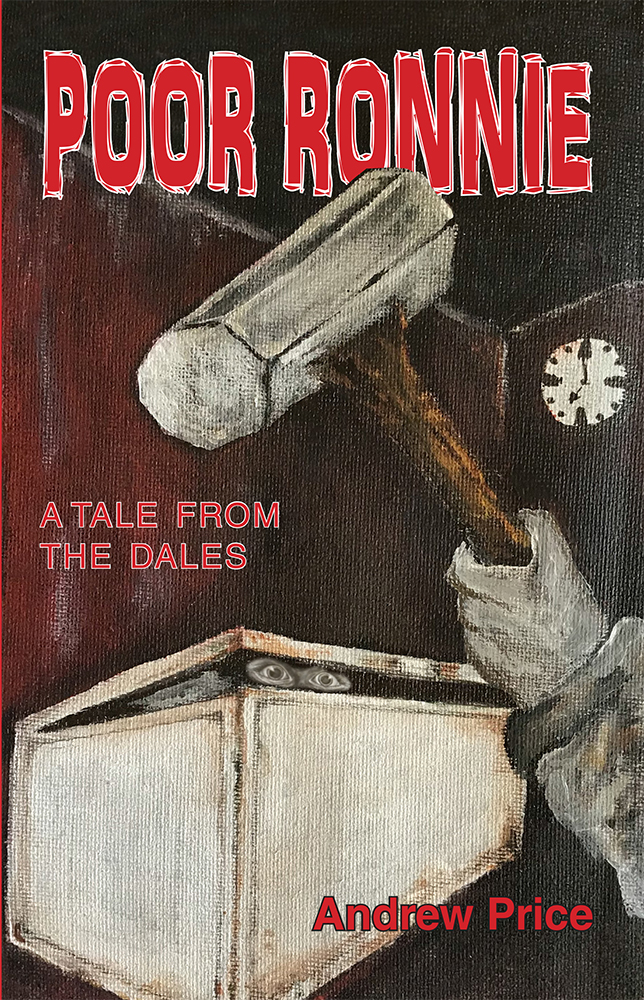
There’s trouble brewing in the Yorkshire Dales when the natives of Richmondshire start behaving out of character. It just so happens that a local pub is trialling a new organic cider – and it’s going down a treat.
Cider should make people merry but this normally docile community of Yorkshire folk finds itself in the grip of paranoia, fear, and confusion. That’s when casual boozer, Lenny Plant, discovers that the disruption is down to something far more sinister than a glass or two of an apple beverage: lying dormant in the corner of his best friend’s garage there lurks a threat to humanity deadlier than a thousand nuclear wars. The cider is almost an innocent bystander.
Against his better nature, Lenny decides to take matters into his own hands, only to find himself up against the KGB, a psychotic war veteran and, perhaps worst of all - his affection for the cider.
Andrew Price was born ages ago in Saltburn by the Sea. He didn’t write for forty-nine years – much too young.
Andrew allows that, although the British are useless at most things, sport in particular, their fluency in humour is without equal.
His novels “Poor Enid” and “Poor Ronnie” are humble contributions to the cause – a manifestation of all that has inspired him. For every sentence is etched onto the hard drive with stubborn purpose, goaded by a duty of care, to celebrate, perpetuate, and create.
Reviews...
Roger Ordish, TV Producer and Director Remarkable imagination. As a retired piss artist, I laughed most at the wonderful pub scenes.
Willie O'Kane
Andy Price does it again! Just when you thought things in Yorkshire couldn't get any worse, along comes Lenny Plant and his cohort of assorted wasters to foil another evil plan to take over the world.
The story ties in (and picks up from) where 'Poor Enid' left off, as centenarian monomaniac Art Schitthelm locks horns with Russian spies and local winos in a bid to control the entire world. In a plot that defies description, Andy deploys his wide-ranging knowledge of quantum physics, time-travel and the workings of the human alimentary canal to create a truly madcap story where nothing is as it seems. In a dim-lit world where gargantuan guzzling of alcohol truly makes a man, Lenny and co prove that it takes more than scientific know-how to take over the world, and once again our heroes win out despite the odds and without their even really trying.
A tale for our times, 'Poor Ronnie' will make the reader marvel at the dexterity with which the main players face up to fate - and despite the occasional jolt to one's digestive system it has to be recommended for its raucous energy and imaginative spirit.
John Vickers, Amazon Review “Intricately funny. A very enjoyable read which complements the first book.
Funny, dark and twisted; you can really relate to the piss-heads in the book.”
Peter Ullathorne, Amazon Review “It is always said the measure of a good book is if you cannot put it down.
This one is so entertaining and funny that you always have that ‘just another chapter’ thought.
In this highly engaging, instructive and even inspirational inquiry, Jonathan Mirvis illuminates the tapestry of Jewish education innovation with the lens of the work and theory of social entrepreneurship. He tells us how and why some Jewish educational innovators succeed and how to recognize the most promising ventures in the field. This work will appeal to anyone engaged in Jewish educational change or social entrepreneurship of any kind, as it contributes to our understanding of both worlds of thought – Jewish education and the applied theory of social innovation. Professor Steven M. Cohen Research Professor of Jewish Social Policy, Hebrew Union College-Jewish Institute of Religion
Jonathan Mirvis has written a provocative and invaluable tract for our times, and for the uncertain times ahead. Whether Jewish “peoplehood” will have any meaning for the next generation in Israel and the Diaspora, depends largely on whether Jewish education can re-invent itself. Not only for our children and grand-children, but for “adults” and whole communities as well. Jerry Silverman President/CEO, Jewish Federations of North America
Australia : AUS$ 25.00 Discount price: AUS$16.99 Free delivery
South Africa : Israel: Discount price: £14.99 Free delivery by Courier
The good news is that Mirvis believes it can happen. He shows us how to build on the trailblazing initiatives of some of the visionary Jewish educators and funders who’ve “changed the rules” – and whose stories Mirvis tells with great warmth and insight. And, critically for the author, by adapting his theory of change as it applies to social entrepreneurship marketing, and the online knowledge revolution. This is not just an important book about the need for more “disruptive innovation” in the Jewish world; Mirvis is himself the “disruptive innovator”. He’s brought together his wide experience in adult Jewish education internationally, his deep immersion in Yiddishkeit, and some novel, even radical thinking about – dare we say it – how to market and sell a social product. Ever the teacher, he’s given educators, funders, policy-makers, and community leaders essential homework to complete. Read this book!
Dr. Jonathan Mirvis is a senior lecturer at the Melton Centre for Jewish Education at The Hebrew University of Jerusalem. He specializes in social entrepreneurship, social innovation and adult education. He lectures in these areas to graduate students studying Jewish education, nonprofit management, business administration, and community development.
Reviews...
Jewish Philanthropy.
Dr. Jonathan Mirvis has just released a very exciting book, It’s Our Challenge: A Social Entrepreneurship Approach to Jewish Education. Its most surprising aspect is that it has implications not just for Jewish education providers but also for all Jewish organizations and their professional and volunteer leadership around the globe. Dr. Mirvis, who is a senior lecturer at The Hebrew University’s Melton Centre for Jewish Education , is a pioneer in teaching social entrepreneurship to students in education, nonprofit management and business administration. Although the book gives a spot-on analysis of entrepreneurship in Jewish education, its salient contribution is demonstrating not only the importance of creative and innovative thinking but also the impact that volunteer leaders and professionals can have in the Jewish community by thinking differently about what they do and how they do it.
When you have produced the final draft of your book, it is always advisable to have the text read and checked by a professional editor or proof reader.
You may have friends that are willing and competent to do this and we can advise you on the type of editing that is required.
We can offer four levels of editing as well as proof-reading.
You choose which, if any, are appropriate in your case: 1. Edit of sample pages and short report (£30)
We will edit a few pages to highlight editorial issues so that you can look for similar problems throughout the book.
This will reduce the amount of further copy-editing required when the book is finished. 2. Broad structural editing and criticism (£5 per thousand words)
A structural review is particularly relevant for works of fiction.
The structural reviewer will address the following main areas and produce a short report for the author ” Read More 3. Copy editing (£10 per thousand words)
A copy-editor takes a close look at your text, line by line, with an eye to grammatical errors, repetition, inconsistency and lack of clarity. The copy editor will make changes to the text, with suggestions for rewriting, grammar, and punctuation. When you receive the edited version, you have the final choice about accepting of rejecting the individual changes. 4. Proof Reading (£8 per thousand words)
Proof reading is a line-by-line check that the book is ready for publication. Proof readers will make small corrections for punctuation, grammar and spelling but they will not make significant changes to the text.
A proof reader will identify any significant issues and add comments to the text so that you can make those corrections yourself. 5. Consistency Scan
If you decide your book doesn’t need a full proof reading, we offer an electronic scan to search for common errors and inconsistencies. This looks at issues such as inconsistent spelling and inconsistencies of hyphenation and capitalisation.
We can also identify inconsistencies in the spelling of proper names. 6. Cover text
The quality of the text on the cover is very important as it indicates the quality of the writing in the book.
The title, sub-title and back-cover blurb are all important elements and we can work with you to make sure that these are correct and effective.
Copy Edit
Copy-editors get the raw material into shape for publication i.e they edit the copy.
When they have finished, the designer can lay out or typeset the book and produce a proof.
It is quite normal for the author to make additional changes after a book has been copy-edited.
Working through the material, the copy-editor may identify errors in spelling, punctuation, grammar, style and usage, but also very long sentences and overuse of italic, bold, capitals and exclamation marks.
They should correct or query doubtful facts, weak arguments, plot holes and gaps in numbering.
In fiction, they should also check that characters haven’t changed their name or hair colour, look for sudden changes from first to third person among other things.
The Copy-editor is not a proof reader and should not be expected to find all of the errors in the text particularly if the text is badly written to start with.
This is the job of the proof reader.
The final proof should be checked by a proof reader or an experienced reader friend before going to print.
It is almost inevitable (and acceptable) to miss a few errors which can be corrected in a later edition.
Proof Reading
Proof reading is a line-by-line check that the book is ready for publication.
Proof readers will make small corrections for punctuation, grammar and spelling but they will not make significant changes to the text.
A proof reader will identify any significant issues and add comments to the text so that you can make those corrections yourself.
If you have decided to complete this stage of the process yourself, we will send a detailed check-list to help you.
We ask you to try and ensure that the book is completely ready before we start the layout.
Once the layout has started, we expect that you might want to to make a small number of amendments but
if there are a significant number, we may need to charge for the extra time it takes to change the layout
so best to discuss this with us first.
Structural Review
In fiction, the main areas that a structural editor will address are:
Plot: Does the plot make sense? Is it believable? Is it satisfying or does it leave the reader frustrated? Themes: Are the themes effectively handled? Are there so many that the book lacks focus? Do they interfere with the plot or complement it?
Characterisation: Are your characters well developed and believable? Are they cast in a role that fits their personality? Do they sometimes behave out of character? Point of view/voice: Is the voice consistent or is it sometimes confused? Is the voice authentic? Are you using too many or too few POVs? Pace: Does the plot move forward at an appropriate pace? Should you cut that preface? Should the action happen sooner or should the tension build more slowly? Dialogue: Do your characters sound real when they speak? Is your dialogue cluttered with adverbs and beats? Do you use clunky dialogue to move the plot forward? Flow: Is the narrative interrupted by dead-ends and tangents? Is there so much back story that the main plot is dwarfed? Are there missing plot points that would give the narrative greater integrity?
In non-fiction, the principle is the same, but the specific issues are slightly different:
Thesis: Is your thesis relevant? Is it clearly defined or is it lost among marginal issues? Exposition: Are your arguments clear and cogent? Are they well researched and properly supported? Do they have a clear relationship with your thesis? Content: Are all the necessary topics sufficiently dealt with? Are the chapters weighted correctly? Is there superfluous content? Organisation: Is the information organised logically? Are tables and illustrations used appropriately? How many levels of subheads do you need and how should they be arranged? Tone: Is the tone appropriate for the audience? Do you need to eliminate jargon? Is the text accessible? Pace: Are there passages that are bogged down in detail? Do you spend too long on detail irrelevant to the main thesis? Are there areas that need further exposition lest they be skipped over?
Cover Text
The quality of the text on the cover is very important as it indicates the quality of the writing in the book.
The title, sub-title and back-cover blurb are all important elements and we work with you to make sure that these are as effective as possible.
Consistency check
If you decide your book doesn’t need a full proof reading, we can run an electronic scan to search for common errors and inconsistencies.
This looks at issues such as inconsistent spelling, hyphenation and capitalisation.
It also checks for consistent formatting of numbers and dates as well as undefined abbreviations.
Full Script Edit
The script that you deliver to us will probably constitute what the industry would classify as the ‘Initial Rough Draft’, i.e. a full screenplay written without any other professional input or advice, and probably without a great deal of rewriting. We work through your draft, line by line, scene by scene, and come back to you with a comprehensive set of notes from which you can then work towards the official ‘1st Draft’. Some of our notes will be broad and general, dealing with such areas as the overall shape and structure, pacing, plot and character development; others will be far more specific, with corrections, clarifications and suggested cuts etc. It is of course entirely up to you whether or not to take these suggestions on board, and to what extent.
Subsequent Script Edit
It is very normal and generally beneficial for the script-editing process to go through at least a couple of cycles
i.e. the rewritten draft to be worked through once again by an experienced script practitioner – though this would be entirely at the discretion and behest of the writer.
Ongoing Support
We aim to make your self-publishing venture an enjoyable and rewarding experience.
Publishing is a complex business and we treat every book as a separate project.
We explain all of the stages at the outset and we manage the project schedule for you. This will include all of the expert services you have requested for editorial, design, printing, distribution and collection of royalties, keeping in close contact with you throughout the process.
You will be allocated a project-sheet on the YouCaxton website so that you can monitor progress and ensure that all stages are properly completed.
If you would like to see an example of a Project-Sheet…
go to My project on the menu and enter…
Username: Sample
Password : welcome.