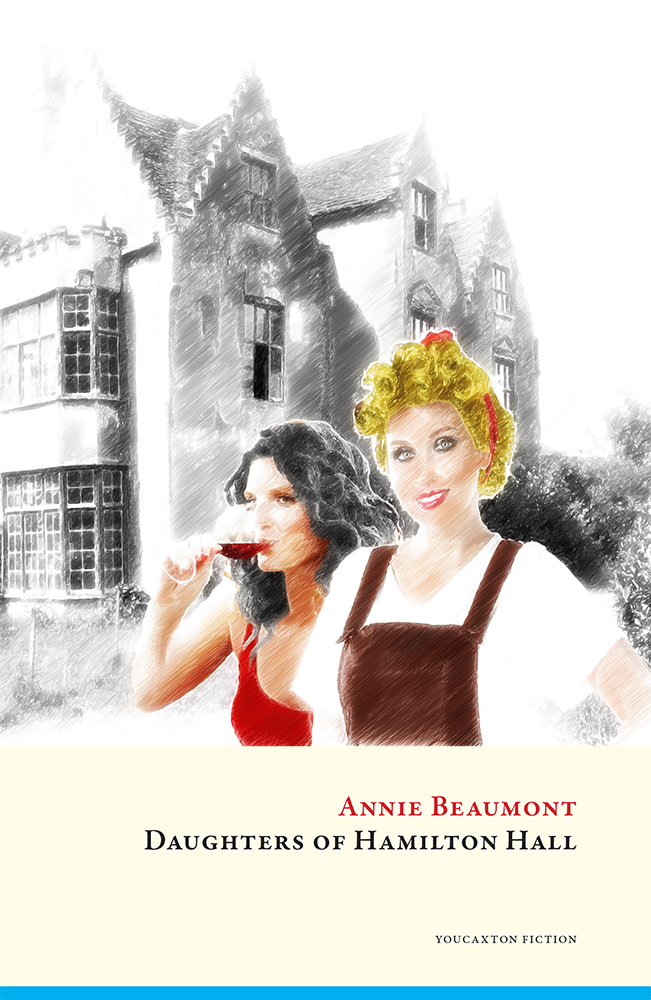
When a delicious young man knocks on her door one morning, it is the first time Laura has ever met an heir-hunter. And she has no idea that she’s ever had a great aunt either, let alone one from whom she is to inherit a neglected eighteenth-century mansion called Hamilton Hall in Norfolk.
Who were the Boulais-Hamilton family anyway? And where does Laura fit in? After all, she grew up with a single mum and had no other living relatives, as far as she knew. And how did her late mother come to be estranged from the Boulais-Hamiltons if they were her kith and kin?
If this is no fairy story, how can Laura, a part-time undergraduate student and part-time care worker, possibly find the money to restore Hamilton Hall to its former glory, let alone afford to live in it?
The answers to these questions will change her life and tell a story that spans five generations from World War Two to the present day.
Annie Beaumont was born in Scotland and left before her first birthday. She was brought up in various places around England and the Far East. At 47, she began her Bachelor’s degree at Sussex University and went on to complete a Master’s at the University of East Anglia (UEA) and a PhD at Essex. She has taught sociology at Essex University and social sciences at The Open University. Annie is currently a student at the Unthank School of Writing in Norwich. Set in Wymondham, Norfolk, the county she made her own, Daughters of Hamilton Hall is Annie Beaumont’s first novel.
Reader Reviews
Amazon Reader Lovely read, heard about the book thanks to local newspaper.
Read in a day - could not put it down.
Characters were believable. Liked the time hopping element.
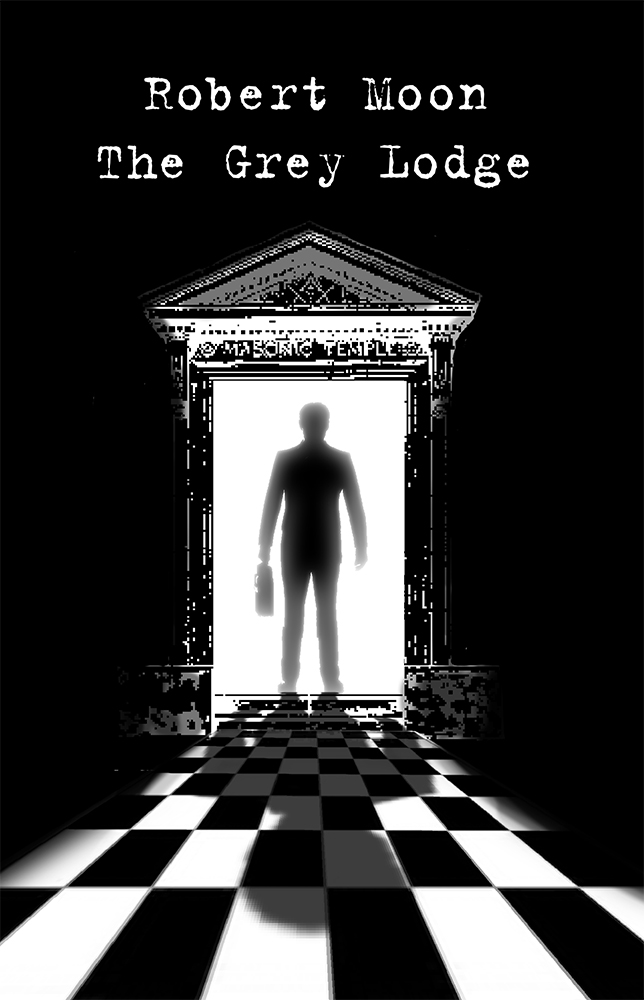
From the school visit we remember, to the local beat cop who helped us out, we trust the police and we respect them - all of them. Despite the occasional cover ups, the miscarriages of justice, the corruption and the hidden decisions, it’s very much in our British psyche to trust police managers because we trust the local cop.
What if we shouldn’t trust them? What if we really knew how a murder could be covered up? What if, under the surface, lay a secret brotherhood protecting the elite and the chosen?
Robert Moon describes a world where senior police managers are untouchable, celebrities and politicians are protected after committing evil crimes, and when one man stands against them there is nothing they won’t do to hide the truth. It’s fiction – or is it?
Robert Moon’s vivid descriptions, detail and accuracy to police procedures and management are rooted in twenty-one years serving the public at the front end of policing in Scotland.
Robert Joined 23 SAS, became “Sabre”, and a squadron member for four years before accidentally joining the police. He then walked, drove and ate ice cream in one of the toughest areas in Scotland for eight years before being exiled to the middle of nowhere. As the police changed from serving the public to serving statistics, he started to see a dark side to police-service and finally left the job, fed up of the corruption, nepotism and bullying, and after refusing his long-service medal. He now travels the world and complains a lot.
Reader Reviews...
Douglas Walker - The Sun Newspaper
Robert Moon has lived a full life. As part of the SAS he put his life at risk serving around the world.
After packing it in, he moved to the 'teuchter' branch of the Scots police expecting a simple life. Instead he was met by bent coppers and corruption dripping through the ranks from the highest echelons of the force.
Written with gallows humour, Moon is left deeply traumatised by what he experienced.
His description of front-line policing is too shocking to believe.
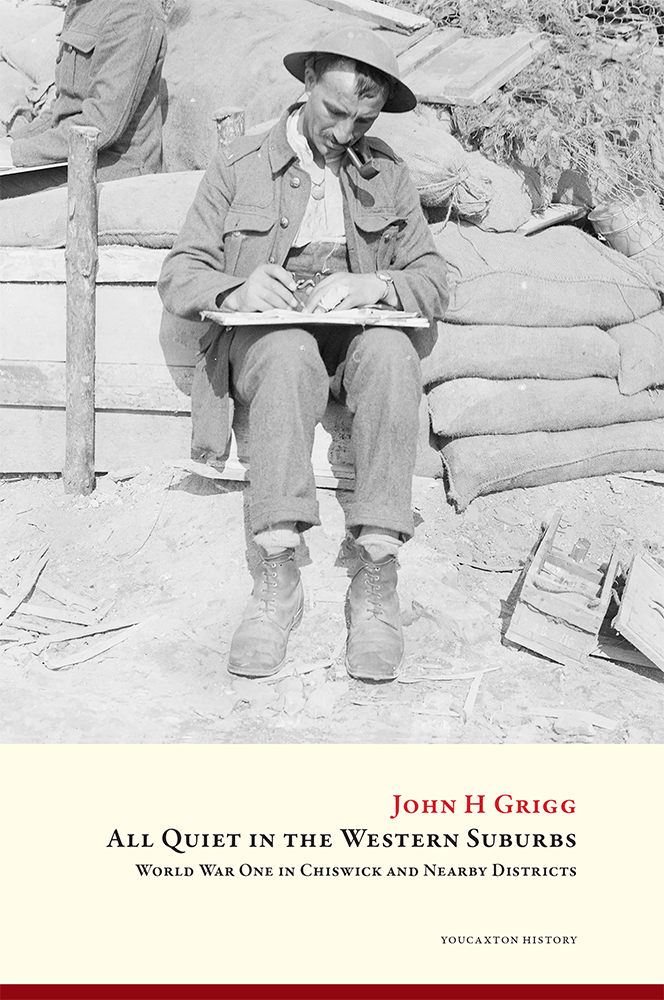
Millions of letters were written home by soldiers and sailors in the First World War and the men from Chiswick, West London, were every bit as prolific as their companions from elsewhere. Most of the letters in this book were sent to the Rev. Oldfield in Chiswick and he sent them on to the Chiswick Times, but there are others are to relatives, friends and employers and the Chiswick Working Men’s Club, and there are interviews and reports from journalists in the Chiswick Times and the Acton Gazette.
This is a unique record of the experiences of servicemen from the district who served all over the world. They describe the horrors of the war, writing of ‘Jack Johnsons’ ‘Rum Jars’ and ‘Coal Boxes’ (all nicknames for enemy shells and bombs) although often with feigned indifference, but many do not touch on the horrors at all - perhaps to protect relatives and friends from anxiety. The war was not confined to the European Western Front and this book includes letters and reports from other parts of the world: India, Africa, Egypt, Palestine, Greece, Mesopotamia (present day Iraq), and the Dardanelles. There are even letters from Russia where British forces were engaged against the Bolsheviks after 1918.
John Howard Grigg was born in Feltham, Middlesex in 1935. He has lived in West London all his life apart from two years in Nottingham with relatives during the Second World War, and two years National Service with the RAF. He retired from the Midland Bank in 1987 and has always denied he was ever a bank manager. He served as a local councillor in Hounslow from time to time between 1958 and 1990. He is an amateur local historian specializing in local social and political history.
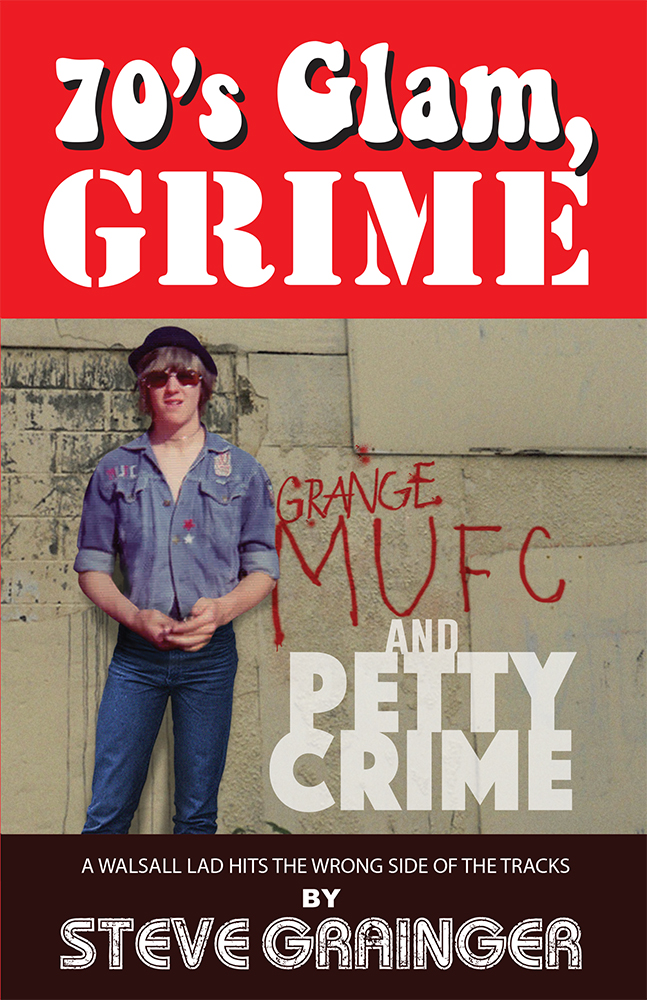
Step into a decade where political correctness was frowned upon, when parental guidance was almost non-existent, where Social Media only existed in the mind of an incarcerated lunatic and where 18” wide flares were considered the height of fashion.
Welcome to the 1970’s.
Join Steve on his fascinating journey during a time where his taste for adventure and mischief were allowed to flourish – and very often, allowed to grow totally out of control.
From working on a fairground at the age of 11, to following his beloved Man United around the country by the age of 14 – this is an eye-opening exposé of a young man who stumbled in and out of court during his teenage years.
Set amidst the backdrop of the miner’s strike, the fall of a government,dubious glamour, charming innocence and a touch of brutality – take a step back into a time when colour TV was considered new technology, where many a fashion crime was committed and when violence on the football terraces was considered a national past time.
Born in 1960 in Kingstanding, Birmingham (in the same council house, his mom was born in) Steve was the second oldest of five children and he was up to mischief from the day he started to walk. His dad was a self-employed builder and his mom did out-work for local factories and did various cleaning jobs. It was hard going in the mid 60’s and during the summer holidays and aged only six, Steve would be given a jam sandwich by his mom and told not to come back until teatime. He would spend most of his days exploring with friends in the near by Sutton Park. Steve moved to Aldridge, Walsall in 1968. Prior to moving to Aldridge, for a full school year, come rain or shine Steve commuted very day (without his parents of course) from Birmingham to Aldridge on the famous Harpers buses. Always a bright and inquisitive child, Steve struggled with school work and to reflect attention away from his academic failures, he was happy to play the class clown. As a teenager Steve started to follow his beloved Manchester United, home and away and made several appearances in front of the magistrates. Still very much struggling to learn his ABC’s Steve officially left school at 15 and immediately got himself ‘A Local’ and a job in the building trade. Steve stayed in the building trade until he was 20, then he moved on to bigger and better things.
With Forwords by Man United Legend Norman Whiteside & star of stage & screen actress Shobna Gulati
NORMAN WHITESIDE - Manchester United & Northern Ireland Legend!
‘I have known Steve for several years mainly through his interest in football memorabilia and of course Man United. The late 1970’s always reminds me of my Doc Martens days and travelling from Belfast to Manchester every weekend to train with Man United schoolboys - great times. Mainly through humour and sometimes heartache, Steve has certainly captured the mood of a teenage boy growing up in the turbulent 1970’s. Anyone who was around in the 70’s will immediately identify with Steve’s book.
I just know the book is going to be a great hit and will sell like cup-final tickets’
SHOBNA GULATI - Actor
‘Steve and I first met back in 2008 in very rowdy bar in Moscow. We were both in the Russian capital to see our beloved Manchester United win the Champions’ League. We have kept in touch ever since.
Steve has been lucky enough to lead a very exciting and well-travelled life and whenever we meet up, Steve has always been wonderful company and has great stories to tell.
I’m not the least bit surprised Steve has decided to put his experiences down on paper and I am in no doubt that Steve’s book will be a great success’
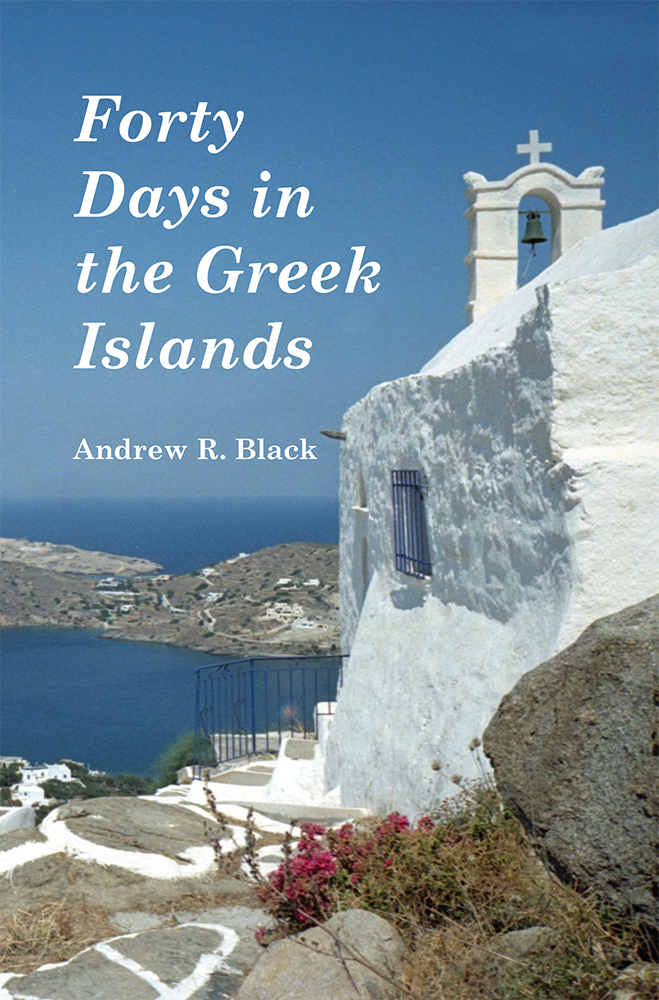
From their very first visit to a Greek island, Andrew and his wife Morag were hooked and kept going back for more. As they got to know the country and the language better, they ventured further off the standard tourist trail, finding an endless variety of new places to visit. Twenty five years later they are still exploring and learning about the islands.
So what exactly is the attraction of travelling around the Greek islands? There are plenty of guidebooks full of factual information to help you find your way about. Instead this book gives you an insight into some typical day-to-day experiences you might have. It is a personal recollection of forty individual days spent getting to know a selection of forty different Greek islands. It shows why Greek island hopping can be so addictive.
This is a comfortable, pleasing book to read - it feels like a collection of short stories to be enjoyed at will, and not necessarily in order. Each island with a story of its own, as and when. Slow read...slow food. The style of composition was an apt reflection of the 'there's always tomorrow' Mediterranean way of life that Andrew Black has obviously felt and absorbed. So many mythological-sounding place names are mentioned, therefore the maps outlining the islands were really useful, as was the separate and clear list of island names at the end of the book that could be seen at a glance. Sometimes, when you read travel books, you are left wondering, "yes, but do they really know?" Having spent so much time in the Greek islands, it can be seen from Andrew's descriptions that, yes, he does really know, and has looked and lived beneath the surface of the Greek island culture. He writes it well, too. And on crisp, pure white paper.
A very enjoyable book that has inspired me to expand my knowledge of the Greek islands. There are several hand-drawn maps included, however this is not a standard guide book but an appealing account of experiences from many years of travel, including brief notes on Greek history (mythical, ancient and modern) interspersed with observations on geography, birds, plant life and delicious food. Not all tourists wish to leave the mainstream resorts, however the anecdotes in this book describing encounters with friendly, generous islanders should encourage many to step away from the crowds and undertake their own mini-adventures. Just ensure you leave enough time to relax each day in a local cafe to sip your iced coffee and savour the charm of Greek island life! Well worth reading.
Great book - the basis of next years holiday plans, makes Island hopping sound much easier than I had imagined and I may avoid some obvious mistakes (you pay when you get off the bus!). Recommended read in the planning stage of a holiday to the Greek Islands.
This is one of the best books I have ever read about the Greek Islands and as a regular traveller in Greece I am fussy!
I only wish he would write some more.
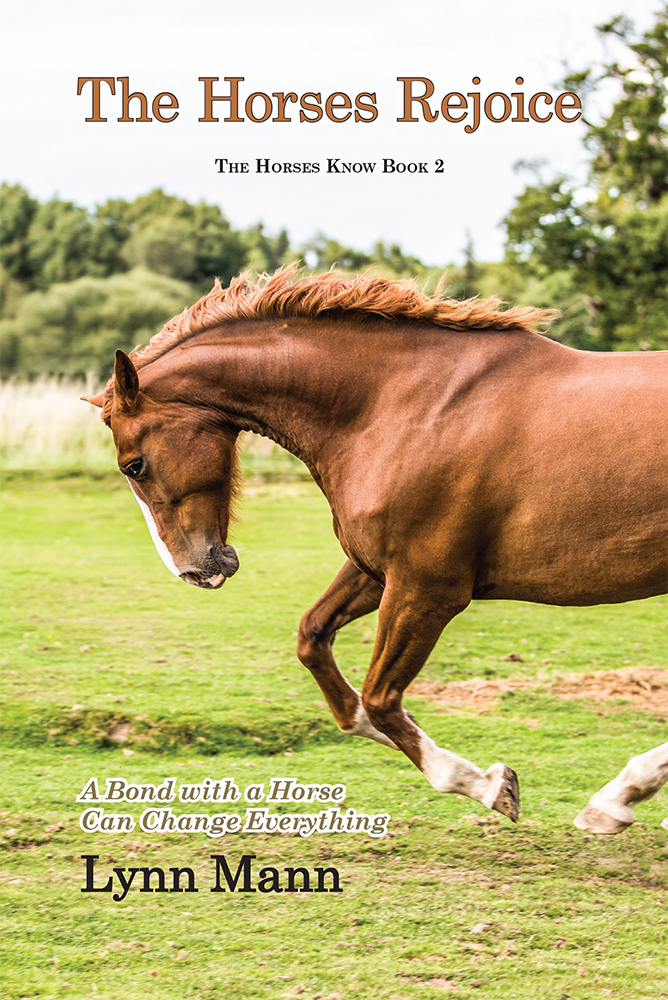
Amarilla and Infinity have been the catalysts for change that they agreed to be, but they know there is more to be done. If they can befriend the Woeful and persuade the rest of humankind to do the same, then the ways of The Old will forever be in the past.
Amarilla, Infinity and their friends set out on a journey to find the Woeful, only to discover that their search becomes something so much more due to the horses they meet along the way. But they never forget what they agreed to do. They must find the Woeful. And then they must be willing to risk losing everything.
Lynn Mann is a writer with a long-standing involvement with horses. During her school years, she spent as much time riding and being with horses as she could. She took a break from horses to study for her biology degree and then on leaving university, realised her dream of having her own horse for the first time. She worked on show-jumping, racing and dressage yards before starting a business as a saddle consultant and riding instructor, which involved working both in the UK and abroad.
Carrie - 5 star review I absolutely love this book. It is a worthy sequel to the brilliant The Horses Know, and I have reread this book no less than three times so far. I get something more from it every time I read. Yes, it is a novel set in a fantasy future and is a wonderful compelling story, but the ideas behind the book are no less real for that. Get talking to your horses, listen to what they have to say - anyone can do this, truly. This book will show you the way, inspire you, and change the way you interact with your horses forever. Let Amarilla, Infinity and the Kindred open your heart and your mind. It is an incredible book and worthy of its' current no.1 position on Amazon in the Equine books section. I cannot wait for Book 3 . . . .
T Stretton - 5 star review
It is not often I feel inspired by works of fiction, but both this book and 'The Horses Know' have certainly changed the way I view the world. Aside from that, the easy style in which it is written and careful storytelling have kept me glued to the pages, day after day, just as a good book should! I am actually rather sad that this story is over! As with the first book, this is most definitely not just for 'horsey' people; such an interesting idea needs to be shared!
Tracy - 5 star review If you enjoyed The Horses Know then you will certainly enjoy The Horses Rejoice. Lynn Mann has a talent that is unique, her books will grab your attention and not let go until you've read the whole book so make sure you have lots of spare time. The Horses Rejoice continues the story but with its own individuality, I just hope Lynn is preparing to write the next book. Every horse lover or even those who like a good read should have these books in there possession.
Beki - 5 star review
Such an amazing book! I loved the first one (The Horses Know) and this was a fantastic continuation of the story. If you have horses you need to read these books - there are some wonderful insights and they have helped me immensely. Please write more Lynn!
Emma Magliocco - 5 star review
Highly recommend excellent read could not put it down anyone who has horses would love this book as I did.
Kindle Customer - 5 star review
I wasn't sure if this would be my kind of book but I absolutely loved it.
It's well written and such a clever idea. I found myself relating things to experiences with my own horse and I feel more connected to him now.
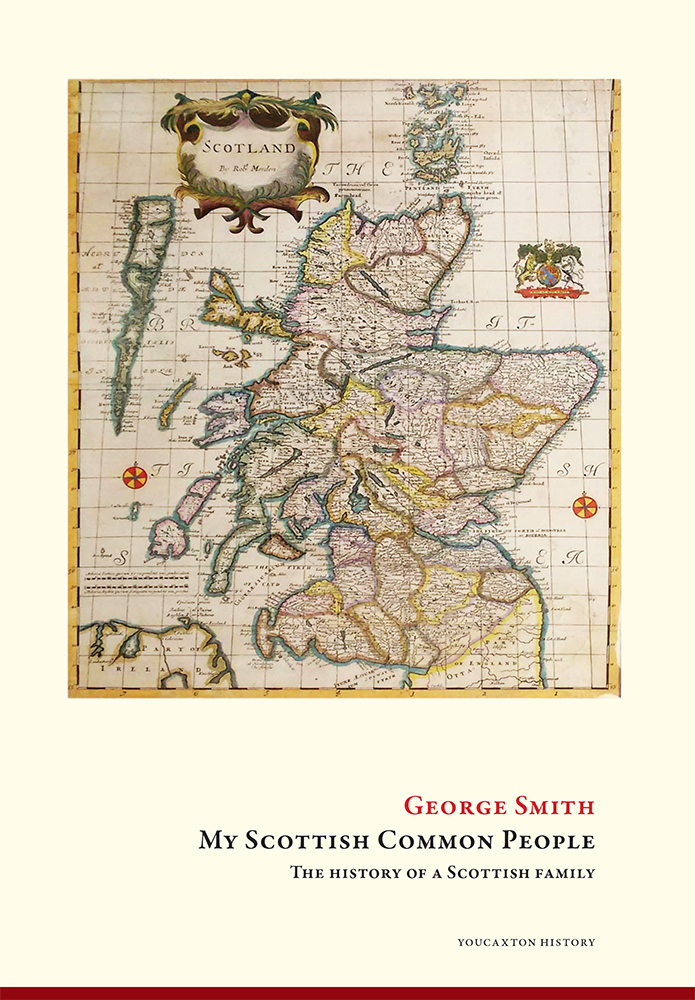
My Scottish Common People is the account of a family history which could stand for a history of the Scottish working class over the last four hundred years. George Smith has tracked eight paternal and maternal lines of forebears, common people who lived in Angus, Inverness-shire, Perthshire, Fifeshire, Orkney and Dundee. They include jute mechanics, seamstresses, handloom weavers, smallholders, farm hands, and fishing families, and finally the not-so-common author’s father, a shipyard joiner who became a trade union leader, TUC president and knight of the realm who will be familiar to many in the Labour Movement.
This book tells of the life events of ordinary people and their pursuit of livelihoods. Included are: members of a congregation that quit the Church of Scotland over a point of principle in 1733, a thirteen-year-old fisherman who joined the naval militia during the Napoleonic war, a politically active shoe clicker who supported a Proletarian Sunday School, a stone mason who helped to build Stevenson lighthouses, an Orkney ploughman and family who migrated to Dundee for a better life, a poor agricultural labourer given free oatmeal and cash from the the Church of Scotland, a widowed mother who survived as a seamstress. All are representative, including, and perhaps especially, a handloom weaver, later soldier, who was in a mutiny in 1794.
George Smith was born in Dundee and moved to England as a child. He has since visited Scotland many times. He was educated at Nottingham University, Garnett College, the London School of Economics and the Institute of Education, London University which awarded him a doctorate. For most of his working life he was a lecturer in social studies and contributed to academic publications. He was a magistrate for nine years. In retirement he has furthered his long-held interest in family history through research and published articles. A volunteer, he is an adviser for Citizens Advice. He lives in Worcestershire.
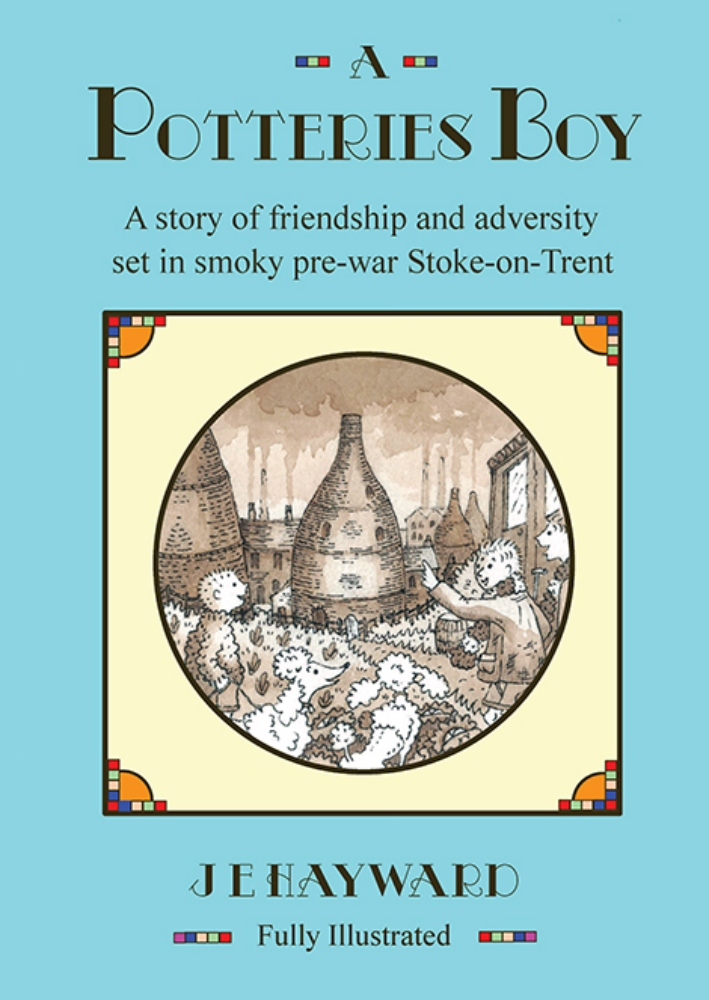
Set between the wars and touched by both of them, this is a story about the transformative power of creativity… and the jealousy that it can arouse.
Whilst being true to the spirit of her late father, the Royal Doulton Art Director and designer Walter Hayward, the author has spun an exciting tale of loss and restoration, friendship and bullying, in which a close-knit community comes together to help Walter achieve his dream of creating a great Dragon Vase… with surprising results!
And not everyone is friendly… The lamplit streets and smoky bottle ovens harbour an evil presence.
This is a cosy story – with a dark edge.
Jean Hayward was born, grew up, and worked in the Potteries before leaving for university and a career as an English Lecturer in the English Midlands. Jean is now retired and writes and illustrates nostalgic novels inspired by her hometown and by her father, Walter Hayward, whose fictional childhood adventures form the basis for themes dealing with love and loss, the supernatural, transformation, restoration, and the triumph of kindness and love over frailty or even downright evil. Jean has a horse, a Shetland pony and a cat and enjoys bringing animals and humour into her writing.
When you have produced the final draft of your book, it is always advisable to have the text read and checked by a professional editor or proof reader.
You may have friends that are willing and competent to do this and we can advise you on the type of editing that is required.
We can offer four levels of editing as well as proof-reading.
You choose which, if any, are appropriate in your case: 1. Edit of sample pages and short report (£30)
We will edit a few pages to highlight editorial issues so that you can look for similar problems throughout the book.
This will reduce the amount of further copy-editing required when the book is finished. 2. Broad structural editing and criticism (£5 per thousand words)
A structural review is particularly relevant for works of fiction.
The structural reviewer will address the following main areas and produce a short report for the author ” Read More 3. Copy editing (£10 per thousand words)
A copy-editor takes a close look at your text, line by line, with an eye to grammatical errors, repetition, inconsistency and lack of clarity. The copy editor will make changes to the text, with suggestions for rewriting, grammar, and punctuation. When you receive the edited version, you have the final choice about accepting of rejecting the individual changes. 4. Proof Reading (£8 per thousand words)
Proof reading is a line-by-line check that the book is ready for publication. Proof readers will make small corrections for punctuation, grammar and spelling but they will not make significant changes to the text.
A proof reader will identify any significant issues and add comments to the text so that you can make those corrections yourself. 5. Consistency Scan
If you decide your book doesn’t need a full proof reading, we offer an electronic scan to search for common errors and inconsistencies. This looks at issues such as inconsistent spelling and inconsistencies of hyphenation and capitalisation.
We can also identify inconsistencies in the spelling of proper names. 6. Cover text
The quality of the text on the cover is very important as it indicates the quality of the writing in the book.
The title, sub-title and back-cover blurb are all important elements and we can work with you to make sure that these are correct and effective.
Copy Edit
Copy-editors get the raw material into shape for publication i.e they edit the copy.
When they have finished, the designer can lay out or typeset the book and produce a proof.
It is quite normal for the author to make additional changes after a book has been copy-edited.
Working through the material, the copy-editor may identify errors in spelling, punctuation, grammar, style and usage, but also very long sentences and overuse of italic, bold, capitals and exclamation marks.
They should correct or query doubtful facts, weak arguments, plot holes and gaps in numbering.
In fiction, they should also check that characters haven’t changed their name or hair colour, look for sudden changes from first to third person among other things.
The Copy-editor is not a proof reader and should not be expected to find all of the errors in the text particularly if the text is badly written to start with.
This is the job of the proof reader.
The final proof should be checked by a proof reader or an experienced reader friend before going to print.
It is almost inevitable (and acceptable) to miss a few errors which can be corrected in a later edition.
Proof Reading
Proof reading is a line-by-line check that the book is ready for publication.
Proof readers will make small corrections for punctuation, grammar and spelling but they will not make significant changes to the text.
A proof reader will identify any significant issues and add comments to the text so that you can make those corrections yourself.
If you have decided to complete this stage of the process yourself, we will send a detailed check-list to help you.
We ask you to try and ensure that the book is completely ready before we start the layout.
Once the layout has started, we expect that you might want to to make a small number of amendments but
if there are a significant number, we may need to charge for the extra time it takes to change the layout
so best to discuss this with us first.
Structural Review
In fiction, the main areas that a structural editor will address are:
Plot: Does the plot make sense? Is it believable? Is it satisfying or does it leave the reader frustrated? Themes: Are the themes effectively handled? Are there so many that the book lacks focus? Do they interfere with the plot or complement it?
Characterisation: Are your characters well developed and believable? Are they cast in a role that fits their personality? Do they sometimes behave out of character? Point of view/voice: Is the voice consistent or is it sometimes confused? Is the voice authentic? Are you using too many or too few POVs? Pace: Does the plot move forward at an appropriate pace? Should you cut that preface? Should the action happen sooner or should the tension build more slowly? Dialogue: Do your characters sound real when they speak? Is your dialogue cluttered with adverbs and beats? Do you use clunky dialogue to move the plot forward? Flow: Is the narrative interrupted by dead-ends and tangents? Is there so much back story that the main plot is dwarfed? Are there missing plot points that would give the narrative greater integrity?
In non-fiction, the principle is the same, but the specific issues are slightly different:
Thesis: Is your thesis relevant? Is it clearly defined or is it lost among marginal issues? Exposition: Are your arguments clear and cogent? Are they well researched and properly supported? Do they have a clear relationship with your thesis? Content: Are all the necessary topics sufficiently dealt with? Are the chapters weighted correctly? Is there superfluous content? Organisation: Is the information organised logically? Are tables and illustrations used appropriately? How many levels of subheads do you need and how should they be arranged? Tone: Is the tone appropriate for the audience? Do you need to eliminate jargon? Is the text accessible? Pace: Are there passages that are bogged down in detail? Do you spend too long on detail irrelevant to the main thesis? Are there areas that need further exposition lest they be skipped over?
Cover Text
The quality of the text on the cover is very important as it indicates the quality of the writing in the book.
The title, sub-title and back-cover blurb are all important elements and we work with you to make sure that these are as effective as possible.
Consistency check
If you decide your book doesn’t need a full proof reading, we can run an electronic scan to search for common errors and inconsistencies.
This looks at issues such as inconsistent spelling, hyphenation and capitalisation.
It also checks for consistent formatting of numbers and dates as well as undefined abbreviations.
Full Script Edit
The script that you deliver to us will probably constitute what the industry would classify as the ‘Initial Rough Draft’, i.e. a full screenplay written without any other professional input or advice, and probably without a great deal of rewriting. We work through your draft, line by line, scene by scene, and come back to you with a comprehensive set of notes from which you can then work towards the official ‘1st Draft’. Some of our notes will be broad and general, dealing with such areas as the overall shape and structure, pacing, plot and character development; others will be far more specific, with corrections, clarifications and suggested cuts etc. It is of course entirely up to you whether or not to take these suggestions on board, and to what extent.
Subsequent Script Edit
It is very normal and generally beneficial for the script-editing process to go through at least a couple of cycles
i.e. the rewritten draft to be worked through once again by an experienced script practitioner – though this would be entirely at the discretion and behest of the writer.
Ongoing Support
We aim to make your self-publishing venture an enjoyable and rewarding experience.
Publishing is a complex business and we treat every book as a separate project.
We explain all of the stages at the outset and we manage the project schedule for you. This will include all of the expert services you have requested for editorial, design, printing, distribution and collection of royalties, keeping in close contact with you throughout the process.
You will be allocated a project-sheet on the YouCaxton website so that you can monitor progress and ensure that all stages are properly completed.
If you would like to see an example of a Project-Sheet…
go to My project on the menu and enter…
Username: Sample
Password : welcome.