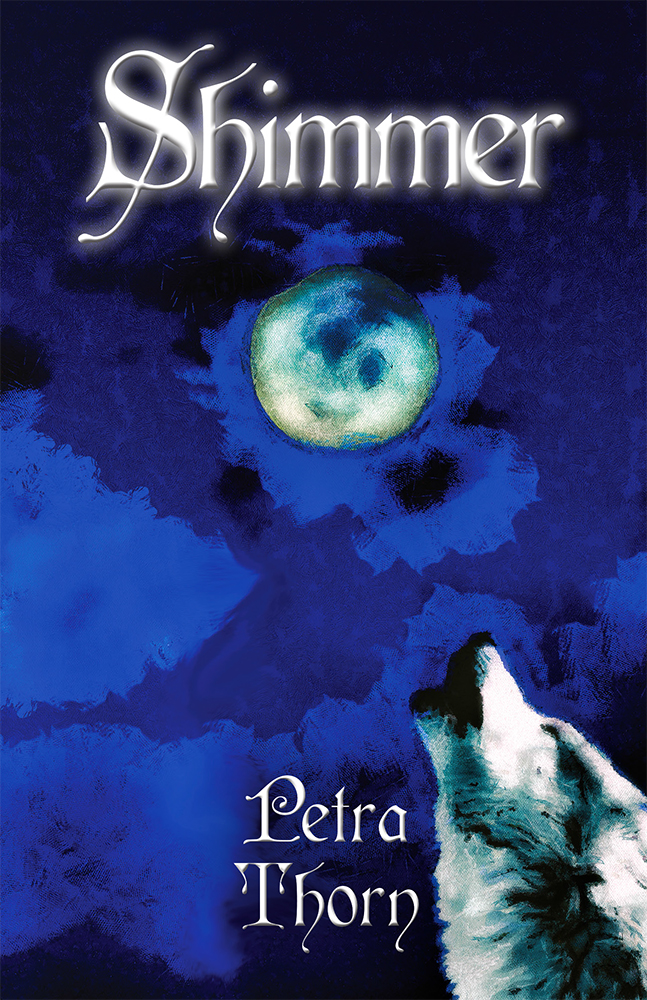
One doom-laden day, a young woman called Paige journeys home. She has received a phone call that drags her back to her Nan’s cottage, the cottage where she spent much of her childhood and where she grew up after her parents split up; Paige chose to live there with her father alongside her Nan. Unbeknown to her, the village had hidden secrets, secrets that are connected to Paige’s family. Can she unravel the dark mystery in time? Or will she be placing herself in the path of peril? If she cannot work out who can be trusted, she could be placing herself in serious danger...
Published:
29th February 2016
Paperback:
176 pages
Price:
£7.99
ISBN:
9-781911-175148
Available from YouCaxton Pay with PayPal
£7.99 (+ £2 postage)
Petra is currently living in the Shropshire area.
Her daughter hopes to follow in her mother's footsteps and is working on her own books.
This flagrantly honest book documents the ascent/descent of an ageing ski-bum from city-living executive to garage-dwelling chalet-host. It describes how the ski-bum’s escape from the rat race is affected by means of a rented chalet in the French alpine town of Morzine, where his ‘Chalet Project’ teaches him new and strange domestic skills and he learns a lot about Land Rover maintenance - it also causes him to lose his home and his wife and to stare down into an alcoholic crevasse. On arrival in chalet land he is frequently abducted by the ‘Après Aliens’ and hears voices in his head - his ‘Ski Demons’.
Enter the world of ‘girlfriend skiing’ and of the ‘Ski Nazis’ and other such weird creatures and find out what ski-bums do in the summer. Feel for the author as he attempts to qualify as ski instructor and Ski Club of Great Britain Leader – only to discover that he’s not actually very good at skiing!
This book is also a useful manual for skiers. It examines skiing philosophies and looks at common skiing phobias. Finally, rejoice as our ski-bum exorcises his demons and also his fear of avalanches and an infamous run called the Swiss Wall.
Amazon No1 Best Seller tag in Winter Sports - UK and France
Reader Reviews...
An excellent read!
A great book. I read it all in one go, so eager was I to follow the story. It is funny - I had a few laugh out loud moments which are unusual for me - and poignant too. The author is disarmingly honest about his exploits, the end of his marriage and his struggle to get back on his feet. I passed it onto my 17 year old son who also read it in one go and loved it and to my 80 year old mother-in-law who is reading it now. So, a book for everyone and a great little stocking filler!
Witty page turner of how one man started living the dream of many avid holiday skiers.
A great book. I read it all in one go, so eager was I to follow the story. It is funny - I had a few laugh out loud moments which are unusual for me - and poignant too. The author is disarmingly honest about his exploits, the end of his marriage and his struggle to get back on his feet. I passed it onto my 17 year old son who also read it in one go and loved it and to my 80 year old mother-in-law who is reading it now. So, a book for everyone and a great little stocking filler!
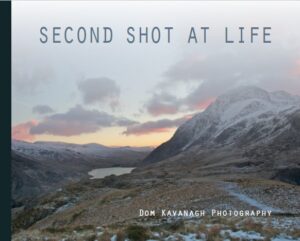
A double lung transplant during the summer of 2014 was the inspiration for this book which brings together some of my most treasured memories in a collection of wildlife and landscape photography intended to capture the essence of what makes life so precious.
As my own life neared expiry due to respiratory failure following 47 years of damage caused by cystic fibrosis, I returned to painting to reflect on what I would miss most and to celebrate subjects and scenes which are great for the soul and which reminded me of what we all have around us that we should be grateful for.
After a successful transplant, my painting continues and my photography resumed. Beavering away from my man cave nestled at the end of my garden in rural north Shropshire, surrounded by woodland and its evocative sights, sounds and smells, I have been inspired by the natural world to give something back, in the shape of this fundraising book, for the gift of organ donation so selflessly offered to me.
Purchasing this book will support the magnificent work of the specialist NHS adult cystic fibrosis team at Birmingham Heartlands Hospital and the Queen Elizabeth Hospital Lung & Transplant team (Birmingham).
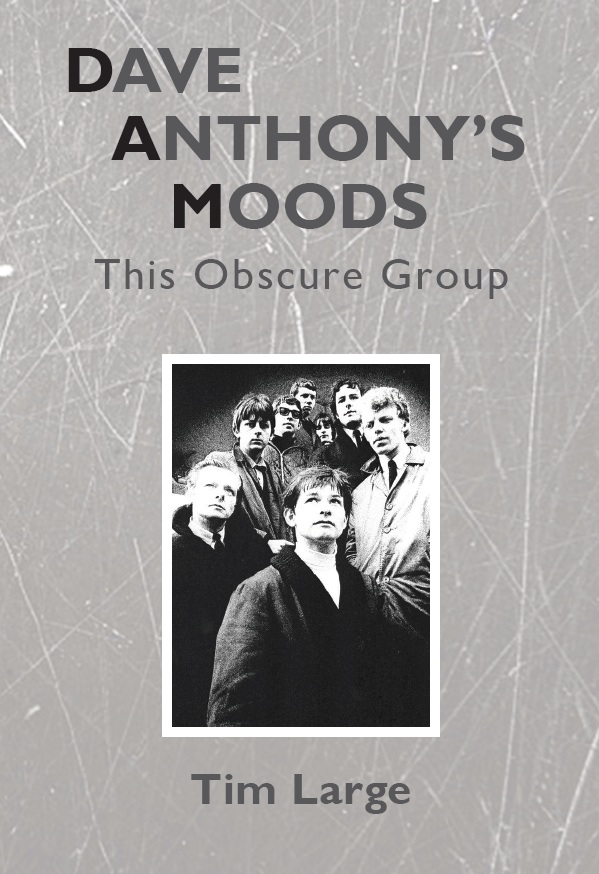
In the summer of 1965, Dave Anthony’s Moods, an eight-piece band from the musical cauldron of Bournemouth, were confidently poised to take over the world of jazzy, brassy, bluesy, popular music and rule supreme.
No such luck. Four years later, they were a backing group for a second-rate Italian pop singer and the band fell painfully apart. Nobody but a few dedicated fans remembers them today. This is the story of how that fiery ambition arose and how it developed and mutated - and how it descended in fits and starts into final failure.
Dave Athony's Moods is Tim Large's account of an amazing journey of peaks and troughs, hilarity and boredom, triumph and occasional tragedy, all seen through his inspired, time-distorted prism. He saw it all, from before the beginning until after the very end. This is his version and he's sticking to it.
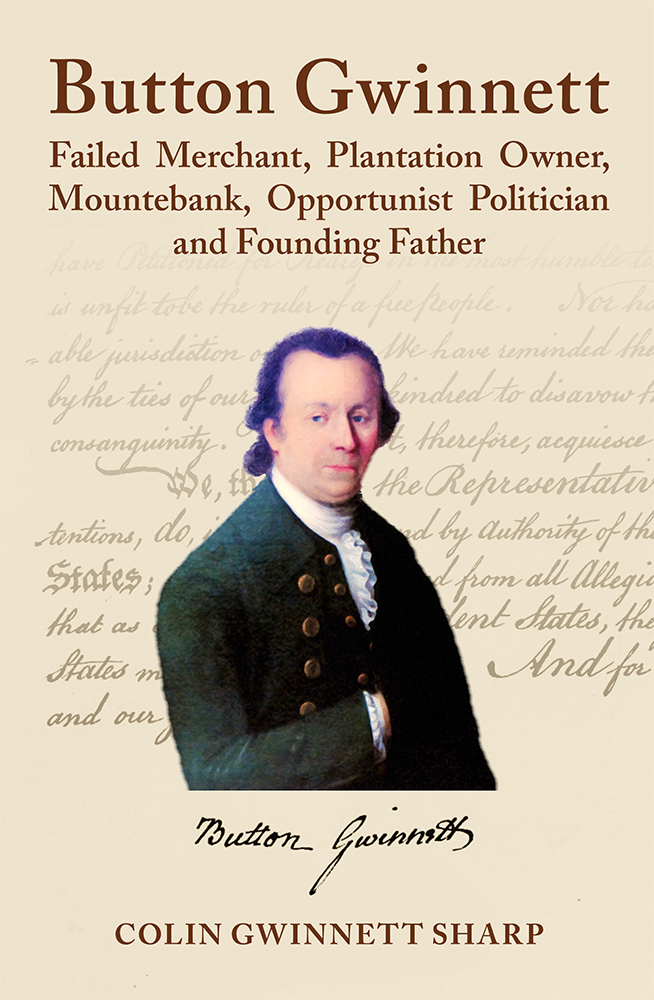
Button Gwinnett was a signatory to the Declaration of Independence. His short-lived but meteroic political career has invited much conjecture but the lack of any obvious legacy has since condemned him to semi-oblivion - apart from his signature which is now the most sought after in the United States.
This book fills a gap in our knowledge. It tells the story of Gwinnett's life in gripping detail: from 1762 and his arrival in America as a bankrupt Englishman, to Founding Father in 1776, and finally to his death in a duel the following year. It examines how he rose by dubious means to become one of the largest landowners in the State of Georgia and leader of the Popular Party, and it lays out the complex steps by means of which, in 1776, he placed his signature on the Declaration of Independence and became successively Speaker, Commander-in-Chief and President of Georgia - before an untimely death in an unnecessary duel.
Colin Gwinnett Sharp is a former Royal Navy Commander and an indirect descendant of Button Gwinnett who first came to know of his forbear's life whilst serving in the British Embassy in Washington DC.
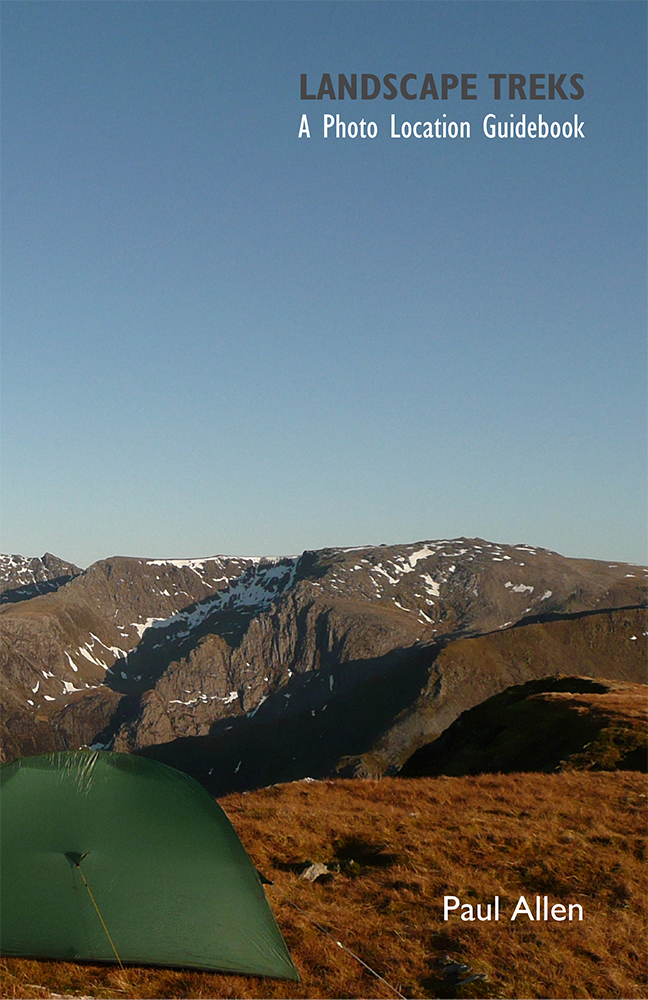
Landscape Treks is a photo location guidebook that takes you round some of the UK’s wildest and most photogenic mountain scenery. The walks are based around getting the best images from a visit to an area by delivering in depth and well researched route descriptions, getting you off the beaten track.
They set out a number of key photographic locations along the route with compositional pointers for each location. Also included are a number of wild camping locations which allows you to stay out in some stunning places and maximise your time in the hills. The routes can be split into short (few hours) sections, full day walks and two day overnight trips. These walks cover some of the finest mountain scenery in the UK whilst visiting lesser known viewpoints.
The guide is aimed at walkers, with a love of taking photographs, and landscape photographers, of all abilities, who are looking for new ideas on where to visit to capture their own stunning landscape images.
With 16 locations around the UK, in The Lake District, Snowdonia, The Brecon Beacons, The Peak District, The Pennines and The Scottish Borders, this book has 140 images to inspire you to pack up your rucksack and go explore over 70 photogenic viewpoints.
Paul Allen has many years’ experience mixing wild camping and photography as well as arranging trips for clients. These have taken him all over the UK and Europe.
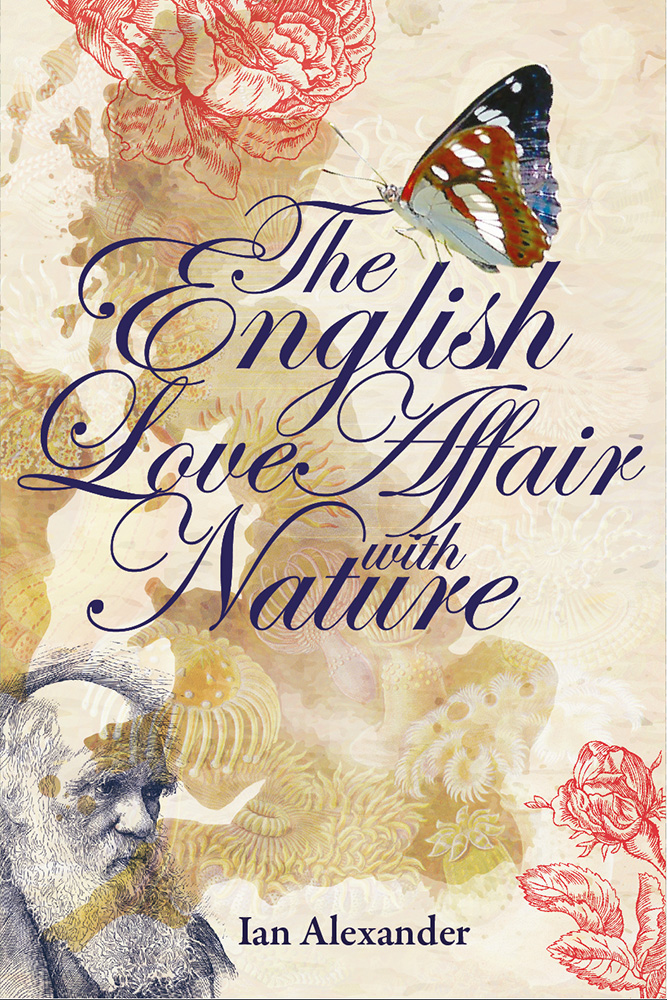
We English, supposedly cold and unemotional, are helplessly in love with nature. We fell in love two hundred years ago and, since then, have been on a wild roller-coaster ride through escapism, romanticism, art, animal cruelty, conservation, birdwatching, the back-to-nature movement and much more. Today we live with pets, gardening, wildlife documentaries and smartphone apps.
The English Love Affair with Nature tells the story of this extraordinarily long, tangled and passionate romance, how we fell in love, and why we are still mad about nature.
Ian Alexander was educated at Winchester and Cambridge. He has written
three books and many peer-reviewed articles on software engineering. He
has been in love with nature all his life, and became fascinated by the
question of how, why, and when a whole nation fell in love. www.obsessedbynature.com
Passionate landscapes with an engaging guide
Ian Alexander introduces his theme with a wink
..'the facts alone can be dry- but the bump and grind are not easy to put into words after the event.'
So we can expect a factual account of the development of awareness of Nature – matched with a love affair. He's set himself a hard task – and he succeeds remarkably.
Historically he describes the English using Newtonian science to liberate themselves from the mental constraints of a medieval God-centred universe. This uncovers the combined potential of the quest for discovery and also reveals Nature in the raw as it were, fit to be wooed and pursued.
The scope of this passionate quest is phenomenal: from romantic poetry to village dogshows, from Victorian collectors to naval camouflage, traditional rural scenes to technical advancement. To a non-expert the research is impressively rigorous and credible.
However, this is not a catalogue; more of a ramble - discursive, unevenly paced according to the ground covered, with pauses for perspective or reflection. Our author /guide keeps us company with beautifully described vignettes of natural observation; - lending a beguilingly personal quality to big themes.
It is inevitably episodic- the kind of book that could be dipped into- but I found the story thread strong enough to keep me engaged from start to finish.
late eighteenth century the English people have been in love with nature
Ian Alexander’s book investigates the premise that since the late eighteenth century the English people have been in love with nature; with leisure time and literacy increasing and a rising number of available books about nature the love affair grew and with the population’s migration into the cities to fuel the industrial revolution’s need for workers the prevailing attitude altered from taking nature for granting to idealising it. Starting with the publication of Gilbert White’s ‘Natural History of Selborne’ and Thomas Bewick’s ‘A History of British Birds’ the relationship with nature is explored through a bewildering number of sources such as nineteenth century scientific pioneers Charles Lyell, Alfred Russell-Wallace and Charles Darwin but also landscape gardeners, romantic poets and modern children’s authors amongst many others.
Another theme of the book is the multi-faceted nature of the word ‘nature’, from harsh agricultural drudgery to idealised rural fantasy and from the viewpoints of both individuals and society. Controversies over the age of the Earth and evolution are examined, brought to public attention by the developing sciences of geology, palaeontology and taxonomy. The growth of the conservation movement from the end of the nineteenth century is also explored.
The discussions are framed by the author’s own observations of nature, clearly communicating his passion for the subject. The chronology, dramatis personae and bibliography provide an effective aid to further research on the ideas the book raises.
Man and the Earth: Towards an Ethic to Transform our Relationship with the Planet
THIS BOOK, written fifty years ago, was among the first calls for a new system of values to govern the relationship between humanity and our planet. It has at least two claims on our attention. First, it contains a passionate and reasoned plea for the rights of non-human life. Second, Patrick Duncan proposes a new ethic which might enable fractious humanity to come together and help save the world from disaster.
Patrick Duncan was exceptional in being an innovative thinker with a breadth of understanding which spanned philosophy, ethics, law and science; and a political activist who dedicated his life to bringing an end to apartheid in his native South Africa. His biography was written by C.J.Driver Patrick Duncan: South African and Pan-African. James Currey (2000).
See also: wikipedia.org/wiki/Patrick_Duncan (anti-apartheid_activist)
Buy from YouCaxton (UK only)
£10.00 (+ £2 postage)
Man and the Earth is being republished fifty years on, because of its continuing relevance to some of the greatest global public policy challenges of the 21st century: the impact of humanity on our environment (climate change, biodiversity loss, etc.), and inequality of opportunity. The book makes exhilarating reading when Duncan describes the beauty of the world and human creativity. He does not flinch when reacting against the destructive side of humanity, and his anger and disgust are reminiscent of Swift. This is deeply personal, and many readers will disagree with some of his analyses. They will also be surprised, charmed, and moved.
From Sir Peter Scott’s introductory message... ... This book suggests an ethical approach which might serve to unite humanity ... I hope it will be read by all those who believe that the present philosophy of maximisation must be replaced by a new concept of high-quality human living ...
Reviews...
Dr. George Monbiot, Writer and Journalist at The Guardian This is a remarkably prescient book. Written at a time when technological optimism appeared to sweep all before it, Man and the Earth identifies some of the great themes that later came to dominate.
Cormac Cullinan, environmental activist, lawyer and author of Wild Law Man and the Earth is a book for the 21st Century which explains with great clarity why humanity cannot prosper unless we unite behind a common ethic centred on what is of greatest value to us all – Earth. The clarity, breadth and foresight of Patrick Duncan’s analysis and proposals for a way forward are all the more extraordinary for having been written in the 1960s. With the benefit of half of century of hindsight his discussions of ideology, population increase, global warming, the depletion of the ozone layer, the destruction of wild places, and the extinction of species seem prophetic. Yet global society is only now beginning to explore the solutions that he proposed. Only in the last few decades have serious attempts been made to determine the “budgets” that he proposed for establishing the ecologically sustainable limits of human impacts. Even more recent is the emergence of a global movement that advance his insight that it is essential to embrace the establishment of a balance and harmony between humanity and rest of the community of life as the purpose of life, and that achieving this requires fostering our inherent love of Earth. The fate of most, even all, of humanity will be decided during the first half of this Century. One of the best ways of enhancing our prospects is to read and act on Duncan’s insights. The Duncan family deserve credit for republishing a book that was so ahead of its time, now, when its time has come.
Satish Kumar, Editor-in-Chief, Resurgence & Ecologist magazine and Founder, Schumacher College Patrick Duncan was a prophet ahead of his time. His seminal book, Man and the Earth is at once visionary, profound and practical. Patrick Duncan reminds us again and again that we mistreat our planet home at our peril. Man and the Earth is a lucid engaging read, wisdom and deep insight leaps out of every page. The essential message of the book is very simple and clear; take care of the earth and the earth will take care of you. Furthermore, Patrick Duncan makes it clear that nature is not merely a resource for our economy, nature is the source of life. Even though the book was written 50 years ago, it is as relevant today as it was then.
When you have produced the final draft of your book, it is always advisable to have the text read and checked by a professional editor or proof reader.
You may have friends that are willing and competent to do this and we can advise you on the type of editing that is required.
We can offer four levels of editing as well as proof-reading.
You choose which, if any, are appropriate in your case: 1. Edit of sample pages and short report (£30)
We will edit a few pages to highlight editorial issues so that you can look for similar problems throughout the book.
This will reduce the amount of further copy-editing required when the book is finished. 2. Broad structural editing and criticism (£5 per thousand words)
A structural review is particularly relevant for works of fiction.
The structural reviewer will address the following main areas and produce a short report for the author ” Read More 3. Copy editing (£10 per thousand words)
A copy-editor takes a close look at your text, line by line, with an eye to grammatical errors, repetition, inconsistency and lack of clarity. The copy editor will make changes to the text, with suggestions for rewriting, grammar, and punctuation. When you receive the edited version, you have the final choice about accepting of rejecting the individual changes. 4. Proof Reading (£8 per thousand words)
Proof reading is a line-by-line check that the book is ready for publication. Proof readers will make small corrections for punctuation, grammar and spelling but they will not make significant changes to the text.
A proof reader will identify any significant issues and add comments to the text so that you can make those corrections yourself. 5. Consistency Scan
If you decide your book doesn’t need a full proof reading, we offer an electronic scan to search for common errors and inconsistencies. This looks at issues such as inconsistent spelling and inconsistencies of hyphenation and capitalisation.
We can also identify inconsistencies in the spelling of proper names. 6. Cover text
The quality of the text on the cover is very important as it indicates the quality of the writing in the book.
The title, sub-title and back-cover blurb are all important elements and we can work with you to make sure that these are correct and effective.
Copy Edit
Copy-editors get the raw material into shape for publication i.e they edit the copy.
When they have finished, the designer can lay out or typeset the book and produce a proof.
It is quite normal for the author to make additional changes after a book has been copy-edited.
Working through the material, the copy-editor may identify errors in spelling, punctuation, grammar, style and usage, but also very long sentences and overuse of italic, bold, capitals and exclamation marks.
They should correct or query doubtful facts, weak arguments, plot holes and gaps in numbering.
In fiction, they should also check that characters haven’t changed their name or hair colour, look for sudden changes from first to third person among other things.
The Copy-editor is not a proof reader and should not be expected to find all of the errors in the text particularly if the text is badly written to start with.
This is the job of the proof reader.
The final proof should be checked by a proof reader or an experienced reader friend before going to print.
It is almost inevitable (and acceptable) to miss a few errors which can be corrected in a later edition.
Proof Reading
Proof reading is a line-by-line check that the book is ready for publication.
Proof readers will make small corrections for punctuation, grammar and spelling but they will not make significant changes to the text.
A proof reader will identify any significant issues and add comments to the text so that you can make those corrections yourself.
If you have decided to complete this stage of the process yourself, we will send a detailed check-list to help you.
We ask you to try and ensure that the book is completely ready before we start the layout.
Once the layout has started, we expect that you might want to to make a small number of amendments but
if there are a significant number, we may need to charge for the extra time it takes to change the layout
so best to discuss this with us first.
Structural Review
In fiction, the main areas that a structural editor will address are:
Plot: Does the plot make sense? Is it believable? Is it satisfying or does it leave the reader frustrated? Themes: Are the themes effectively handled? Are there so many that the book lacks focus? Do they interfere with the plot or complement it?
Characterisation: Are your characters well developed and believable? Are they cast in a role that fits their personality? Do they sometimes behave out of character? Point of view/voice: Is the voice consistent or is it sometimes confused? Is the voice authentic? Are you using too many or too few POVs? Pace: Does the plot move forward at an appropriate pace? Should you cut that preface? Should the action happen sooner or should the tension build more slowly? Dialogue: Do your characters sound real when they speak? Is your dialogue cluttered with adverbs and beats? Do you use clunky dialogue to move the plot forward? Flow: Is the narrative interrupted by dead-ends and tangents? Is there so much back story that the main plot is dwarfed? Are there missing plot points that would give the narrative greater integrity?
In non-fiction, the principle is the same, but the specific issues are slightly different:
Thesis: Is your thesis relevant? Is it clearly defined or is it lost among marginal issues? Exposition: Are your arguments clear and cogent? Are they well researched and properly supported? Do they have a clear relationship with your thesis? Content: Are all the necessary topics sufficiently dealt with? Are the chapters weighted correctly? Is there superfluous content? Organisation: Is the information organised logically? Are tables and illustrations used appropriately? How many levels of subheads do you need and how should they be arranged? Tone: Is the tone appropriate for the audience? Do you need to eliminate jargon? Is the text accessible? Pace: Are there passages that are bogged down in detail? Do you spend too long on detail irrelevant to the main thesis? Are there areas that need further exposition lest they be skipped over?
Cover Text
The quality of the text on the cover is very important as it indicates the quality of the writing in the book.
The title, sub-title and back-cover blurb are all important elements and we work with you to make sure that these are as effective as possible.
Consistency check
If you decide your book doesn’t need a full proof reading, we can run an electronic scan to search for common errors and inconsistencies.
This looks at issues such as inconsistent spelling, hyphenation and capitalisation.
It also checks for consistent formatting of numbers and dates as well as undefined abbreviations.
Full Script Edit
The script that you deliver to us will probably constitute what the industry would classify as the ‘Initial Rough Draft’, i.e. a full screenplay written without any other professional input or advice, and probably without a great deal of rewriting. We work through your draft, line by line, scene by scene, and come back to you with a comprehensive set of notes from which you can then work towards the official ‘1st Draft’. Some of our notes will be broad and general, dealing with such areas as the overall shape and structure, pacing, plot and character development; others will be far more specific, with corrections, clarifications and suggested cuts etc. It is of course entirely up to you whether or not to take these suggestions on board, and to what extent.
Subsequent Script Edit
It is very normal and generally beneficial for the script-editing process to go through at least a couple of cycles
i.e. the rewritten draft to be worked through once again by an experienced script practitioner – though this would be entirely at the discretion and behest of the writer.
Ongoing Support
We aim to make your self-publishing venture an enjoyable and rewarding experience.
Publishing is a complex business and we treat every book as a separate project.
We explain all of the stages at the outset and we manage the project schedule for you. This will include all of the expert services you have requested for editorial, design, printing, distribution and collection of royalties, keeping in close contact with you throughout the process.
You will be allocated a project-sheet on the YouCaxton website so that you can monitor progress and ensure that all stages are properly completed.
If you would like to see an example of a Project-Sheet…
go to My project on the menu and enter…
Username: Sample
Password : welcome.