F. Scott Fitzgerald’s The Great Gatsby is one of the most enduring novels of the twentieth century for two almost contradictory reasons.
While being a precise and graphic depiction of the society which Fitzgerald himself relished and named ‘the Jazz Age’, its leading character is a person of ambiguity and uncertainty. It is reasonable to suppose that Fitzgerald meant this to be both a parable of the American Dream as well as a selfless love story.
From the novel we know something of Gatsby’s past: his humble origins, his early experiences as Jimmy Gatz, that he was decorated in the Great War and also that he went to Trinity College, Oxford. These truths emerge despite the fantasies and fictions he also adopts.
The time at Trinity College in Oxford would have been crucial for Jay Gatsby between his war time in France, his devotion to Daisy Fay, and his amassing of a huge fortune to secure her love.
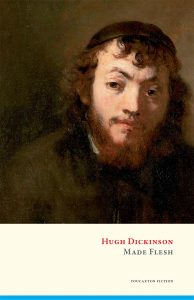
Gatsby at Trinity tells the story of his days in Oxford.
It has been carefully researched from both historical archives and contemporary records, with all the evidences of Fitzgerald’s own novel fully taken into account.
Ian Flintoff was a Modern Languages Scholar at Trinity College, Oxford, before becoming a professional actor, writer and director, and is a long-standing devotee of the works of F. Scott Fitzgerald.
Readers' comments...
"The substance and nuance of your book continues to amaze me. Thanks so much for the scholarly effort you put into it. I'm sure it's bound to be a classic."
"It's obviously been a tremendous labour of love for you, and displays loads of ingenuity and wit, for example your solution to the photographic mystery of the multitude of spires glimpsed through the chapel archway."
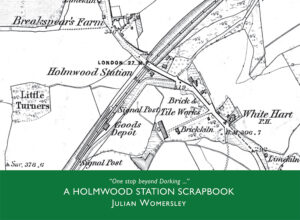
Like all good scrapbooks, this is a serendipitous collection of snippets from the past: photographs, press cuttings and other ephemera are brought together to tell the saga of Holmwood railway station and its role in the social history of a developing community in deepest rural Surrey.
Holmwood station has witnessed astonishing events since it first opened in 1867.
Extraordinary people have trodden its platforms – ranging from a Royal Prince about to be proclaimed King to pauper children sent from a London workhouse. Others included a Crimean War hero; self-made millionaires; gallant officers returning from the Boer War and, during the Great War, wounded officers delivered by ambulance trains. Even the German Kaiser, His Imperial Highness, Emperor Wilhelm II, once alighted at Holmwood.
Special trains came and went - bringing London society people to glittering parties in the country; taking outings to the seaside and visitors to the Crystal Palace or transporting troops to military manoeuvres on Holmwood Common. Suffragettes frequently used the station, as did the Surrey Union Hunt, who unloaded hounds and horses directly onto the platform.
Although aimed at the general reader, the fresh research and new material in this book will appeal to those with more specialist railway or historical interests.
Reader Reviews...
Chris Hewitt
A Holmwood Station Scrapbook is a multi-faceted gem which has been lovingly polished by its author, Julian Womersley, and sparkles with wit and wisdom. At its simplest level this is the saga of a railway station, but don’t be misled into thinking it’s a book for trainspotters; all human life is played out in these pages. There are tales of tragedy, triumph, paupers, politicians and parties which have been painstakingly collected from photographs, archive documents, press cuttings and other material and brought together in one delightful and thoroughly entertaining book. It’s an enchanting read and one I’d highly recommend.
“We love the book and it has also been very well received by our neighbours to whom I gave a copy. Charles commutes from Holmwood and is very intrigued.”
“A fascinating collection of information - it will take hours of study to absorb it. I have found that once opened, it is difficult to put down!”
Based in Sussex, Julian paints the landscape, coastline and urban areas in a style often described as 'contemporary realism'.
He studied illustration and printmaking at the Eastbourne College of Art for 4 years (under the tuition of printmaker Robert Tavener) before embarking on a career in graphic design and illustration.
Since 2004, when he had 2 paintings purchased by the House of Lords to complement an existing collection of period travel paintings, he has been painting and exhibiting in the UK and throughout Europe. He has been accepted 3 times to exhibit work in the Royal Academy Summer exhibition.
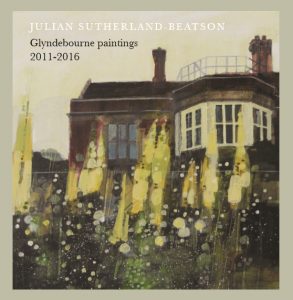
In 2009 Julian worked on a project entitled ‘Sussex 365, A Year in the Life’ which comprised 365 Sussex paintings. He was invited to show this work during the 2010 Glyndebourne Tour and then returned the following year, creating a a painting every day throughout the Glyndebourne season which were then exhibited in the Stalls Gallery . He has returned each summer since then, continuing the ‘daily painting’ tradition and this book features a number of his favourite paintings made during that time.
Published:
Jan 2016
Paperback:
124pages
Price:
£12.50
ISBN:
978-1-911175-03-2
Julian says “The opportunity to work at Glyndebourne over recent years has been both a pleasure and a privilege. There is always change and development to observe as preparations for the Festival season gather pace, both in the rehearsal rooms, backstage areas and in the grounds. I love to see the new plantings each spring and to feel the buzz of anticipation as the first performances draw near. This is mirrored by the burgeoning of the natural environment as the weeks pass, culminating in splendid maturity towards the end of August as the triumphant final performances conclude the season in Glyndebourne’s magnificent auditorium. The opportunity to experience the rhythms of this iconic place and to be welcomed into the life of such a creative and highly esteemed cultural institution has made producing these paintings a joyful and fulfilling experience.
This book contains some of my favourite paintings made here between 2011 and 2016. I hope you enjoy the collection”.
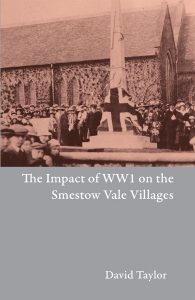
Perhaps the most popular strand of the local history of War World One concerns those who died in the war, looking at their lives and war experience, particularly the action in which they died or the unit they served in. Another strand considers the Home Front, particularly in the towns and cities or in locations where a notable activity took place, such as Zeppelin Raids or explosives manufacture. However, there is a third strand, equally important but little investigated, and that is the impact of the war on rural communities. This booklet looks at one such community, on the edge of the Black Country but clearly rural in character, the villages of South Staffordshire centred on what is now known as Smestow Vale.
Published:
Aug 2017
Extent:
64 pages
Paperback:
£5.00
ISBN:
9-781911-175742
£5.00 (+ £2 postage) Number of copies:
These villages have their own tale to tell of what happened between 1914 and 1918. There were the absences and deaths of many young, and not so young, men. But also there were air raid precautions, lack of public transport, increasing food production for local towns and themselves, new housing requirements and many other irritations and difficulties caused by the war. Followed by the celebrations at the Armistice and the signing of the Peace Treaties, and then the commemorations for those who would never return. The Impact of World War One on the Smestow Vale Villages looks at these villages to find out what we can discern after 100 years of what life was like in the countryside during The Great War.
A history of the Shrewsbury Drapers Company from the Middle Ages until the present day with special attention to the new Drapers' Almshouses. The Shrewsbury Drapers' Company looks at the effect of the Company on the town and on its development, the various charitable guilds and trusts connected with it and finally at the long struggle to create new almshouses for elderly citizens of the town and the successful conclusion to the project.
Published:
Sept 2017
Extent:
250 pages
Paperback:
£17.50
Hardback:
£25.00
ISBN:
9-781911-175506
Paperback: £17.50 (+ £2 postage) Number of copies:
Hardback: £25.00 (+ £2 postage) Number of copies:
Nigel is a chartered accountant with a passion for local history and cloud technology, he was master of the Shrewsbury Drapers Company in 2011/12.
He is married to Bridget they have three daughters and four grandchildren. Nigel`s other publications include Historical Hostelries with David Trumper, Silhouette, the story of the Little X, and a book for children, Baa Baa Blodwyn
Consciousness Matters addresses the age-old problem of the relationship between consciousness and the material world. In the course of exploring some of the history of this major philosophical subject it looks at a range of materialist responses, such as mind-brain identity theory, behaviourism, functionalism and supervenience, as explanations for consciousness.
Set against these positions is the view, first, that consciousness is neither material nor reducible to material and, second, that consciousness is a prerequisite for our knowledge of the material world. If the latter view is the case, the terms of the debate are shifted fundamentally.
The theories of idealism and dualism of the material and the conscious are considered.
In contrast to the dualism made famous by Descartes, according to which there is two-way causal interaction, the long-neglected theory of occasionalism is introduced and explained with reference to two significant philosophers associated with it. A case is made for a revival of occasionalism that takes into account a more modern perspective. The book ends with an acknowledgement that it has only scratched the surface of this vast and very challenging topic.
“Oh Bugger it! Why don’t we just go and live there?”
Next morning we left our home behind and set off on the first leg of our great antipodean adventure.This is the story of a ‘grown-up gap-year’ spent in New Zealand. A melting-pot of recollections, reflections and abundant digressions, it is, by turns, tangentially informative, subjectively insightful and forthrightly irreverent. The author recounts, with frequent characteristically acerbic asides, the trials and tribulations, highs, lows and flat spots of stepping ‘outside the box’ and thirty years back in time, into a new life on the other side of the world. Along the way, he touches upon a diversity of nebulously related topics, amongst which teaching, long-distance walking, bureaucracy and drinking beer are recurrent themes.
Anyone who has ever harboured a desire to seek out distant horizons will relate to the inherent urge to ‘up and go’ encapsulated in this account. Anyone who has never felt such wanderlust may find themselves re-evaluating their perspectives. Reading this book is unlikely to change your life but it just might change the way you think about it.
Godfrey Wilkinson grew up in Lichfield, Staffordshire in the English Midlands: a city with a proud cultural heritage and an established tradition of landlocked introspection.In his mid-50s, after some 30-odd years as a Secondary School teacher (with occasional forays into the real world of Business and Commerce), he decided to get off the grid and realise a long-held ambition to experience the New Zealand dream. His occasional newsletters prompted friends to say, “You should write a book about it.”
So he did.
He currently lives with his wife, Jayne, and their New Zealand sheepdog, above a taverna overlooking the harbour of a small Greek fishing village.
Reader Reviews...
Malcolm Cowburn Beyond drudgery: there is life after teaching
The title of the book is in Māori (‘Whā Kaupeka’) and then repeated in English (‘Four seasons in New Zealand’). Some chapter titles are in English and others in Māori indicating the emphasis of each section, I briefly offer the translation of the Māori words (with thanks to maoridictionary.co.nz): Pae Tawhiti (cast far away), Ngahuru (Autumn), Hōtoke (Winter), Kōanga (Spring) and Raumati (Summer). The attention to, and respect for Māori culture is one of the many strengths of this book.
In part personal memoir, drinking diary, nature journal, walker's log, cultural commentary and social polemic, this book is entertaining, informative and thought provoking. The author and his wife, both experienced teachers jaundiced with teaching policy and practice in the UK, decided to emigrate to New Zealand. The book is, in part an account of their experience. It captures, with humour, the frustrations of dealing with bureaucracies managing emi/immigration, house sale and purchase and employment in two countries at opposite ends of the globe. The acerbic eye of the author looks back in anger on the KPI driven world of English education managed by acquiescent careerists, and initially enthuses about the simple candour of staff-pupil relationships on the other side of the world. It is also an account of a long-distance walk undertaken by the author with two friends and his dog. The Cleveland Way is a 110 mile walk in North Yorkshire, England. The book is unified by the way it encounters the natural, cultural and historical worlds of both locations; these are well researched and expressed in an easy and accessible manner. The text is liberally punctuated with 'drinks breaks’ which the author manages with eloquent ease, savouring the new and relishing the familiar. The pains of emigration are not ignored, sadness and sorrow are economically yet powerfully expressed. Family ties and memories of England recur regularly throughout: humorously, for example, in the author’s early naturalist experiments that disturbed the, rhythms of family life, and poignantly in the references to his father. The book ends as it began with a refusal to accept life-numbing work conditions and a quest for adventure. The strength of this book is its clarity, and full-on engagement with the complexities and challenges of living fulsomely in the moment.
When you have produced the final draft of your book, it is always advisable to have the text read and checked by a professional editor or proof reader.
You may have friends that are willing and competent to do this and we can advise you on the type of editing that is required.
We can offer four levels of editing as well as proof-reading.
You choose which, if any, are appropriate in your case: 1. Edit of sample pages and short report (£30)
We will edit a few pages to highlight editorial issues so that you can look for similar problems throughout the book.
This will reduce the amount of further copy-editing required when the book is finished. 2. Broad structural editing and criticism (£5 per thousand words)
A structural review is particularly relevant for works of fiction.
The structural reviewer will address the following main areas and produce a short report for the author ” Read More 3. Copy editing (£10 per thousand words)
A copy-editor takes a close look at your text, line by line, with an eye to grammatical errors, repetition, inconsistency and lack of clarity. The copy editor will make changes to the text, with suggestions for rewriting, grammar, and punctuation. When you receive the edited version, you have the final choice about accepting of rejecting the individual changes. 4. Proof Reading (£8 per thousand words)
Proof reading is a line-by-line check that the book is ready for publication. Proof readers will make small corrections for punctuation, grammar and spelling but they will not make significant changes to the text.
A proof reader will identify any significant issues and add comments to the text so that you can make those corrections yourself. 5. Consistency Scan
If you decide your book doesn’t need a full proof reading, we offer an electronic scan to search for common errors and inconsistencies. This looks at issues such as inconsistent spelling and inconsistencies of hyphenation and capitalisation.
We can also identify inconsistencies in the spelling of proper names. 6. Cover text
The quality of the text on the cover is very important as it indicates the quality of the writing in the book.
The title, sub-title and back-cover blurb are all important elements and we can work with you to make sure that these are correct and effective.
Copy Edit
Copy-editors get the raw material into shape for publication i.e they edit the copy.
When they have finished, the designer can lay out or typeset the book and produce a proof.
It is quite normal for the author to make additional changes after a book has been copy-edited.
Working through the material, the copy-editor may identify errors in spelling, punctuation, grammar, style and usage, but also very long sentences and overuse of italic, bold, capitals and exclamation marks.
They should correct or query doubtful facts, weak arguments, plot holes and gaps in numbering.
In fiction, they should also check that characters haven’t changed their name or hair colour, look for sudden changes from first to third person among other things.
The Copy-editor is not a proof reader and should not be expected to find all of the errors in the text particularly if the text is badly written to start with.
This is the job of the proof reader.
The final proof should be checked by a proof reader or an experienced reader friend before going to print.
It is almost inevitable (and acceptable) to miss a few errors which can be corrected in a later edition.
Proof Reading
Proof reading is a line-by-line check that the book is ready for publication.
Proof readers will make small corrections for punctuation, grammar and spelling but they will not make significant changes to the text.
A proof reader will identify any significant issues and add comments to the text so that you can make those corrections yourself.
If you have decided to complete this stage of the process yourself, we will send a detailed check-list to help you.
We ask you to try and ensure that the book is completely ready before we start the layout.
Once the layout has started, we expect that you might want to to make a small number of amendments but
if there are a significant number, we may need to charge for the extra time it takes to change the layout
so best to discuss this with us first.
Structural Review
In fiction, the main areas that a structural editor will address are:
Plot: Does the plot make sense? Is it believable? Is it satisfying or does it leave the reader frustrated? Themes: Are the themes effectively handled? Are there so many that the book lacks focus? Do they interfere with the plot or complement it?
Characterisation: Are your characters well developed and believable? Are they cast in a role that fits their personality? Do they sometimes behave out of character? Point of view/voice: Is the voice consistent or is it sometimes confused? Is the voice authentic? Are you using too many or too few POVs? Pace: Does the plot move forward at an appropriate pace? Should you cut that preface? Should the action happen sooner or should the tension build more slowly? Dialogue: Do your characters sound real when they speak? Is your dialogue cluttered with adverbs and beats? Do you use clunky dialogue to move the plot forward? Flow: Is the narrative interrupted by dead-ends and tangents? Is there so much back story that the main plot is dwarfed? Are there missing plot points that would give the narrative greater integrity?
In non-fiction, the principle is the same, but the specific issues are slightly different:
Thesis: Is your thesis relevant? Is it clearly defined or is it lost among marginal issues? Exposition: Are your arguments clear and cogent? Are they well researched and properly supported? Do they have a clear relationship with your thesis? Content: Are all the necessary topics sufficiently dealt with? Are the chapters weighted correctly? Is there superfluous content? Organisation: Is the information organised logically? Are tables and illustrations used appropriately? How many levels of subheads do you need and how should they be arranged? Tone: Is the tone appropriate for the audience? Do you need to eliminate jargon? Is the text accessible? Pace: Are there passages that are bogged down in detail? Do you spend too long on detail irrelevant to the main thesis? Are there areas that need further exposition lest they be skipped over?
Cover Text
The quality of the text on the cover is very important as it indicates the quality of the writing in the book.
The title, sub-title and back-cover blurb are all important elements and we work with you to make sure that these are as effective as possible.
Consistency check
If you decide your book doesn’t need a full proof reading, we can run an electronic scan to search for common errors and inconsistencies.
This looks at issues such as inconsistent spelling, hyphenation and capitalisation.
It also checks for consistent formatting of numbers and dates as well as undefined abbreviations.
Full Script Edit
The script that you deliver to us will probably constitute what the industry would classify as the ‘Initial Rough Draft’, i.e. a full screenplay written without any other professional input or advice, and probably without a great deal of rewriting. We work through your draft, line by line, scene by scene, and come back to you with a comprehensive set of notes from which you can then work towards the official ‘1st Draft’. Some of our notes will be broad and general, dealing with such areas as the overall shape and structure, pacing, plot and character development; others will be far more specific, with corrections, clarifications and suggested cuts etc. It is of course entirely up to you whether or not to take these suggestions on board, and to what extent.
Subsequent Script Edit
It is very normal and generally beneficial for the script-editing process to go through at least a couple of cycles
i.e. the rewritten draft to be worked through once again by an experienced script practitioner – though this would be entirely at the discretion and behest of the writer.
Ongoing Support
We aim to make your self-publishing venture an enjoyable and rewarding experience.
Publishing is a complex business and we treat every book as a separate project.
We explain all of the stages at the outset and we manage the project schedule for you. This will include all of the expert services you have requested for editorial, design, printing, distribution and collection of royalties, keeping in close contact with you throughout the process.
You will be allocated a project-sheet on the YouCaxton website so that you can monitor progress and ensure that all stages are properly completed.
If you would like to see an example of a Project-Sheet…
go to My project on the menu and enter…
Username: Sample
Password : welcome.